



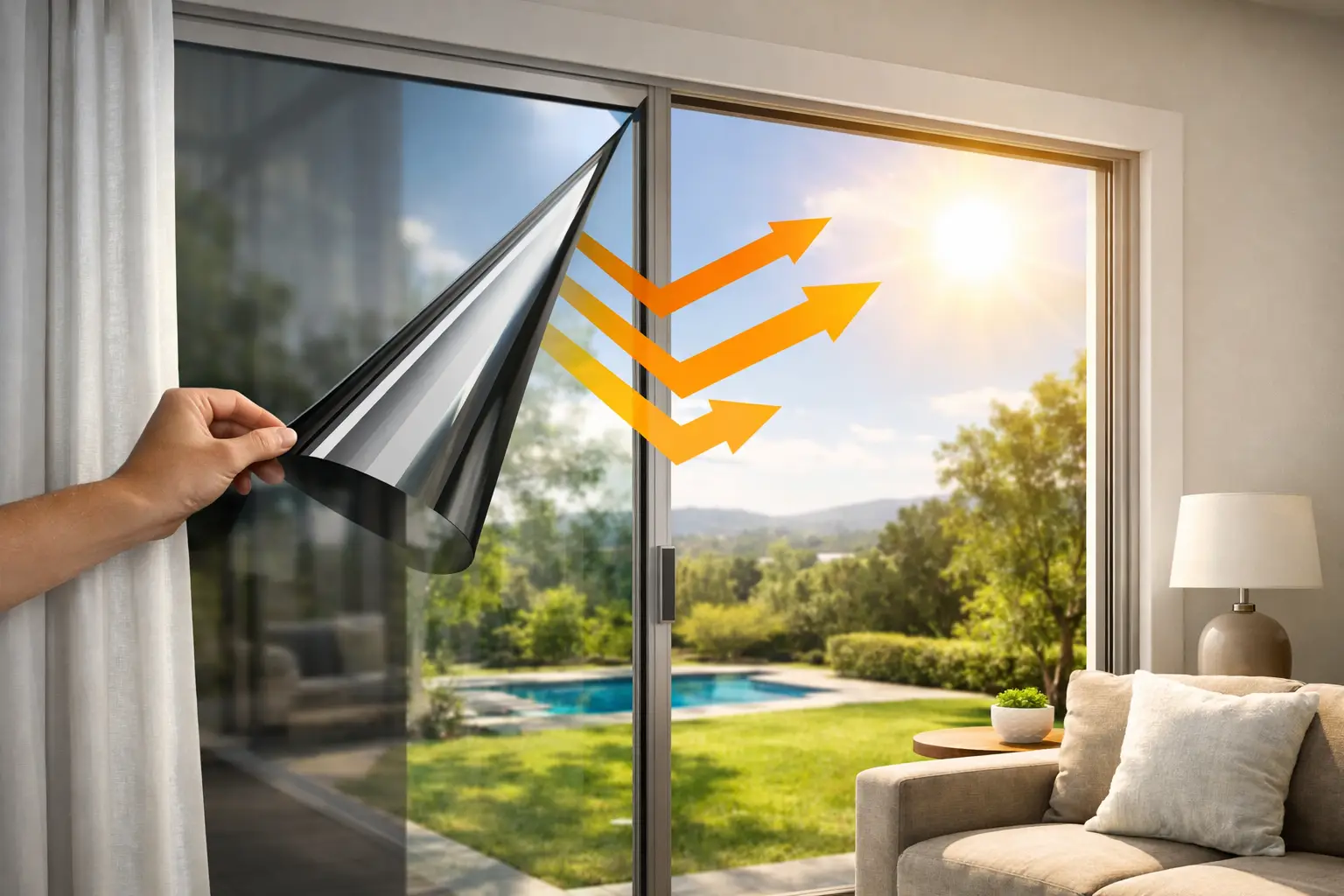
If your west-facing living room turns into a late-afternoon hot zone, you do not need a bigger AC system as your first move. In many San Diego homes, the best home window film for heat reduction is the upgrade that makes the biggest day-to-day difference because it cuts solar heat at the glass, where the problem starts.
Not every window film solves that problem equally well, though. Some products are built mainly for privacy. Some darken the room more than homeowners expect. Others look nearly invisible but still do a strong job reducing heat and glare. The right choice depends on your glass, sun exposure, comfort goals, and how much daylight you want to keep.
What actually makes a window film good at reducing heat?
Heat-rejecting film works by reducing the amount of solar energy that passes through your windows. That sounds simple, but performance comes from a mix of factors, not one number on a brochure.
The biggest one is solar heat rejection. This tells you how much total solar energy the film can block or reflect away. Infrared rejection also matters, especially when you are comparing premium films, because infrared light is a major contributor to the heat you feel near the window. Then there is visible light transmission, which affects how dark the film appears and how much natural light still comes through.
That is why the best film is not always the darkest film. A high-quality spectrally selective or ceramic film can reject a lot of heat while keeping the glass relatively clear. For many homeowners, that balance is better than a darker film that changes the look of the home more dramatically.
Best home window film for heat reduction: the main options
If your goal is lower indoor temperatures, better comfort, and less strain on your cooling system, most residential films fall into a few practical categories.
Ceramic window film
Ceramic film is often the top choice for homeowners who want strong heat rejection without making their windows look overly tinted. It uses advanced non-metallic particles to reduce heat and glare while maintaining a cleaner, more neutral appearance.
This type of film is especially useful when you want performance without a mirrored exterior look. It also avoids issues associated with older metallic films, such as signal interference. In homes with large windows, open views, or modern architecture, ceramic film is often the best fit because it delivers comfort without making the house feel closed in.
The trade-off is cost. Ceramic films are typically more expensive upfront, but they are often worth it for homeowners planning to stay in the property and wanting a better long-term result.
Dual-reflective and reflective film
Reflective films are strong performers for heat reduction because they reflect a significant portion of solar energy away from the glass. In rooms that get hammered by direct sun, this can make a noticeable difference.
These films can be a smart choice for south- and west-facing windows, sunrooms, and spaces with persistent glare. However, they do change the exterior appearance more than ceramic or spectrally selective films. From the inside, views can also look more reflective depending on lighting conditions.
For some homeowners, that is a benefit because it adds daytime privacy. For others, especially in neighborhoods with strict aesthetic preferences or HOAs, it may not be ideal.
Spectrally selective film
Spectrally selective film is designed to reject heat-producing portions of sunlight while allowing more visible light to pass through. In plain terms, it can keep your home brighter while still reducing heat.
This is one of the best options for homeowners who say, “I want less heat, but I do not want my windows to look dark.” It works well in living rooms, kitchens, and front-facing areas where maintaining natural light matters.
The main limitation is that performance varies by product line. Some spectrally selective films are excellent. Others are more moderate. This is where working with an experienced installer matters because the product spec sheet needs to match your actual exposure and comfort goals.
Dyed film
Dyed film is usually the budget-friendly option, but it is not typically the best home window film for heat reduction if maximum performance is the priority. It can help reduce glare and darken a room, but it generally does less to reject heat than ceramic or reflective products.
For homeowners focused mainly on comfort and cooling efficiency, dyed film is rarely the top recommendation unless budget is the deciding factor.
The best choice depends on the room
One mistake homeowners make is trying to use the same film everywhere. In practice, different parts of the home often need different performance priorities.
A west-facing family room may need aggressive heat and glare reduction because it gets hit hard in the afternoon. A front office may need a lighter, more natural-looking film so the room stays bright on video calls. A bathroom or street-facing bedroom may need privacy as much as heat control. Large picture windows may need a film that protects flooring and furniture from UV damage without changing the exterior look too much.
That is why a whole-home approach works better than choosing by shade card alone. The right solution should match how each space is used, not just what looks good in a sample book.
What San Diego homeowners should pay attention to
In Southern California, sun exposure is not a seasonal problem. It is a year-round comfort and energy issue. Homes in places like Poway, El Cajon, La Mesa, and Chula Vista can see serious solar gain, especially on older windows or rooms with broad afternoon exposure.
That makes heat rejection one of the most practical reasons to install residential film. Good film can help reduce hot spots, support more even indoor temperatures, and lessen the load on your HVAC system. It also helps protect flooring, furniture, artwork, and interior finishes from fading caused by UV exposure.
For many homeowners, glare is part of the problem too. If you are closing blinds every afternoon just to watch TV or work at a desk, the film needs to address comfort in a usable way, not just lower a technical heat number.
Don’t choose by darkness alone
A darker film may look like it should perform better, but that is not always true. Modern premium films are engineered to reject heat more efficiently than older dark films while preserving visibility and curb appeal.
That matters if you want your home to stay comfortable without making every room feel dim. It also matters if you have views you want to keep. Many homeowners are surprised to learn that a lighter, higher-grade film can outperform a darker, cheaper one.
The better way to compare options is to look at the full performance picture: solar heat rejection, UV protection, glare reduction, visible light transmission, warranty, and the quality of the installation.
Installation quality matters as much as the film
Even the best product can underperform if it is installed poorly. Dust contamination, edge gaps, incorrect product selection, or applying the wrong film to the wrong type of glass can create problems that show up quickly.
Residential glass is not one-size-fits-all. Some windows are dual-pane, tempered, low-E, or otherwise sensitive to the wrong film choice. A professional installer should evaluate the existing glass, the orientation of the home, and the homeowner’s goals before recommending a product.
That is where experience counts. A licensed contractor with a strong residential background can tell you when a high-performance ceramic film makes sense, when a reflective film is the better value, and when a lighter spectrally selective option will give you the result you actually want. For San Diego homeowners who want that kind of guidance, Simmons Solar Control focuses on practical recommendations backed by professional installation.
How to tell which film is right for your home
Start with the problem you want to solve first. If the issue is severe afternoon heat, prioritize strong heat rejection. If your biggest complaint is glare, make sure the film addresses visible light control as well. If you want to preserve your home’s appearance, focus on neutral, low-reflectivity options.
It also helps to think about your tolerance for change. Some homeowners are comfortable with a more reflective exterior if it means stronger performance. Others want the film to be almost invisible. Neither approach is wrong. The better choice is the one that fits your house, your comfort expectations, and your budget.
If you are comparing products, ask practical questions. How much heat will this film reject on my type of glass? How much daylight will I lose? Will the exterior look noticeably different? Is the warranty strong? And just as important, has the installer worked on homes like mine before?
The right answer is usually not the cheapest roll of film or the darkest one. It is the product that solves the real problem without creating a new one.
A cooler home should still feel like your home – bright where you want brightness, private where you need privacy, and comfortable when the sun is at its worst.