



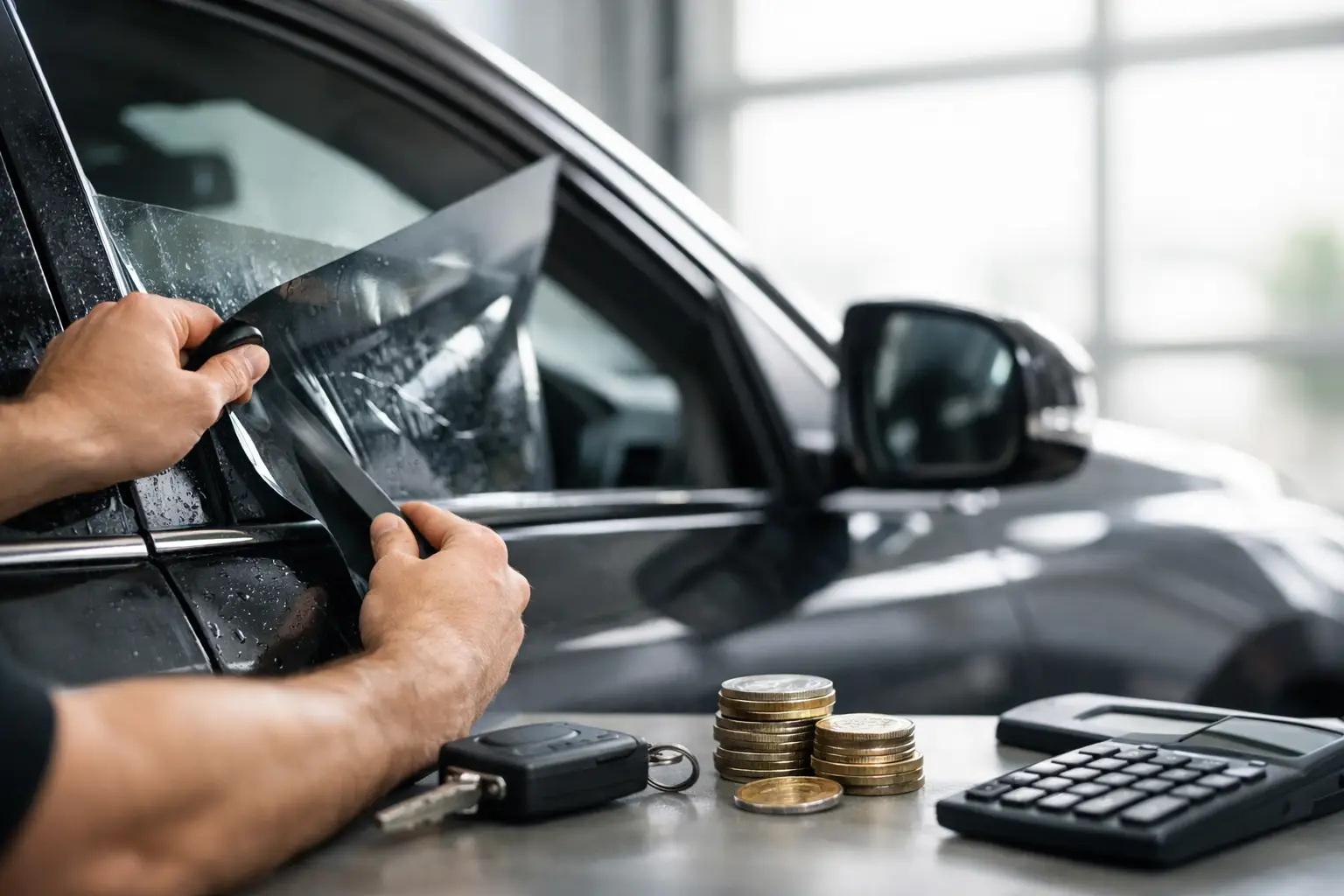
If you’re pricing out tint for your vehicle, the first question is usually simple: how much does car window tint cost? In San Diego, the honest answer is that it depends on the film you choose, the size and shape of your vehicle, and whether the installation is done properly the first time. A bargain quote can look good up front, but if the film fades, bubbles, or turns purple a year later, it stops being a bargain.
For most drivers, professional car window tinting lands somewhere between a few hundred dollars and well over that for premium film on a larger vehicle. The range is wide because window tint is not a one-price service. You’re paying for material quality, heat rejection, UV protection, warranty coverage, and the installer’s experience.
How much does car window tint cost by film type?
Film type is the biggest factor in price. Basic dyed film is usually the most affordable option. It improves appearance and adds some glare reduction, but it generally offers lower heat rejection and a shorter performance life than higher-end materials. If the main goal is a darker look and a modest level of privacy, dyed film may fit the budget.
Metalized film sits above dyed film in both performance and price. It can reject more heat and add durability, but it may interfere with signals in some vehicles, including GPS, radio, or cell service. That trade-off matters more in newer vehicles loaded with electronics.
Carbon film is a common middle-to-upper tier choice because it offers a clean look, strong heat control, and no metallic signal interference. Many drivers see it as a smart balance between cost and long-term value.
Ceramic film is typically the premium option. It costs more, but it also delivers the best overall performance for heat rejection, glare control, and UV protection without making the cabin excessively dark. In Southern California, where sun exposure is intense for much of the year, ceramic film is often worth serious consideration if comfort is a top priority.
As a general range, a full professional tint job on a standard sedan may start around $200 to $300 for entry-level film, move into the $300 to $500 range for better-performing options, and reach $500 to $800 or more for premium ceramic products. Those numbers can shift based on brand, warranty, and local labor rates.
Vehicle size changes the price
A compact coupe costs less to tint than a large SUV for a simple reason: more glass and more labor. A two-door car usually has fewer windows and less installation time. A four-door sedan costs more. SUVs, crossovers, vans, and trucks can move the number higher, especially when rear windows are larger or shaped in ways that require more precise cutting and shrinking.
Some vehicles also have steep rear glass or complex curves that are harder to install cleanly. That extra labor matters. A skilled installer takes the time to prep the glass correctly, fit the film properly, and avoid contamination that causes visible defects.
If you want the front two windows tinted to match factory privacy glass in the rear, your cost will be lower than a full vehicle package. If you’re tinting every side and rear window, expect the price to reflect that broader scope.
What affects car window tint cost besides the film?
When people compare estimates, they often focus on the final number and miss what is actually included. Two quotes can look similar on paper while delivering very different results.
Installation quality matters. Professional prep work, clean application, and experience with modern vehicle glass all affect the finished look. Cheap jobs often cut corners on prep, use lower-grade film, or rush the install. That is usually when you see peeling edges, dust trapped under the film, or uneven appearance.
Brand also matters. Recognized products from manufacturers such as 3M and SunTek generally cost more than off-brand material, but they also tend to perform more consistently and carry stronger warranty support. For many vehicle owners, especially those planning to keep their car for years, that extra upfront cost makes sense.
Warranty coverage is another pricing factor. A professionally installed film backed by a real manufacturer warranty and a local contractor’s workmanship guarantee offers more protection than a low cash price with no support after the sale.
Mobile service can affect cost too, depending on the provider and the job conditions. Many customers value the convenience of having professional tint installation brought to them, especially in busy parts of San Diego County. That convenience can be worth it when you factor in time saved and the ease of getting the job handled without disrupting your schedule.
Cheap tint vs professional tint
This is where cost and value start to separate.
Low-cost tint can be tempting, especially if you’re comparing only the upfront number. But cheap film often falls short where it matters most. Heat rejection may be weak, color stability may be poor, and the finish can age badly under heavy sun exposure. In a climate like San Diego‘s, where vehicles spend a lot of time parked in direct sunlight, film quality shows itself quickly.
Professional tint costs more because it is built around long-term performance. Better film helps reduce cabin heat, protect the interior from UV damage, cut glare during daytime driving, and improve comfort without sacrificing visibility. If your air conditioning does not have to work as hard, that can also improve the driving experience during hot months.
There is also the appearance factor. A clean, uniform tint job looks sharp. A poorly installed one can make an otherwise well-kept vehicle look neglected. Most customers are not just buying darkness. They are buying comfort, protection, and a finish that looks right.
Legal limits can affect your options
California tint law plays a role in what you should choose. Not every shade is legal on every window, and darker does not automatically mean better. A reputable installer should guide you toward film options that improve privacy and heat control while staying within legal limits for your vehicle.
This matters because some customers ask for the darkest possible film, only to realize later that visibility suffers at night or the setup creates legal issues. The right recommendation balances compliance, performance, and how you actually use the vehicle.
Is ceramic tint worth the higher cost?
For many drivers, yes.
Ceramic film usually carries the highest price, but it also delivers the strongest all-around performance. If you commute daily, park outdoors, or drive a vehicle with a dark interior that traps heat, ceramic tint can make a noticeable difference. The cabin stays more comfortable, glare is reduced, and interior materials get better protection from sun damage.
If budget is tight, carbon film can still be a strong value. It may not reach the same performance level as ceramic, but it often offers a meaningful upgrade over dyed film without pushing the price to the premium end.
The right choice comes down to how long you plan to keep the vehicle, how sensitive you are to heat, and whether you want the best result or simply the lowest cost.
Getting an accurate estimate
The most reliable way to price a tint job is with a direct quote based on your exact vehicle and goals. Year, make, model, number of windows, existing film removal, and your preferred product all affect the final number. If old tint has to be stripped first, labor increases, and that can add noticeably to the cost.
It also helps to ask what film line is being installed, what warranty is included, and whether the quote covers the full job or only certain windows. A professional estimate should be clear, not vague.
For drivers who want real value, the best question is not just how much does car window tint cost. It is what am I getting for that price, and how well will it hold up over time? That is where experienced installers stand apart. Companies such as Simmons Solar Control build their reputation on doing the job cleanly, using proven film products, and helping customers choose tint that fits both budget and performance goals.
A good tint job should feel better every time you get in the car on a hot afternoon. If the price makes sense and the installer knows what they’re doing, that is money well spent.