



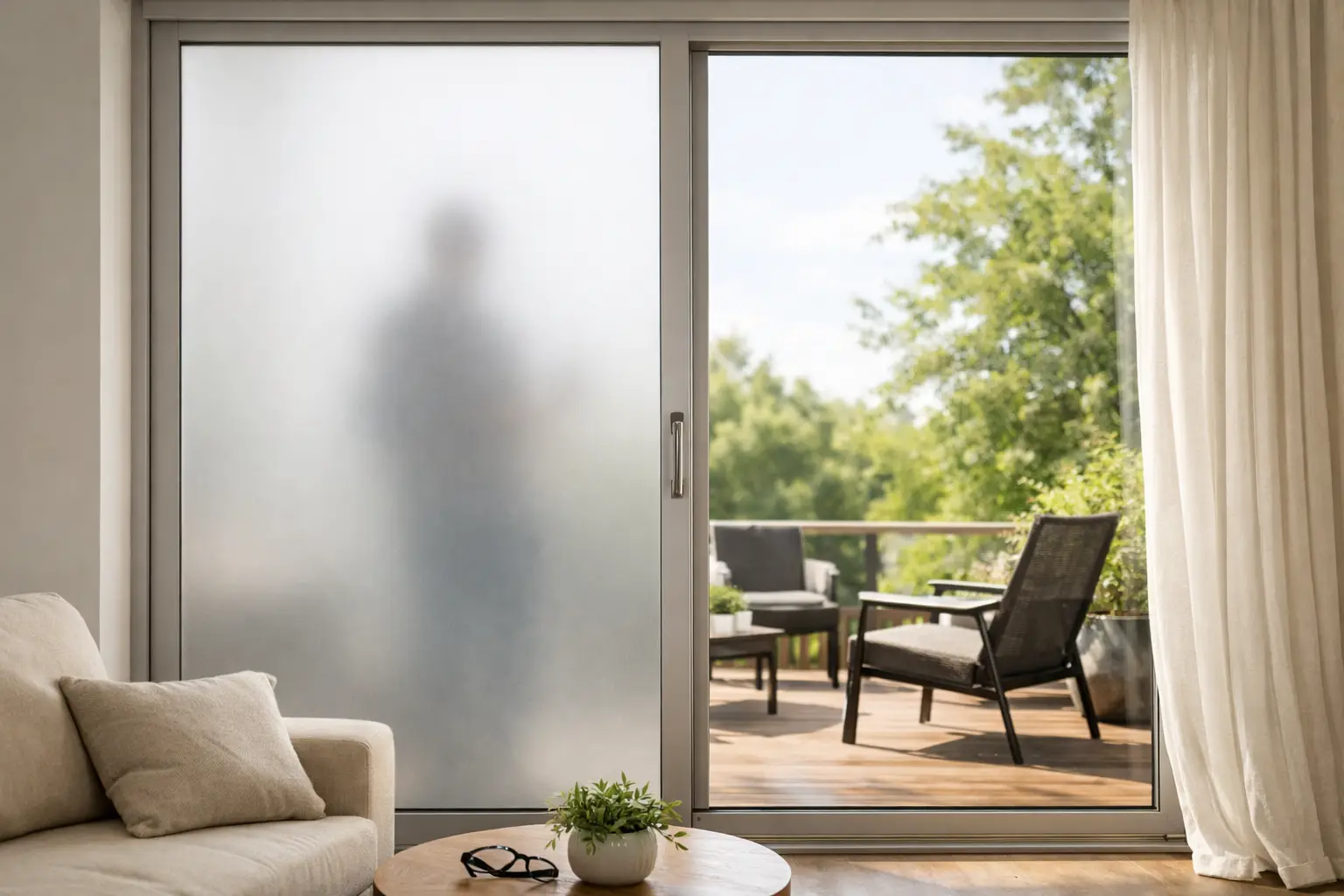
A sliding door can make a room feel open and bright right up until the afternoon sun turns that same space into a hot spot and the neighbors can see straight in. That is why sliding glass door privacy film is one of the most practical upgrades for San Diego homes and businesses. It gives you better privacy without giving up the glass, and it can also help with glare, UV exposure, and indoor comfort.
For many property owners, the challenge is not whether film helps. It is choosing the right type. Privacy means different things depending on the room, the time of day, and the look you want. A backyard patio door has different needs than an office conference room or a rental property with a street-facing slider.
What sliding glass door privacy film actually does
Privacy film changes how glass looks and performs. Some films create a frosted or etched appearance that obscures visibility on both sides. Others use reflective or tinted finishes that make it harder to see in during the day while still allowing outward visibility from inside.
That difference matters. If your main goal is to stop clear sight lines into a bathroom, office, or entry area, a decorative or frosted film is usually the better choice. If you want daytime privacy for a living room or family room while still keeping your view, a solar reflective film may make more sense.
Most customers are also looking for more than privacy alone. On large sliding doors, especially in Southern California, solar heat and glare can become just as frustrating as visibility. The right film can pull double duty by reducing harsh sunlight, helping protect furnishings from UV damage, and making the room more comfortable during peak sun hours.
Daytime privacy vs nighttime privacy
This is where expectations need to be realistic. Not every sliding glass door privacy film provides the same result after dark.
Reflective and darker tinted films are strongest for daytime privacy. When it is brighter outside than inside, they reduce the ability for someone to see into the room. At night, that advantage can reverse. If your interior lights are on and it is dark outside, people outside may still be able to see in.
Frosted and opaque films are different. They do not preserve a clear view through the glass, but they provide more consistent privacy regardless of lighting conditions. That makes them a strong option for spaces where privacy matters all day, not just during daylight hours.
The best choice depends on whether you value visibility or concealment more. You usually cannot maximize both at the same time on a fully transparent slider.
Best film options for sliding glass doors
There is no one-size-fits-all answer, but most sliding door projects fall into a few common categories.
Frosted and decorative films
These films soften or block the view through the glass while still letting light pass through. They work well for doors that face close neighbors, shared walkways, or spaces where full-time privacy matters. They are also popular in offices where you want separation without making the room feel closed off.
The trade-off is simple. You gain privacy, but you lose a clear outside view.
Reflective solar films
Reflective films are often the best fit when you want daytime privacy plus heat and glare reduction. On a sun-exposed patio door, this can make a noticeable difference in comfort. These films can also reduce fading on floors, furniture, and interior finishes by blocking a significant amount of UV.
The main limitation is nighttime performance. If indoor lighting is stronger than outdoor light, privacy drops.
Neutral or lightly tinted films
Some customers want a cleaner look with less visible reflectivity. Neutral films can reduce heat and glare while adding a modest privacy boost. They are often chosen when appearance is just as important as performance.
These films are usually not the strongest solution if privacy is your top concern, but they can be a good balance when you want a more subtle finish.
Why sliding doors need the right film, not just any film
Sliding glass doors are large, high-traffic glass surfaces. That means installation quality matters. Film on a slider has to look clean across a wide pane, hold up to regular use, and perform well in direct sun.
Not all glass is the same, either. Some doors are tempered, dual-pane, or coated glass units that need compatible film selections. Using the wrong product can affect performance and, in some cases, create stress on the glass. That is one reason professional recommendations matter more on large residential and commercial doors than they do on small decorative glass panels.
There is also the issue of appearance. A film may sound good on paper but look too mirrored, too dark, or too flat once it is applied across a big sliding door. Experienced installers help narrow the field before you commit to something you will see every day.
Common reasons San Diego property owners choose privacy film
In San Diego County, sliding doors are everywhere. They connect living rooms to patios, offices to courtyards, and tenant spaces to outdoor common areas. They also bring in strong sun for much of the year.
That is why privacy is often only part of the reason customers call. They are also trying to cut down afternoon heat, reduce eye strain from glare on TVs or screens, and protect interior materials from sun damage. In many cases, one film upgrade solves several problems at once.
For homeowners, the biggest benefit is often comfort. Rooms with large west-facing or south-facing sliders can heat up fast. For business owners and property managers, appearance and usability matter just as much. A conference room, leasing office, or storefront with too much visibility can feel exposed and less functional.
Professional installation vs do-it-yourself film
DIY film has appeal because it looks cheaper upfront. For a small window, that may be enough. On a sliding glass door, it is a different calculation.
Large glass panels make flaws more obvious. Dust, trapped moisture, uneven cuts, and edge lift are hard to ignore on a full-size slider. If the film is reflective, those imperfections can stand out even more in daylight. And if the product itself is low quality, performance may fall short where it matters most heat rejection, clarity, and long-term durability.
Professional installation usually means better film selection, cleaner results, and stronger longevity. It also means the product is matched to the glass and backed by a manufacturer warranty when applicable. For many customers, that is worth more than saving a little on the front end and redoing the job later.
How to choose the right sliding glass door privacy film
Start with the real problem you want to solve. If you mainly want to block views from neighbors at all hours, frosted film is often the cleanest answer. If your bigger issue is daytime exposure, glare, and heat from the sun, a reflective solar film may be the better fit.
Next, think about how much natural light and visibility you want to keep. Some customers are comfortable giving up the view for full privacy. Others want to preserve as much openness as possible and accept that privacy will depend on lighting conditions.
Appearance matters too. Film should look intentional, not like an afterthought. On a modern home or commercial building, the wrong shade or finish can stand out in the wrong way. Premium products from established brands tend to offer better visual consistency, better optical clarity, and more predictable performance.
If you are comparing options for a home, rental, office, or retail space, it helps to see samples in person and discuss the orientation of the door. A west-facing slider in El Cajon may need a different solution than a shaded patio door in La Mesa. That local context matters.
With more than 20 years of experience, Simmons Solar Control sees this every day. The best results come from matching the film to the glass, the sun exposure, and the way the space is actually used.
What to expect after installation
Once properly installed, privacy film should look clean and consistent across the glass. Depending on the product, there may be a brief curing period while any remaining moisture evaporates. During that time, a slightly hazy appearance or small water pockets can be normal.
After curing, the biggest change most people notice is how the room feels. Harsh sunlight is softer. Glare is easier to manage. The space feels less exposed. If the film includes solar control benefits, the door often stops acting like a constant heat source in the late afternoon.
That kind of upgrade is easy to live with because it improves the room without changing how you use it. You still get the light, the openness, and the access to the outdoors just with more control over privacy and comfort.
If your sliding door is creating too much exposure, too much glare, or too much heat, film is one of the simplest ways to make that glass work harder for your space instead of against it.