



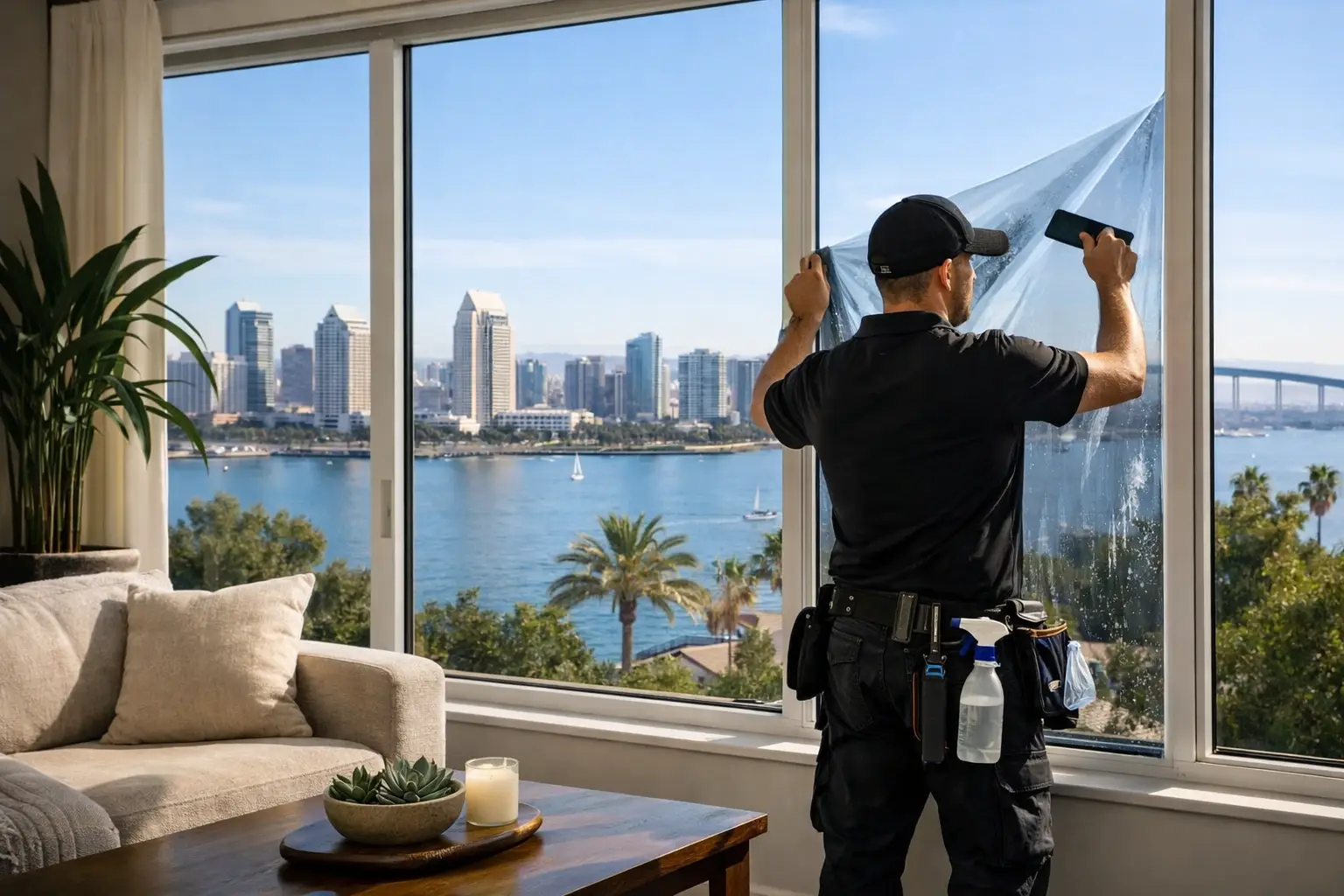
If one room in your house turns into an oven every afternoon while the rest of the home feels fine, the glass is usually the problem. This residential window film guide is built for San Diego homeowners who want a practical fix for heat, glare, fading, and privacy without replacing every window.
Window film is a thin, professionally applied layer installed directly on existing glass. The right film can reduce solar heat, block UV rays, cut glare, improve daytime privacy, and in some cases help hold shattered glass together. For many homeowners, it is one of the most cost-effective ways to improve comfort and protect interiors while keeping the look of the home clean and modern.
What residential window film actually does
Most people start shopping for window film because a room is too hot or too bright. That is usually the right instinct. Glass lets in natural light, but it also allows solar energy to build up inside the home. In Southern California, that can mean harder-working air conditioning, hot spots near windows, and furniture or flooring that fades faster than it should.
A quality residential film changes how the glass performs. Solar control films are designed to reject a portion of the sun’s heat before it settles into the room. UV-blocking films help protect flooring, artwork, upholstery, and wood finishes from sun damage. Glare-reduction films make it easier to watch TV, work from home, or simply sit near a bright window without squinting.
Some films are made primarily for privacy, while others focus on safety and security. Decorative films can also add a frosted or patterned look to specific areas such as front door sidelights, bathrooms, or street-facing windows. The key is matching the film to the real problem you want to solve, not choosing based on appearance alone.
A residential window film guide to the main film types
Not all window film performs the same way, and that is where many homeowners get tripped up. Two products can look similar on the glass but deliver very different results in heat rejection, visible light, and long-term durability.
Solar control film is the most common choice for San Diego homes. It is built to reduce heat and glare while still allowing in usable daylight. This is often the best fit for west-facing living rooms, upstairs bedrooms, and large patio doors that take direct sun.
Ceramic film is a premium option for homeowners who want strong heat rejection without making the glass overly dark or reflective. It is especially useful when you want performance and a more subtle look. In many homes, ceramic film is the best balance of comfort, appearance, and clarity.
Dual-reflective and reflective films can deliver excellent daytime heat and glare control. They are often chosen for windows with intense sun exposure. The trade-off is appearance. Reflective film creates a more mirrored exterior look during the day, which some homeowners like and others do not.
Neutral or lightly tinted films are better when appearance is the priority and you want a low-profile finish. They still improve comfort, but the performance may be more moderate depending on the product.
Privacy and decorative films serve a different purpose. Frosted or patterned films are popular for entry glass, bathroom windows, and interior glass partitions. These are less about solar performance and more about privacy and appearance.
Security film is thicker and designed to strengthen the glass system. It does not make windows unbreakable, but it can make break-in attempts harder and help reduce hazards from broken glass. That is useful for ground-floor windows, sidelights near doors, and homes in high-traffic areas.
How to choose the right film for your home
The best film depends on the room, the window orientation, and what bothers you most. A west-facing family room with afternoon heat needs a different solution than a bathroom window where privacy is the main concern.
Start with the problem. If your cooling bills are climbing and certain rooms stay hot, focus on solar heat rejection. If hardwood floors or furniture are fading, UV protection should be near the top of the list. If the issue is television glare or bright home office screens, you need a film that cuts visible glare without making the room feel too dark.
It also helps to think about when you want privacy. Daytime privacy films work well when it is brighter outside than inside. At night, when interior lights are on, that effect changes. Homeowners are often surprised by this. If nighttime privacy matters, film may need to be paired with shades, blinds, or curtains.
HOA rules and home style should also be considered. Some neighborhoods prefer a uniform exterior appearance, and some homes simply look better with a softer, less reflective finish. A professional recommendation matters here because the wrong product can solve one issue while creating another.
Questions to ask before installation
A good residential window film guide should also cover what happens before the installer ever touches the glass. Not every window is the same, and compatibility matters.
First, confirm the type of glass in your home. Single-pane, dual-pane, tempered, low-E, and specialty glass can all respond differently to film. Applying the wrong product to the wrong window can create stress and increase the risk of glass failure. This is one reason experienced, licensed installation matters.
Second, ask about manufacturer warranty and installer warranty. Film quality is important, but so is the workmanship behind it. A premium film installed poorly will not deliver premium results.
Third, ask what kind of visual change to expect. Some films alter reflectivity, interior brightness, or color tone more than others. A sample or product demonstration can save disappointment later.
Finally, ask about realistic performance. Window film can significantly improve comfort, but it is not magic. If a room has poor insulation, aging seals, or oversized unshaded glass, film helps, but it may be one part of a larger efficiency plan.
What homeowners in San Diego usually prioritize
In this market, heat reduction and UV protection are usually the leading concerns. The sun is strong, cooling costs are real, and interior finishes are expensive to replace. Film is often chosen not just for comfort, but to protect flooring, cabinets, rugs, and furnishings from years of exposure.
Glare control is another common driver, especially in homes with open floor plans and large windows. Modern homes often have more glass than older homes, which looks great until the afternoon sun hits the living area or a second-story bedroom becomes hard to use.
Privacy varies by neighborhood. In denser communities or homes close to the street, film can create a more comfortable sense of separation without shutting out natural light. Decorative privacy films are also popular where homeowners want privacy without heavy window coverings.
Professional installation vs. DIY kits
DIY window film kits look appealing because the material cost is lower. For small, low-risk projects, some homeowners try them. But residential film installation is less forgiving than it appears.
Large panes, sliding doors, and high-visibility front windows require precision. Dust, creases, edge contamination, and misalignment show up fast, especially in bright sunlight. The bigger issue is product selection. Homeowners often buy film based on shade rather than glass compatibility and actual performance.
Professional installation gives you a cleaner finish, better product guidance, and accountability if something is not right. With a local contractor, you also get advice based on San Diego conditions, not generic packaging claims. That is a meaningful difference when your goal is long-term comfort and protection.
The value of a site-specific recommendation
The most effective projects are rarely one-size-fits-all. A home may need stronger heat rejection on west-facing windows, a more neutral film on the front elevation, and a privacy product for a bathroom or entry area. Treating every pane the same can leave performance on the table.
That is why experienced contractors assess sun exposure, glass type, room usage, and appearance goals before recommending a product. Simmons Solar Control has built its reputation on that kind of practical guidance, backed by professional installation, recognized film brands, and more than 20 years of hands-on experience.
What to expect after installation
Once installed, residential window film usually needs a short curing period. During that time, a slightly hazy look or small water pockets can be normal. As the film settles, the glass clears up and performance becomes more noticeable, especially during the hottest parts of the day.
Most homeowners notice the difference first in comfort. Rooms feel more stable, bright spaces become easier to use, and the house does not take on as much afternoon heat. Over time, the benefits extend to reduced interior fading and less strain on your cooling system.
A smart window film project should make your home easier to live in, not just change how it looks from the curb. If you focus on the room-by-room problem, choose the right product for the glass, and work with an experienced installer, window film becomes a practical upgrade that pays you back in comfort every day.