



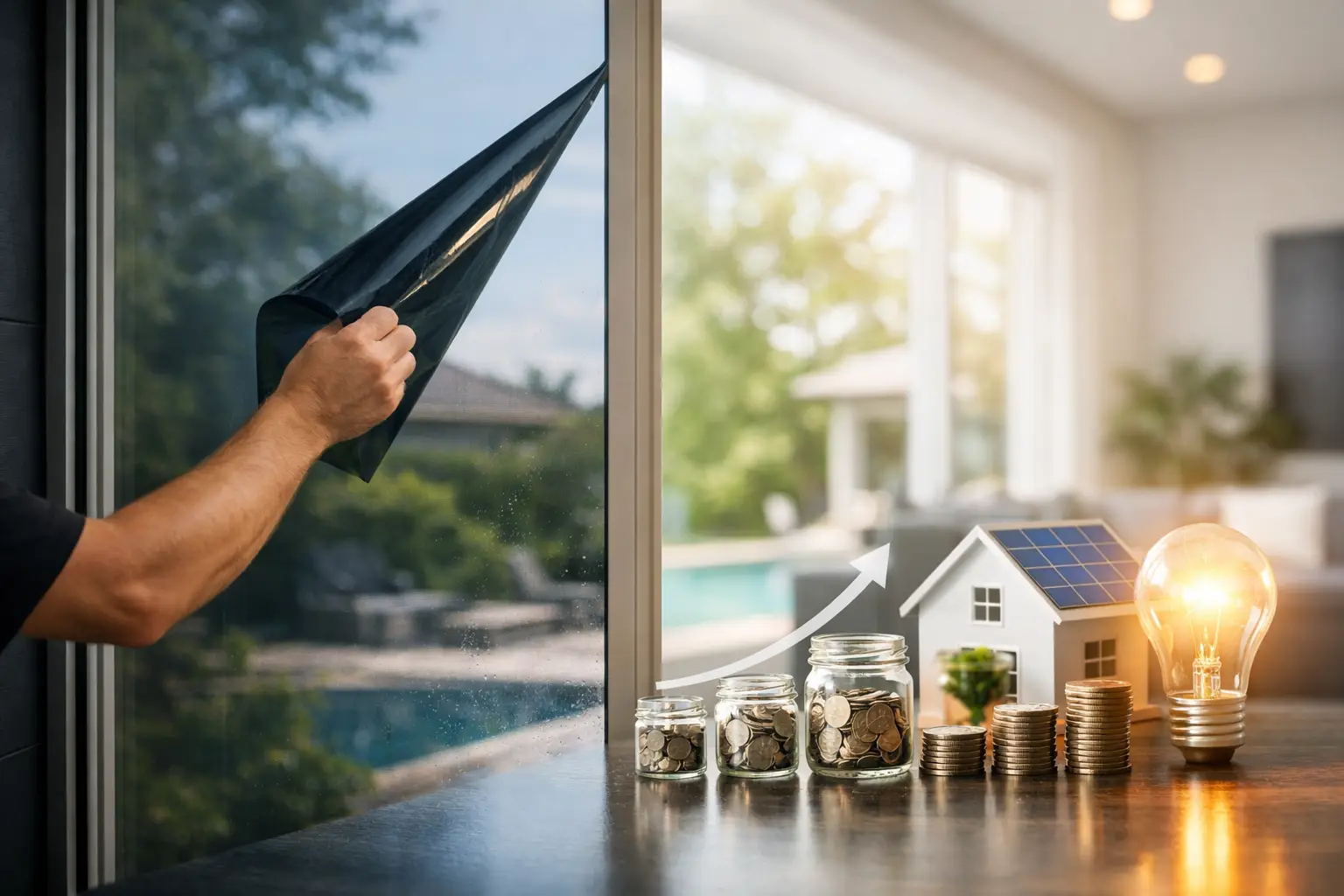
If your AC seems to run nonstop every afternoon and the rooms with the most sun are always the hardest to keep comfortable, house window tinting energy savings are probably worth a closer look. In San Diego, that heat load adds up fast. The right residential window film can cut solar heat coming through the glass, reduce glare, and help your home stay more stable without asking as much from your cooling system.
That does not mean every house will see the same drop in energy use. Savings depend on your window type, sun exposure, floor plan, insulation, thermostat habits, and the film you choose. But for many homeowners, window tinting is one of the more practical upgrades because it addresses the source of the problem right at the glass.
How house window tinting energy savings actually work
Sunlight brings visible light, ultraviolet rays, and infrared heat. Standard residential glass lets a significant amount of that solar energy pass indoors. Once it hits floors, furniture, counters, and walls, the heat gets trapped and indoor temperatures rise.
Window film changes that equation. A quality film is designed to reflect or absorb a portion of the sun’s heat before it can build up inside your living space. That means less solar gain through the windows, which reduces the load on your air conditioner.
In practical terms, the benefits usually show up in three ways. First, rooms near west- and south-facing windows feel less harsh in the afternoon. Second, your HVAC system cycles less aggressively during hot periods. Third, your home may reach the thermostat setting faster and hold it with less effort.
This is why homeowners often notice comfort improvements before they notice changes on the utility bill. The comfort is immediate. The energy savings build over time.
Where the biggest energy losses happen
Not all windows are equal. Large picture windows, older dual-pane units, single-pane glass, and rooms with direct afternoon sun usually create the biggest cooling challenges. If you have a living room that gets blasted from 2 p.m. to sunset, or upstairs bedrooms that stay warm long after dark, those are prime candidates for film.
Skylights can also be major heat contributors. They bring in natural light, but they can also bring in concentrated solar heat at the hottest times of day. In many homes, one or two problem areas are responsible for a disproportionate share of discomfort and cooling demand.
That matters because the best energy-saving strategy is not always tinting every window in the house. Sometimes a focused installation on the most exposed glass gives you the best return. Other times, especially in homes with broad sun exposure, a whole-home approach makes more sense. It depends on how the home is built and how you use the space.
Why San Diego homes often benefit more than expected
Southern California does not always get framed as an extreme cooling market the way Phoenix or Las Vegas does, but San Diego homeowners still deal with intense sun, long cooling seasons, and strong afternoon exposure. Even when outdoor temperatures look moderate, direct solar gain through untreated windows can make indoor spaces feel much hotter than the thermostat reading suggests.
That mismatch is exactly where window film performs well. It helps reduce hot spots and glare without forcing you to keep blinds closed all day. For homeowners who want natural light but do not want the heat that comes with it, film offers a practical middle ground.
What affects your actual savings
The phrase house window tinting energy savings sounds simple, but the real number depends on several factors.
Film type is a big one. Some films are designed mainly for glare and appearance, while others are built for stronger solar heat rejection. Premium residential films generally perform better and hold up longer, especially when professionally installed.
Existing glass also matters. If your windows are already high-performance low-E units, the energy improvement from adding film may be smaller than it would be on older glass. That does not make film unnecessary. It just changes the expected payoff. In newer homes, homeowners often choose film as much for comfort, glare control, and UV protection as for direct utility savings.
Orientation matters too. Windows facing west usually create the biggest cooling burden because they catch stronger late-day sun when the home has already been warming up. South-facing glass can also drive heat gain for long stretches of the day. North-facing windows tend to be less problematic.
Your habits matter as well. If you keep blinds closed, use fans strategically, and set your thermostat conservatively, your utility savings may look different from a household that relies heavily on AC. But even then, reducing heat gain can improve comfort and reduce strain on the system.
More than lower bills
Energy savings are often the reason homeowners start researching window film, but they are rarely the only benefit that matters after installation.
UV protection is a major one. Quality film helps block a large percentage of ultraviolet rays that fade flooring, furniture, artwork, and fabrics. That can help protect the appearance and value of your interior finishes.
Glare reduction is another everyday improvement. If you have trouble watching TV, working from home, or using screens in sun-facing rooms, film can make those spaces much easier to use throughout the day.
Then there is comfort. A room that is technically cooled but still feels hot near the windows is not functioning well. By reducing radiant heat and hot spots, film can make the space feel more usable without overcooling the entire house.
For many homeowners, that combination is what makes the upgrade worthwhile. The monthly savings help, but the daily improvement in how the home feels is what they notice first.
Choosing the right film for residential performance
This is where experience matters. The wrong film can make glass too dark, create an unwanted reflective look, or underperform for the conditions of the home. The right film should match the goal.
If the priority is maximum heat rejection, a more performance-focused solar control film may be the best fit. If preserving daylight and outside views is more important, there are lighter films that still reject significant heat. If privacy is part of the goal, that changes the recommendation again.
There are also compatibility issues to consider. Not every film should be installed on every type of residential glass. A professional installer should evaluate the window construction and recommend a film that performs well without creating unnecessary risk.
That is one reason professional installation tends to deliver better long-term value. Product quality matters, but so does proper film selection, precise application, and warranty-backed workmanship. A licensed contractor with residential experience can help you avoid a film that looks good on paper but is wrong for your home.
Is window tinting worth it if you already have blinds or curtains?
Usually, yes. Blinds and curtains help, but they work after sunlight has already passed through the glass. Film works at the glass itself, reducing heat before it fully enters the room.
That difference is important. Interior coverings can darken a room and improve privacy, but they are less effective at stopping solar heat gain than a quality exterior-facing film solution on the window. Many homeowners use both together – film for heat and UV control, and shades or drapes for light management and appearance.
When savings may be modest
There are situations where expectations should stay realistic. If your home has very little direct sun exposure, heavily shaded windows, or already upgraded high-efficiency glass throughout, the energy savings from film may be smaller.
The same is true if your biggest cooling issues come from poor attic insulation, air leakage, or an aging HVAC system. Window film can still help, but it should be part of a broader approach rather than treated as a cure-all.
That is why a straightforward estimate matters. A good contractor should explain where film is likely to make the biggest difference and where other upgrades may deserve attention first.
Getting the best result from a local installer
A residential window film project is not just about picking a shade. It is about matching the film to the home, the sun exposure, and the result you want. In San Diego County, that often means balancing heat rejection, natural light, appearance, and long-term durability.
Working with an experienced local company like Simmons Solar Control can make that process much easier. A mobile, licensed installer who understands regional sun conditions and carries proven film lines can give you a more accurate recommendation than a one-size-fits-all pitch.
If your home has rooms that heat up too quickly, glare that interrupts daily use, or cooling costs that keep climbing, window film is one of the upgrades that earns attention because it solves several problems at once. The best place to start is with the windows causing the most trouble and a clear estimate of what better comfort could look like in your home.
A cooler room in the late afternoon may not sound dramatic, but when it happens every day without overworking your AC, that is the kind of improvement you feel all summer long.