



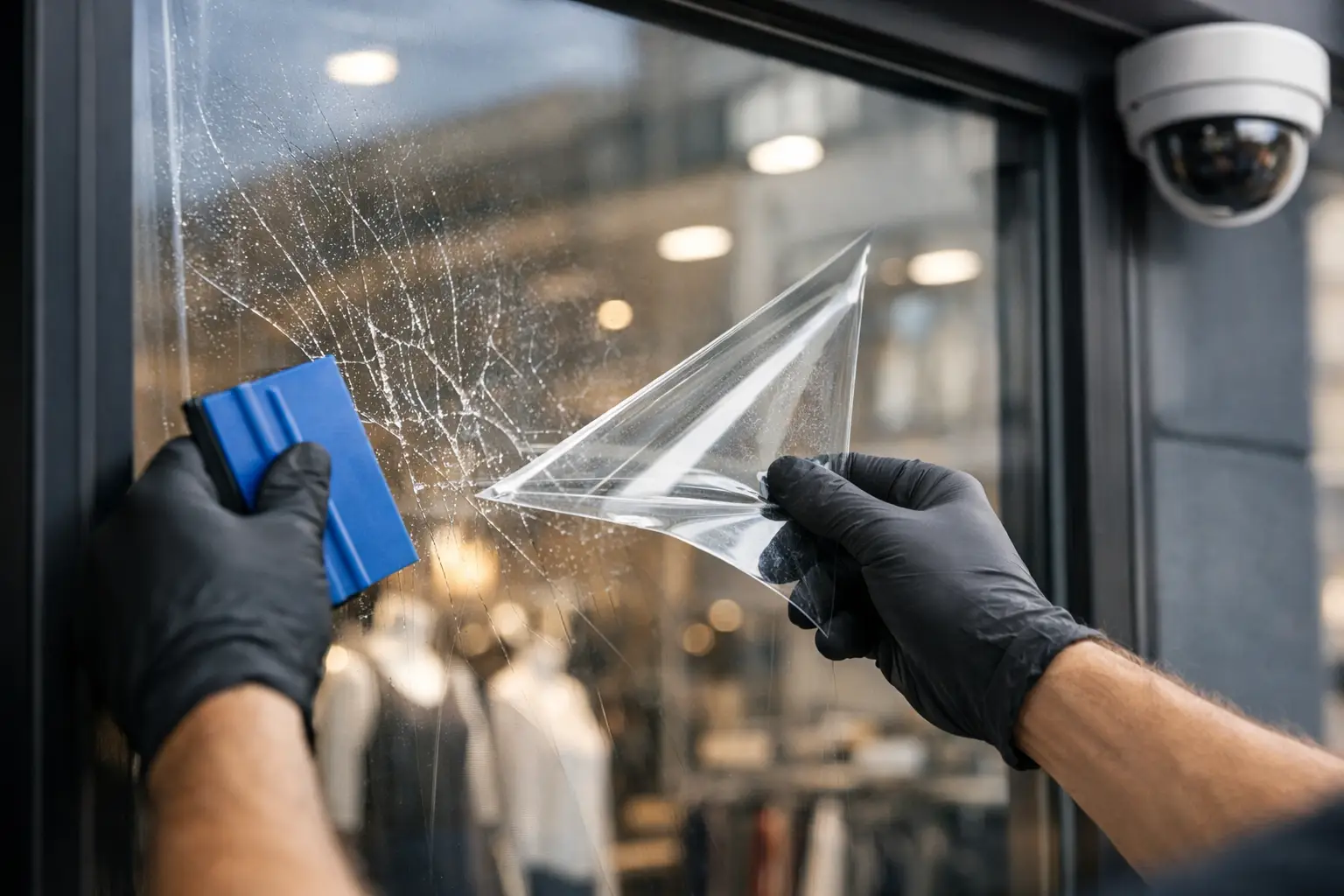
A smashed storefront window rarely stops at broken glass. It can mean stolen inventory, water damage from an exposed opening, emergency board-up costs, and days of disruption. That is why storefront security window film has become a practical upgrade for San Diego business owners who want stronger glass performance without replacing every pane.
For many retail spaces, restaurants, offices, and street-facing commercial properties, the goal is not to make glass unbreakable. That is not how these products work. The real value is slowing forced entry, holding shattered glass together, and reducing the damage that follows an impact. In a busy commercial corridor, even a short delay can matter.
What storefront security window film actually does
Security film is a thick polyester film installed on the interior surface of existing glass. When properly selected and professionally installed, it helps the glass stay in place after impact instead of breaking apart into dangerous shards. That changes what happens during an attempted break-in.
Without film, a thief may only need one or two hits to create an opening. With security film, the glass can still crack, but the broken pieces tend to stay bonded together. That forces repeated strikes, creates noise, and takes more time. For many business owners, that extra resistance is the whole point.
This also matters for accidental impacts and severe weather events. A hard strike from a thrown object, vandalism, or a collision near the storefront can send glass into the sales floor. Film helps contain that breakage, which can reduce injuries and cleanup.
Where storefront security window film makes the most sense
Street-level retail is the obvious fit, but it is not the only one. Any business with exposed glass and valuable assets near public access should look at the risk. That includes salons, medical offices, showrooms, convenience stores, jewelry counters, and office suites with entry doors made largely of glass.
In San Diego County, many businesses also want a solution that preserves natural light and curb appeal. Replacing clear storefront glazing with visibly heavy barriers can change the look of a business. Security film gives owners a way to strengthen performance while keeping the storefront open and professional.
If your property already has good visibility but weak glass, film is often one of the most cost-effective upgrades available. It can work especially well when paired with quality locks, alarm systems, lighting, and camera coverage.
Storefront security window film is not the same as standard tint
This is where many property owners get mixed signals. Standard solar film is designed mainly for heat, glare, UV reduction, and appearance. Security film is built thicker and with a different performance goal. Some products can combine solar control and security benefits, but not every dark or reflective film is a security film.
That distinction matters because the installation standard matters just as much as the product itself. A film meant only for sun control will not deliver the same glass retention under impact. If the job is to improve break-in resistance, the film needs to be selected for that purpose.
Attachment systems also deserve attention. In some applications, the best results come from combining the film with edge retention or anchoring systems that help hold the glass sheet in the frame after it breaks. On some storefronts, film alone may be appropriate. On others, a more complete attachment detail is the better choice. It depends on the glass size, frame condition, and level of protection the owner expects.
What business owners should realistically expect
A good installer should be clear about trade-offs. Security film does not turn standard glass into bulletproof glass, and it does not guarantee that intruders will never get through. What it does is make entry harder, slower, louder, and messier for the person trying to get in.
That delay can be enough to trigger an alarm response, draw attention, or convince someone to move on. It can also limit the amount of shattered glass thrown into the space. For many storefronts, those are meaningful gains.
There are cases where laminated glass or full glass replacement may be the better answer, especially in high-risk locations or where code requirements point in that direction. Film is often chosen because it improves existing glass at a lower cost and with less disruption. But the right answer depends on budget, exposure, and risk tolerance.
Benefits beyond break-in resistance
Many storefront owners first ask about security and then realize film can support other goals too. Depending on the product, you may also reduce UV exposure that fades merchandise, flooring, displays, and furnishings. In storefronts with broad west-facing glass, added solar performance can help with heat and glare as well.
That can be useful in retail environments where the front windows look great from the sidewalk but create hot spots inside. Employees are more comfortable, customers are not squinting near the glass, and HVAC systems do not have to work as hard during peak sun hours.
Not every security film is heavily tinted, and not every business wants a darker storefront. Many owners prefer a clear or low-visibility look so the protection is there without changing the brand presentation. That is one reason professional product matching matters.
Installation quality is where the project succeeds or fails
Commercial glass is not forgiving of shortcuts. Surface preparation, product handling, edge finishing, and frame condition all affect how the film performs over time. A rushed install can leave contamination, poor adhesion, visible defects, or weak points at the edges.
For security applications, those details are not cosmetic issues alone. They are part of the system. The film must be installed correctly, and the installer should evaluate the actual storefront construction before recommending a solution.
Older aluminum frames, oversized panes, previous film layers, damaged seals, and tempered versus annealed glass can all affect the recommendation. A licensed, experienced contractor will account for those conditions instead of applying a one-size-fits-all answer.
Questions worth asking before you buy
If you are comparing bids, ask what problem the film is meant to solve. Is the main concern smash-and-grab theft, vandalism, daytime glare, after-hours privacy, or a combination? The answer should guide the product choice.
Ask whether the quoted film is a true security film, whether the glass needs an attachment system, and how visible the finished product will be from the street. You should also ask about warranty coverage and who is performing the installation. Commercial property owners often find that the cheapest quote leaves out critical details that affect long-term performance.
It also helps to ask how the film will affect daily operations during installation. In many cases, a skilled mobile installer can schedule work to minimize disruption, which matters for active storefronts that cannot afford extended downtime.
A smart fit for many San Diego storefronts
In Southern California, storefront glass does a lot of work. It brings in natural light, supports merchandising, and shapes the first impression customers get from the curb. It also creates exposure. Storefront security window film gives business owners a practical way to improve protection while keeping the clean, open look that modern commercial spaces depend on.
For businesses that want a balanced solution, this upgrade often makes sense because it addresses a real risk without forcing a full redesign. When paired with the right film, proper installation, and a realistic understanding of what the product can and cannot do, it becomes a useful layer in an overall property protection plan.
At Simmons Solar Control, that kind of recommendation starts with the glass you already have, the risks you actually face, and the performance you want from the finished result. If your storefront needs better protection without sacrificing appearance, the right film can do more than strengthen glass. It can help you keep your business running with fewer surprises.