



Bubbling tint usually starts as a small cosmetic issue, then turns into a visibility problem, a glare problem, and a sign the film has reached the end of its life. If you’re wondering how to remove bubbling window tint without damaging the glass underneath, the method matters. A rushed removal can leave behind adhesive, scratch glass, or ruin rear defroster lines.
In San Diego, heat and UV exposure can speed up film failure, especially on older installs or lower-grade products. Once tint starts bubbling, pressing it back down rarely fixes anything for long. The better approach is to remove it cleanly and decide whether the window needs fresh film installed afterward.
How to remove bubbling window tint without damaging the glass
The safest removal process depends on where the film is installed. Automotive side glass is usually the easiest. Rear windows take more care because of defroster lines. Residential and commercial flat glass can be straightforward, but adhesive cleanup still matters.
In most cases, the goal is simple – soften the adhesive, peel the film in larger sections, and remove the leftover glue without using anything too aggressive. If the film is brittle, purple, or breaking apart into flakes, expect the job to take longer.
What you’ll need before you start
You do not need a long list of specialty tools, but you do need the right ones. A spray bottle, soapy water or an ammonia-based solution, black trash bags, a razor blade made for glass, microfiber towels, and a plastic scraper will handle most jobs. For automotive rear glass, skip the razor and use plastic only.
A handheld steamer can help, especially on stubborn automotive film. Heat softens old adhesive and makes it easier to peel the tint in larger sheets instead of tiny fragments.
Start with heat or moisture
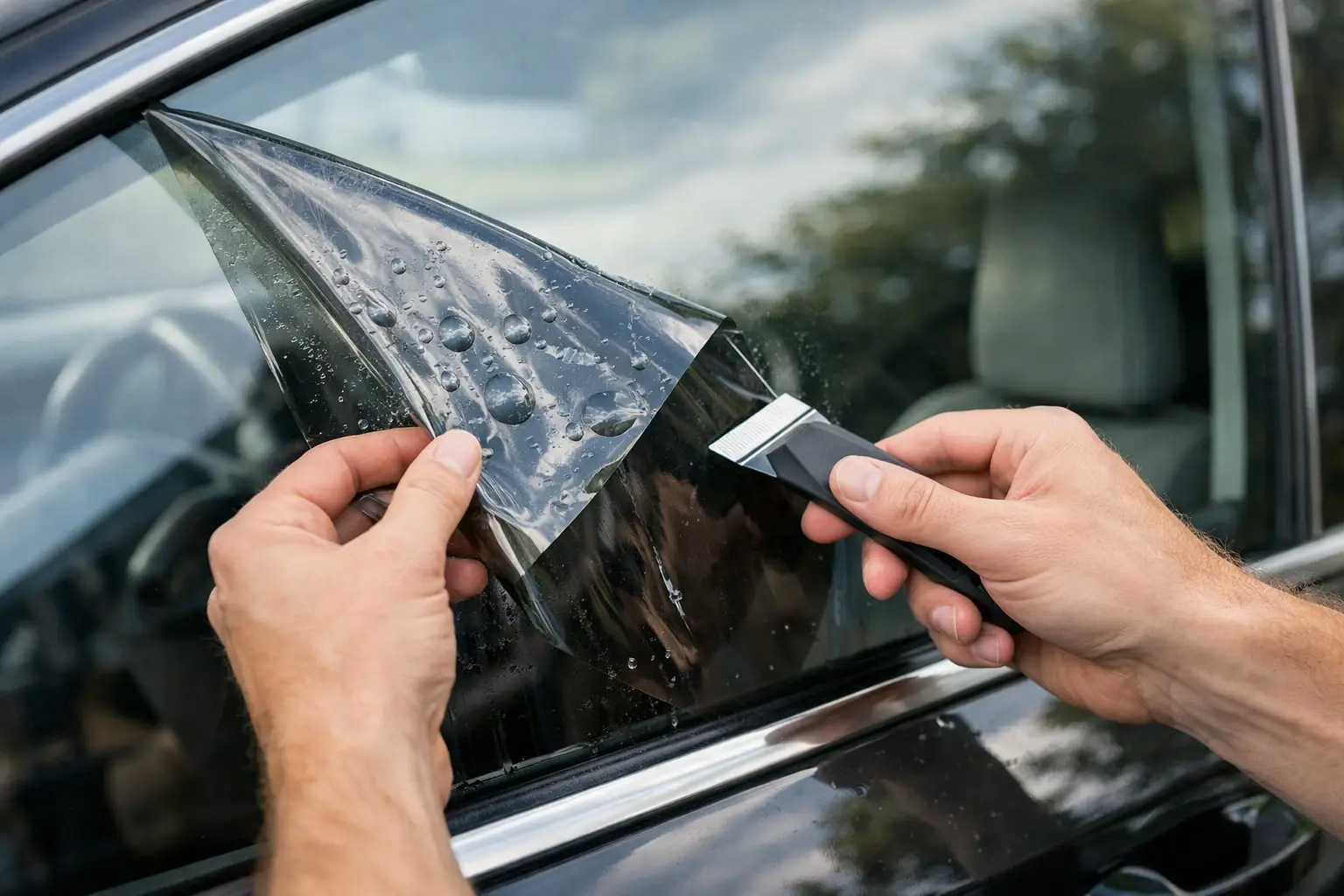
Old tint comes off easier when the adhesive is warm and soft. On a vehicle, park in direct sun if possible. Spray the inside of the glass, press a black trash bag against the wet surface, and let the heat build for 20 to 40 minutes. That combination often loosens the film enough to start peeling.
If you’re working indoors on home or office glass, a steamer is usually more practical than relying on sunlight. Hold the steam close to one corner until you can lift the edge with your fingernail or a plastic blade.
Peel slowly, not forcefully
Once you lift a corner, pull the tint back on itself at a low angle. Slow, steady pressure works better than yanking. If the film tears, apply more heat or moisture and restart from another edge.
When removal goes well, the film comes off in one or two large pieces. When it does not, it usually means the adhesive is too dry, the film is too degraded, or the installation has been on the glass for many years.
The hardest part is usually the adhesive
Removing the film is only half the job. The leftover glue is what causes most frustration, and it is often what makes a window look hazy even after the tint is gone.
Spray the adhesive generously and let it dwell for a few minutes. Then use a plastic scraper or, on standard flat glass only, a fresh razor blade at a shallow angle. Keep the surface wet while you work. Dry scraping is where people get into trouble.
For automotive side windows, a careful razor can sometimes be used if the glass is plain and unobstructed, but this is where judgment matters. If there is any uncertainty, plastic is safer. On rear windows with defroster lines, never scrape aggressively. Those thin lines can be damaged permanently, and once they are broken, the defroster may stop working in that section.
Rear window tint removal needs extra caution
If there is one piece of glass people regret tackling too aggressively, it is the rear windshield. The tint may peel, but the adhesive tends to cling between and over the defroster lines.
The safer method is patience. Use steam or a heat-and-moisture method, peel gently, and rely on soft cloths plus adhesive remover that is safe for automotive glass. If the film is heavily bubbled and cracking into small pieces, professional removal is often the smarter move. It can cost less than repairing damage caused by a rushed DIY job.
When DIY works well and when it doesn’t
There are plenty of cases where a careful property owner or vehicle owner can remove bubbling tint successfully. A side window with decent access, film that is only moderately aged, and glass with no delicate electrical elements is usually manageable.
It gets less predictable when the film is decades old, heavily discolored, or installed on curved automotive glass. The same goes for large commercial panes, marine glass, and RV windows. Those jobs can involve specialty films, larger adhesive loads, or surfaces where appearance matters enough that even minor scraping marks become a problem.
If the tint failed because of poor-quality film, you may also find that the adhesive has baked onto the glass. That is common in strong Southern California sun. What looks like a quick peel can become an extended cleanup project.
Common mistakes that make tint removal worse
The biggest mistake is using the wrong blade on the wrong glass. Metal blades can scratch some surfaces and can destroy rear defrosters in seconds. Another common issue is trying to rip off dry film. That almost guarantees tearing and leaves more glue behind.
Harsh chemicals are another problem. Some products can stain interior panels, damage seals, or create fumes that are unpleasant in enclosed spaces. If you’re working inside a vehicle, ventilation matters. Protect door panels, dashboards, and seats before you start spraying anything.
People also underestimate cleanup. Adhesive residue attracts dust and can interfere with any new film installation. If the window is going to be retinted, the glass needs to be completely clean, smooth, and free of contamination.
What causes window tint to bubble in the first place
Bubbling usually points to adhesive failure, film aging, poor installation, or excessive heat exposure over time. Not every bubble means the same thing. A few localized bubbles might come from contamination during the original install. Widespread bubbling across the whole pane usually means the film is simply done.
Cheap dyed films tend to fail faster, especially in high-heat climates. Once that breakdown starts, the film may also discolor, turn purple, or become brittle. At that point, removal is the right move. Trying to patch or press down old bubbling film rarely restores clarity or performance.
Should you replace the tint after removal?
Usually, yes – if heat rejection, privacy, glare control, or UV protection still matter to you. Bare glass may look cleaner than bubbled tint, but it also gives up the benefits that made film useful in the first place.
For vehicles, replacement film can improve comfort, reduce glare, and help protect the interior from UV damage. For homes and commercial spaces, quality window film can reduce heat gain, cut glare, and help lower the load on air conditioning systems. The key is choosing a film that matches the application instead of using a one-size-fits-all product.
This is also where professional installation pays off. Good film, installed correctly, looks better, lasts longer, and performs the way it should. A clean removal followed by a quality reinstallation gives you a true reset instead of another short-term fix.
How to remove bubbling window tint on home and office windows
Flat glass in homes and commercial buildings is often easier to access than automotive glass, but the stakes can still be high. Scratched glass on a storefront, office partition, or picture window is expensive to correct.
Use heat or steam, start at one corner, and peel slowly. Keep adhesive removers compatible with the surrounding frame materials. If the film is security film, decorative film, or part of a larger commercial installation, removal may take more effort than expected because those products can be thicker and more firmly bonded.
For property managers and business owners, the bigger question is often downtime and appearance. If customers, tenants, or employees will see the work in progress, fast and clean removal becomes more important than saving a little money on labor.
Knowing when to call a professional
If the tint is on a rear windshield, a large commercial pane, marine glass, or any surface where damage would be costly, professional removal is usually the safer route. The same goes if the film is extremely old, heavily bubbled, or leaving thick adhesive behind.
Simmons Solar Control handles film removal and replacement with the same practical focus as installation – protect the glass, preserve the surrounding surfaces, and restore performance where needed. For many San Diego customers, that means less mess, less risk, and a better result the first time.
Bubbling tint is not something you have to live with. If you take your time, use the right method, and respect the differences between automotive and flat glass, removal can go smoothly. And if the window still needs privacy, heat reduction, or UV protection afterward, a fresh professionally installed film is often the best next step.