



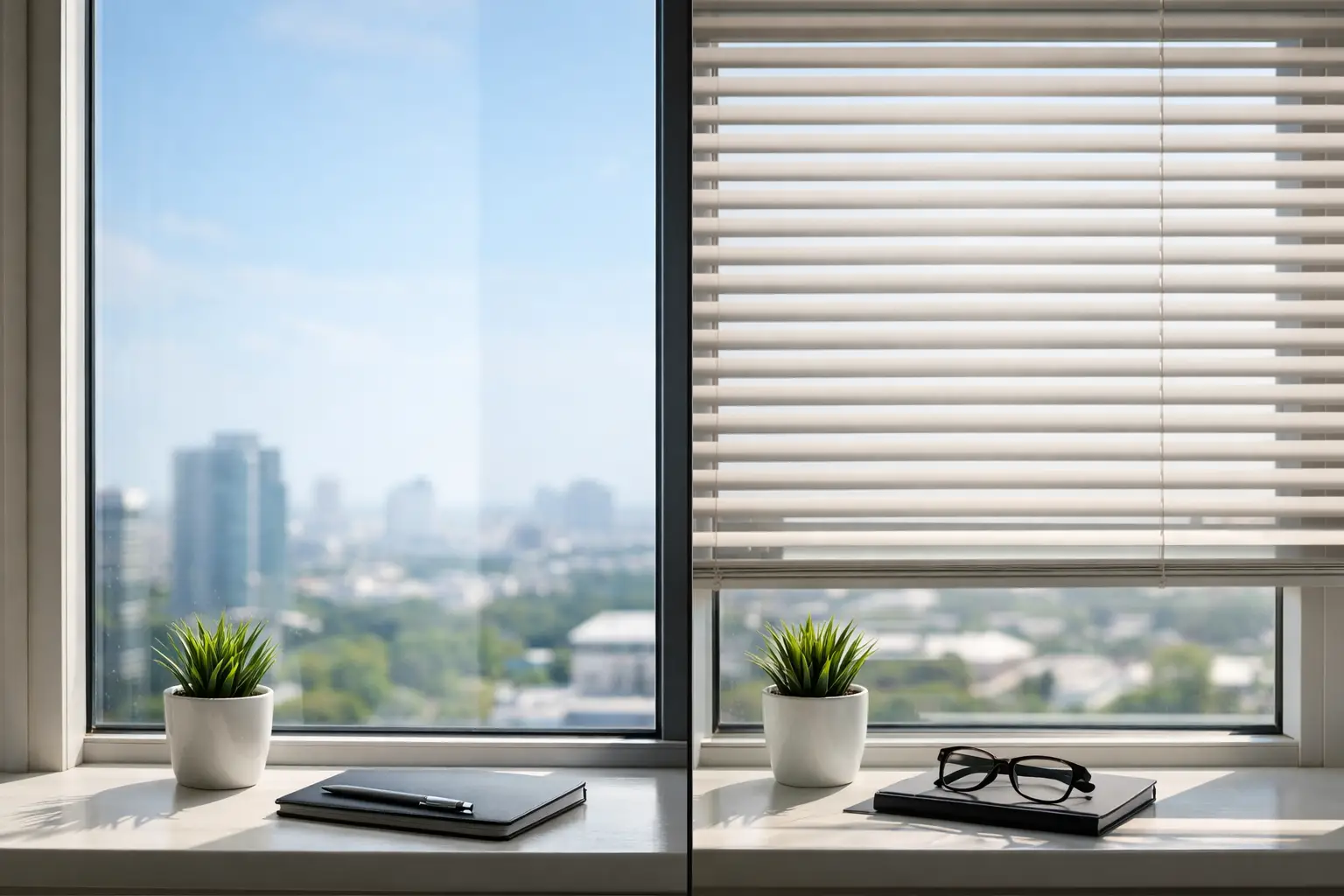
A west-facing room in San Diego can become uncomfortable long before the afternoon is over. If you are weighing window film vs blinds, the better choice comes down to what you need the window to do: block heat, manage glare, add privacy, preserve a view, or change the look of the room. Both can help, but they solve those problems in very different ways.
Blinds are a familiar, adjustable window treatment. Window film is a professionally applied layer that works directly on the glass. For homes, offices, storefronts, RVs, and other sun-exposed spaces, that difference affects comfort, cooling costs, maintenance, and long-term results.
Window Film vs Blinds for Heat Control
For consistent heat reduction, window film usually has the advantage. Quality solar-control film is designed to reject a portion of the sun’s heat before it enters the glass and warms the room. That can reduce hot spots near windows, ease the workload on air conditioning, and make rooms with large glass areas more usable throughout the day.
Blinds can reduce the feeling of direct sunlight when they are closed, especially blackout or insulating styles. However, much of the solar heat has already passed through the window before it is stopped by the blind. The blind itself can heat up, and that warmth may still transfer into the room.
This does not mean blinds are ineffective. They can be a practical choice for a bedroom where darkness matters more than preserving a view, or for a room that only needs occasional shade. But for a sunny living room, glass-heavy office, storefront, or RV, film delivers passive protection all day without requiring anyone to lower or adjust anything.
Glare, UV Protection, and Views
Glare is one of the most common reasons San Diego property owners look beyond standard window coverings. A bright reflection on a television, computer monitor, or polished floor can make a room frustrating to use even when the temperature is manageable.
Blinds control glare well when closed or tilted in the right direction, but the result often comes with a trade-off: less natural light and a blocked view. If you open the slats to enjoy the view, glare can return at the most inconvenient time of day.
Window film reduces glare while keeping the glass clear enough to maintain the view. The amount of glare reduction depends on the selected film, from subtle low-reflectivity options to darker films for high-exposure windows. A professional installer can help match the film to the direction of the window, how the room is used, and the look you want from inside and outside.
Film also provides a major benefit that ordinary blinds may not: UV protection across the full glass surface. Sunlight can fade hardwood flooring, artwork, furniture, merchandise, upholstery, and interior finishes over time. Most quality window films block up to 99% of harmful UV rays. Blinds protect what sits behind them only when they are fully closed, leaving the rest of the room exposed when they are open.
Privacy: Daytime, Nighttime, and Real Expectations
Privacy is where the answer is more situational. Blinds offer adjustable privacy at any hour. Close them at night, and people outside cannot see in. This makes them a strong option for bedrooms, bathrooms, and rooms where complete nighttime privacy is the priority.
Privacy window film can create a clean, permanent solution without cords, slats, or fabric. Frosted and decorative films are especially effective for bathroom windows, front-door sidelights, office partitions, conference rooms, and street-level glass where privacy is needed around the clock. They still allow light into the space while obscuring the view.
Reflective solar films can provide good daytime privacy because the brighter side of the glass reflects more. But they are not a one-way privacy solution after dark. When interior lights are on and it is darker outside, people may be able to see into the building. Homeowners and business owners should understand this before choosing a reflective film strictly for privacy.
For many properties, the best setup is not an either-or decision. Window film can handle daytime heat, UV exposure, and glare, while blinds or curtains provide the added privacy and room-darkening control needed at night.
Appearance and Day-to-Day Maintenance
Blinds add visual texture and can support a room’s decor. Available styles range from basic vinyl to wood, faux wood, cellular shades, roller shades, and motorized systems. They can make sense when the window treatment itself is part of the interior design plan.
The downside is upkeep. Horizontal blinds collect dust on every slat. Cords, mechanisms, and mounts can wear out, while fabric shades may stain or fade. In commercial settings with many windows, keeping blinds clean and evenly adjusted can become a regular maintenance task.
Window film has a lower-profile appearance. Once installed, it does not take up space, block trim, rattle in a breeze, or require daily adjustment. Cleaning is generally similar to cleaning the glass, using the manufacturer’s recommended process after the film has cured. The right film can also improve the exterior appearance of a building by creating a more uniform look across mismatched windows.
For storefronts and offices, that clean appearance matters. Film can reduce harsh sun exposure for customers and employees without making the building feel shut down behind closed blinds.
Cost and Long-Term Value
The upfront cost comparison depends on the product selected and the size, shape, and accessibility of the windows. Basic blinds may cost less initially, especially for a small room. High-end custom shades, motorized systems, and specialty blinds can cost as much as or more than professionally installed window film.
The more useful question is what you expect the investment to do over time. If your main goal is decoration or full room darkening, blinds may offer the better value. If you want to reduce solar heat, protect interiors, cut glare, and potentially lower cooling demand, window film often provides more measurable day-to-day performance.
Film can be particularly valuable on large fixed windows where blinds are rarely used because they are inconvenient, unattractive, or constantly left open. It also makes sense for commercial properties where a comfortable work environment and protection for furnishings or inventory directly affect operating costs.
Choose a film product appropriate for the existing glass. Certain windows, including some dual-pane units, require careful product selection to avoid excess heat absorption and protect the manufacturer’s warranty. An experienced, licensed installer evaluates the glass type, orientation, and performance goals before recommending a solution.
When Blinds Are the Better Choice
Blinds are still the right answer in several situations. Choose them when you need complete darkness for sleeping, want changing levels of privacy throughout the day and night, or want a specific interior design feature. They are also useful in rental properties where a tenant needs a removable, non-permanent option.
They can also complement film rather than compete with it. For example, a homeowner may install solar film on a sun-facing family room to keep the room cooler and protect furniture, then use shades for occasional movie viewing. That combination avoids relying on closed blinds as the only defense against the afternoon sun.
When Window Film Is the Better Choice
Window film is the stronger option when the problem is heat, glare, UV exposure, or constant daytime discomfort. It is well suited to homes with large windows, office buildings with computer workstations, retail spaces with sun-sensitive displays, boats, and RVs where direct sun quickly raises interior temperatures.
It is also an efficient option when you want protection without sacrificing daylight or views. Modern films are available in a range of shades and performance levels, so the goal is not simply to make glass darker. The goal is to select a film that addresses the real issue at that window.
Simmons Solar Control helps San Diego County property owners assess those conditions before installation, including sun direction, glass type, privacy needs, and the desired appearance. That approach helps prevent the common mistake of choosing a film based only on darkness instead of performance.
The right window treatment should make the space easier to live or work in, not create another daily chore. If the sun is driving up comfort complaints, fading interiors, or cooling demand, a professional film assessment can show what the glass can do before you cover it.