



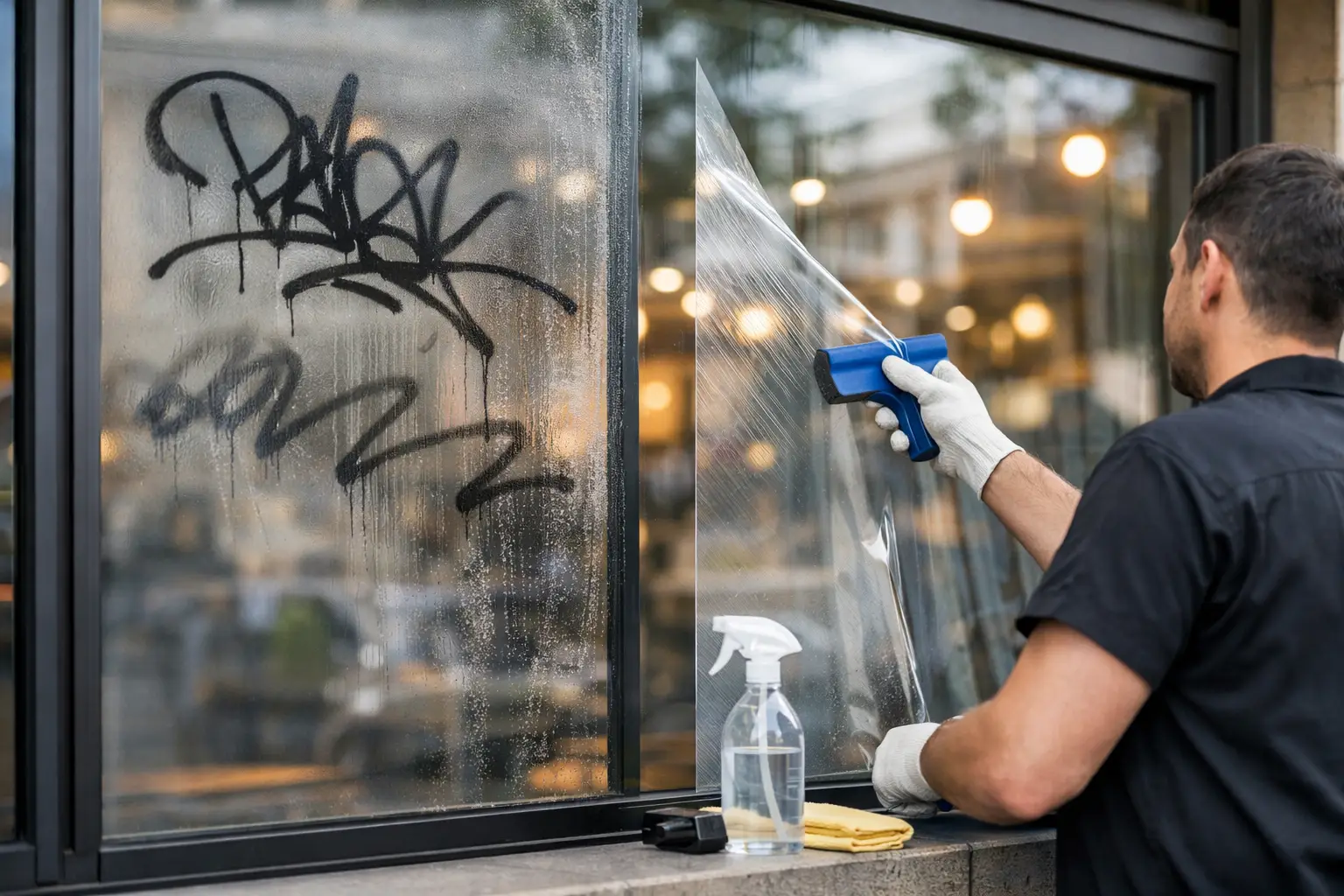
A storefront can go from polished to neglected overnight when marker ink, paint, etching, or scratching shows up on the glass. Storefront window graffiti protection gives San Diego business owners and property managers a practical way to protect that visible investment without replacing an entire pane after every vandalism incident.
Anti-graffiti window film acts as a clear sacrificial layer over the glass. When the film is damaged, a professional installer can remove and replace the film while the original glass remains protected underneath. For retail centers, restaurants, office buildings, transit-facing properties, and ground-floor commercial spaces, that can mean less disruption, lower repair costs, and a storefront that gets back to looking open for business sooner.
Why damaged storefront glass costs more than a repair bill
Graffiti on a window sends a message customers notice immediately. Even when the business is open, paint-covered or scratched glass can make a storefront appear closed, poorly maintained, or unsafe. For tenants, it can affect first impressions. For property managers, recurring vandalism creates a constant maintenance issue that pulls attention and money away from the property.
The biggest expense is not always the glass itself. Replacing a large commercial pane may require ordering specialty glass, coordinating access, securing the opening, and waiting for fabrication. If the window has existing tint, decorative film, safety film, or a custom finish, restoring it can involve additional work. A removable protective film creates a more manageable repair path.
Etching is especially costly because it permanently damages the glass surface. Paint can often be cleaned off, although aggressive cleaning can leave scratches or haze. Acid etching, scoring, and deep scratches are different. Once the glass is physically damaged, cleaning will not restore its original appearance. A properly installed anti-graffiti film takes that damage first.
How storefront window graffiti protection works
Commercial anti-graffiti films are optically clear protective films applied directly to the interior or exterior-facing surface of storefront glass, depending on the product and the exposure. The film is designed to accept the abuse that would otherwise reach the glass. If vandals use spray paint, permanent marker, adhesive, or scratching tools, the damaged layer can be removed and replaced.
The goal is not to make a window impossible to damage. No film can guarantee that a determined person will not cause harm. The goal is to make the damage less permanent and less expensive to correct.
A quality installation starts with evaluating the existing glass, window condition, and location. A busy sidewalk-facing retail window has different risks than a recessed office entry. Ground-level windows near public transit, late-night entertainment, vacant commercial units, and alley-facing entrances often need the most protection.
Film selection also matters. Some applications call for a clear sacrificial film only. Others may benefit from combining protective film with solar-control tint, privacy film, or security film. These products solve different problems, so the right approach depends on what the property needs most.
Anti-graffiti film is not the same as security film
This distinction matters when planning protection for a commercial property. Anti-graffiti film is primarily designed to preserve the surface of the glass from paint, scratches, and etching. It is intended to be removed and replaced after damage.
Security film is designed to help hold broken glass together and improve resistance against forced entry, impact, or breakage. It may be a better fit for a storefront with burglary concerns, but it is not always the most economical sacrificial solution for recurring graffiti. In some cases, the best answer is a layered strategy that addresses both surface vandalism and breakage risks.
An experienced commercial film contractor can review the glass type, exposure, building use, and budget before recommending a product. That avoids paying for a film that addresses the wrong problem.
Where protective film makes the most sense
Storefront window graffiti protection is valuable wherever glass is exposed and replacement would be disruptive. Retail storefronts are the obvious example, but the need extends to shopping centers, medical offices, restaurants, fitness studios, banks, auto dealerships, schools, and multi-tenant office buildings.
Properties with a history of tagging or etching often see the clearest return. If a building has replaced glass more than once because of vandalism, protective film can turn a major repair into a scheduled maintenance item. It is also useful for properties preparing for opening day, remodeling a façade, or upgrading a tenant space where clean glass and a professional appearance matter.
For San Diego County businesses, sun exposure is another consideration. Large west- and south-facing windows can create glare and heat inside the space. A property manager may choose to pair a protective strategy with a solar-control film where compatible products and installation methods allow it. That can help reduce glare and protect furnishings while addressing the visible risk of vandalism.
What happens after graffiti or scratching occurs
Fast response helps prevent a vandalized window from becoming an ongoing eyesore. When a protected window is tagged, document the damage for property records or insurance purposes before attempting cleanup. If the graffiti is limited to the film surface, a professional can inspect whether safe cleaning is possible or whether replacement is the better option.
Trying to scrub away paint with harsh chemicals, abrasive pads, or razor blades can create more damage than the original graffiti. It may scratch the film, affect nearby seals, or leave a dull spot that remains visible in direct sunlight. The same applies to glass without film. Strong solvents and scraping tools can turn a removable problem into a permanent one.
When the film has been etched, deeply scratched, or stained, replacement is usually the cleanest solution. The damaged film is removed, the glass is prepared, and a new protective layer is installed. This process is typically far less involved than replacing a commercial glass panel, especially when the original pane is large or custom-sized.
Choosing the right installer and film
Commercial film work is not a place to cut corners. Poorly installed film can show edge lifting, trapped debris, visible seams, or premature failure. On a storefront, those details affect the appearance customers see every day.
Look for an installer with commercial flat-glass experience, recognized film products, and the ability to assess more than just the immediate damage. The contractor should ask about the type of vandalism, whether the glass has existing tint or coatings, how often incidents occur, and whether the property has security or heat-control concerns as well.
Simmons Solar Control provides mobile commercial window film installation throughout San Diego County, backed by more than 20 years of experience and a California contractor license. A site evaluation and free estimate can help determine whether a clear anti-graffiti film, solar-control film, security film, or a combined approach is the best value for the property.
Price should be considered in the context of the glass it protects. The lowest-cost film is not necessarily the best choice if it yellows, lifts, or has to be replaced before it has done its job. Premium film and careful installation cost more upfront, but they can protect the appearance of a commercial property and simplify the response when vandalism occurs.
Build protection into your maintenance plan
The most effective time to install protective film is before an incident, not after a pane has been damaged. New storefront construction, tenant improvements, façade upgrades, and window replacement projects are all smart times to consider it.
Property managers can also keep records of vandalism locations and timing. A repeated pattern may reveal that only certain windows need film or that a specific entrance needs better lighting, cameras, or landscaping adjustments. Window film works best as one part of a practical property-protection plan.
A clean, clear storefront tells customers that the business is active and cared for. When vandalism happens, sacrificial protective film helps ensure that message is easier and less expensive to restore.