



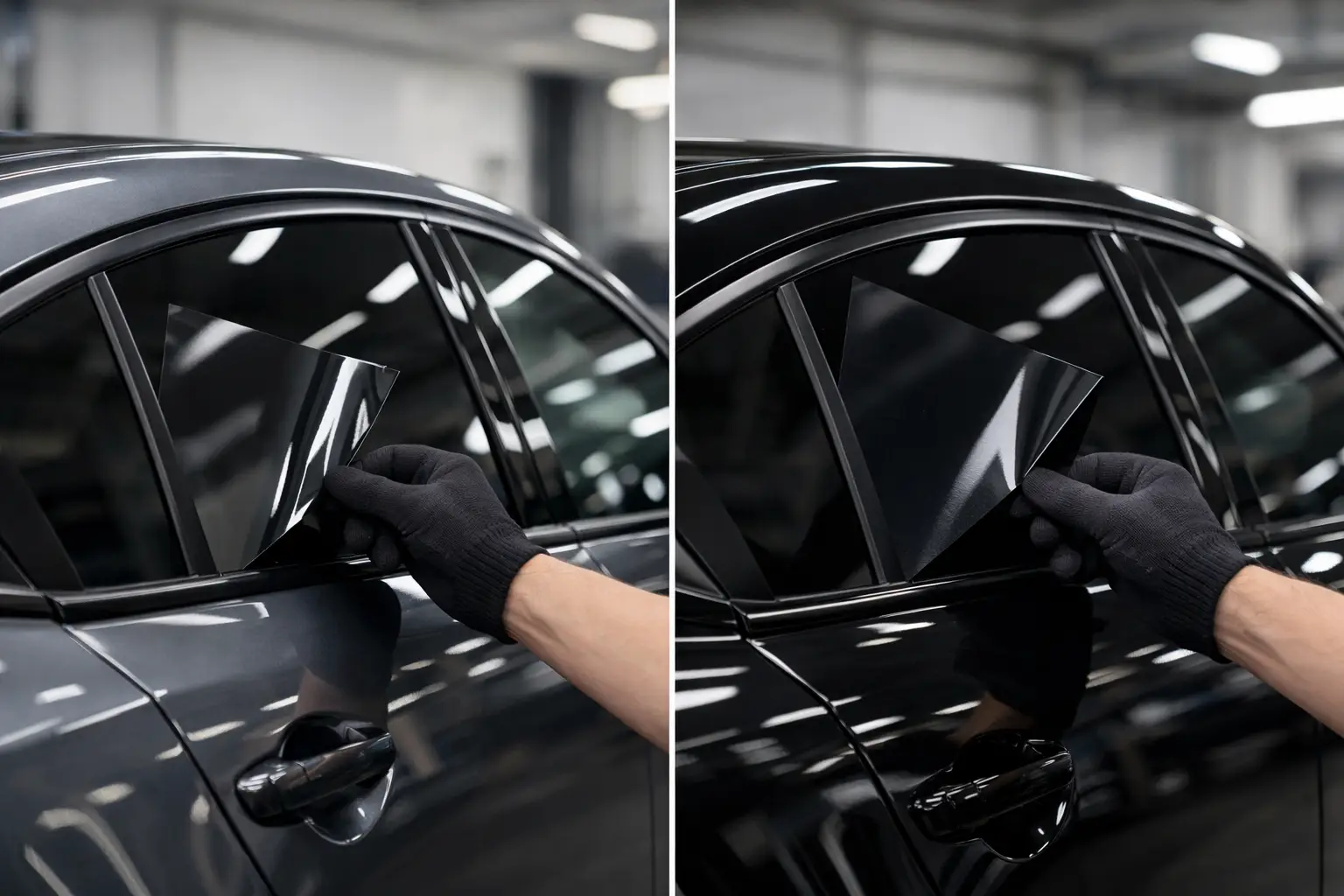
When a customer asks about ceramic tint vs carbon tint, they are usually trying to solve a real problem – a hot cabin, harsh glare, fading interior surfaces, or the feeling that their current tint just is not doing enough in San Diego sun. Both options are solid upgrades over basic dyed film, but they are not interchangeable. The right choice depends on how you use the vehicle, how much heat control you expect, and how long you plan to keep it.
For most drivers, this decision comes down to performance versus budget. Carbon tint gives you a noticeable step up in comfort and appearance without jumping to the highest price tier. Ceramic tint costs more, but it delivers stronger heat rejection and a more premium overall result, especially for people who spend a lot of time on the road or park outside regularly.
Ceramic tint vs carbon tint at a glance
Carbon tint is built with carbon-based particles that help block infrared heat and reduce glare without relying on metal. That matters because metalized films can interfere with electronics, GPS, cell service, and radio reception. Carbon film also has a clean, matte finish that many drivers prefer because it looks darker and more refined than entry-level tint.
Ceramic tint uses advanced ceramic particles to block heat and UV rays at a higher level. Like carbon film, it is non-metallic, so it will not create signal issues. Where ceramic stands out is thermal performance. If your main complaint is that your vehicle gets brutally hot after sitting in the sun, ceramic is usually the stronger answer.
Both films can improve comfort, protect the interior, and give the vehicle a more finished look. The difference is how far you want to take those benefits.
Heat rejection is where ceramic usually pulls ahead
In Southern California, heat rejection is not a minor feature. It is often the reason people call for window tint in the first place. Carbon tint does a respectable job reducing heat, and for many drivers that is enough. You will feel less solar load through the glass, and your AC does not have to work as hard to keep up.
Ceramic tint typically goes further. It is designed to reject a greater amount of infrared heat, which is the part of sunlight that makes a cabin feel like an oven. That difference is especially noticeable on long commutes, in stop-and-go traffic, and on vehicles with large glass areas like trucks, SUVs, and Teslas.
If you want the best chance of stepping into a cooler vehicle after it has been parked outdoors, ceramic is usually worth the extra investment. If you simply want a meaningful comfort upgrade without paying top-tier pricing, carbon can still be a smart choice.
Why this matters in daily driving
Better heat rejection is not just about comfort during the first five minutes after you get in. It can also help reduce AC strain and make the cabin feel more stable throughout the day. That matters for families, rideshare drivers, sales professionals, and anyone who spends serious time behind the wheel.
For short local trips, the difference between carbon and ceramic may feel less dramatic. For high-mileage drivers, it often becomes easier to justify ceramic because the performance benefit shows up every day.
UV protection and glare reduction
Both ceramic and carbon tint provide strong UV protection when you choose a quality film and professional installation. That is important for protecting dashboards, leather, plastics, and upholstery from fading and breakdown. It also helps protect skin from long-term UV exposure during daily driving.
Glare reduction is another area where both films perform well. If bright afternoon sun or headlight glare is making it harder to drive comfortably, either option can make a noticeable difference. The exact result depends on the shade you choose and the film line being installed.
Ceramic can have an edge in overall optical quality, depending on the product. Higher-end ceramic films often provide a very clear view outward, even while delivering strong solar performance. That said, a good carbon film can still look excellent and perform well for the average driver.
Appearance and finish
A lot of people focus on performance first, but appearance still matters. Window tint should improve the look of the vehicle, not just make it darker.
Carbon tint is popular because of its rich, non-reflective finish. It tends to produce a clean factory-style appearance that works well on sedans, trucks, SUVs, and performance vehicles. If your goal is a sleek look without excessive shine, carbon often checks that box.
Ceramic tint also looks premium, but the visual difference between ceramic and carbon is not always dramatic from the outside. Most customers choose ceramic because of what it does, not just how it looks. If appearance is your main priority and your budget is more limited, carbon may give you the better value.
Signal interference and modern vehicles
Years ago, some window films caused problems with electronics because they used metallic layers. That is less of a concern with carbon and ceramic because both are non-metallic options.
That makes both film types a good fit for modern vehicles with phone connectivity, GPS, satellite radio, Bluetooth, and electronic toll systems. If you drive a newer vehicle loaded with tech, this is one reason both carbon and ceramic are considered safer choices than old-school metalized products.
For EV owners and drivers of newer luxury vehicles, ceramic is often the preferred upgrade because it combines top-level heat rejection with signal-safe performance. Still, carbon remains a strong option if you want reliable results without stepping into the highest price range.
Cost differences and long-term value
This is where the decision becomes practical. Carbon tint costs less than ceramic tint in most cases, and that price gap can matter if you are tinting multiple vehicles or trying to stay within a firm budget.
The key question is not just what each film costs today. It is what you want the film to do over the next several years. If you are keeping the car long term, drive often, or park outside most days, ceramic may offer better long-term value because you benefit from the added heat rejection every time you use the vehicle.
If the vehicle is a secondary car, a short-commute driver, or something you may sell in the near future, carbon may make more financial sense. You still get a quality upgrade in comfort, glare control, UV protection, and appearance without overbuilding the solution.
The best choice depends on your priorities
If your top priority is the best heat rejection available in a non-metallic film, ceramic is the stronger pick. If your priority is balancing performance and cost, carbon is often the sweet spot.
That is why an honest recommendation should start with how the vehicle is used, not just which product sounds more advanced.
Ceramic tint vs carbon tint for different drivers
For commuters in San Diego County, ceramic often makes the most sense because daily sun exposure adds up fast. The same goes for drivers with dark interiors, leather seats, large windshields, or vehicles that spend hours parked outside.
For budget-conscious drivers who still want more than basic tint, carbon is a dependable choice. It improves comfort, gives the vehicle a sharp look, and avoids the electronics issues associated with metallic films.
For luxury vehicles, EVs, and high-end trucks or SUVs, ceramic is often the better fit because it matches the premium nature of the vehicle and delivers the strongest performance. For older vehicles or practical daily drivers, carbon can be the more balanced option.
Why installation quality matters as much as film type
Even the best film will disappoint if it is poorly installed. Contamination, edge gaps, peeling, bubbling, and inconsistent application can all reduce the benefits you are paying for. That is why the installer matters just as much as the product line.
A professional installation should include proper film selection, legal shade guidance, clean prep work, and a finished result that looks right and performs as expected. At Simmons Solar Control, that means helping customers choose film based on real use, not just upselling the most expensive option.
A good tint job should look clean on day one and continue performing season after season. That is where experience, product knowledge, and warranty-backed workmanship make a real difference.
Which one should you choose?
If you want the highest level of heat control, especially for heavy daily driving in strong sun, ceramic tint is usually the better investment. If you want a strong all-around upgrade with a lower upfront cost, carbon tint is a very solid choice.
There is no one-size-fits-all answer, and that is the point. The best film is the one that matches your vehicle, your budget, and the way you actually use the car. A quick conversation with an experienced installer can usually narrow that down fast and save you from paying for the wrong level of performance.
When you are comparing tint options, think beyond the label. The right film should make your vehicle more comfortable, better protected, and easier to live with every day.