



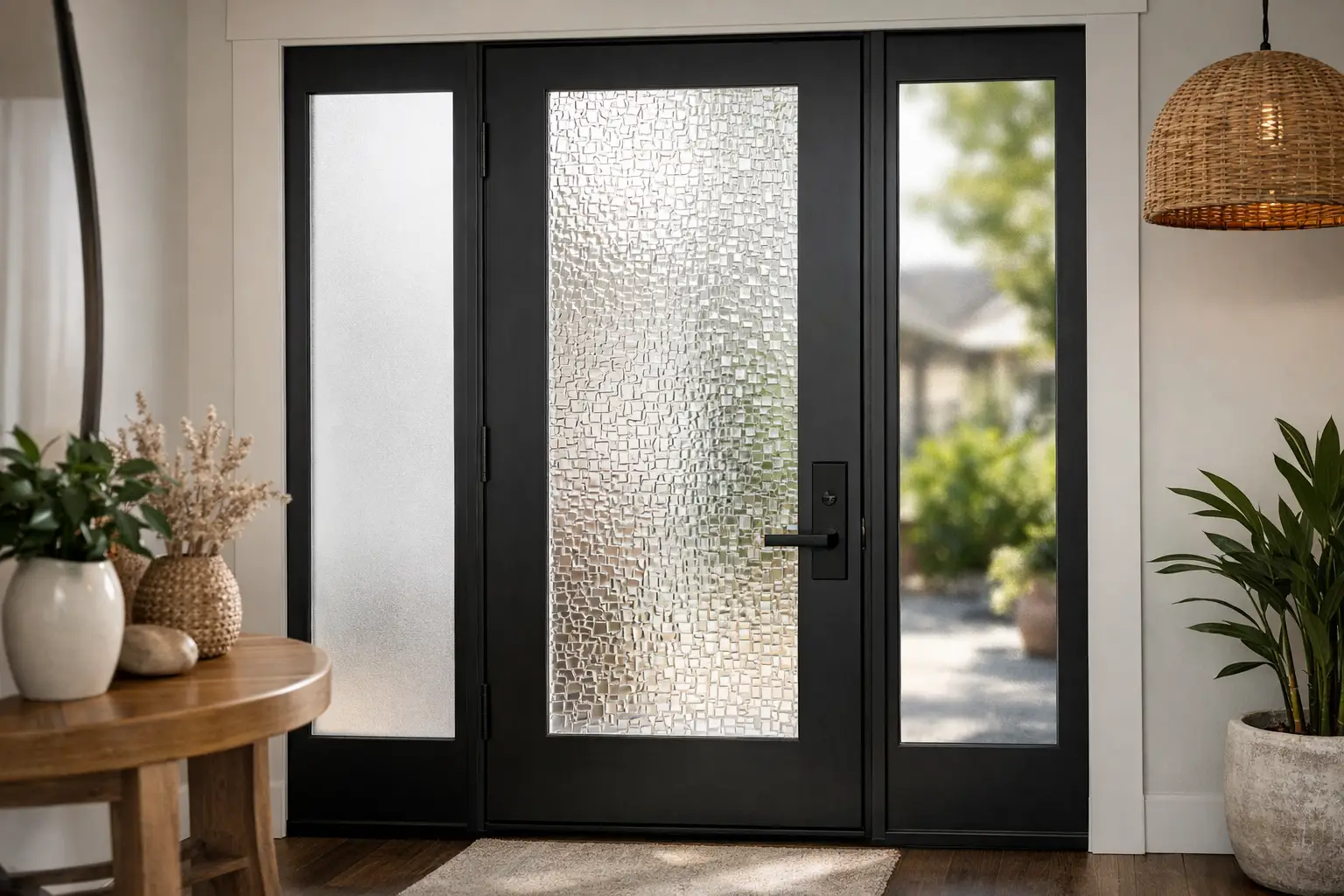
Your front door is supposed to welcome people in – not put your entryway on display. If you have clear glass at the door, sidelights, or decorative panes that let neighbors and passersby see straight inside, privacy window film for front door glass is one of the simplest ways to fix it without blocking natural light.
For many San Diego homeowners, the issue is not just privacy. Front entry glass can also bring in glare, UV exposure, and heat right where you feel it first. The right film can help with all of that, but only if you choose the right type for the glass, the amount of sunlight, and the level of privacy you actually want.
Why privacy window film for front door glass makes sense
Replacing door glass is expensive. Hanging curtains over a front door usually looks bulky and cuts down daylight. Blinds on narrow sidelights are hard to clean and often feel like a temporary fix. Window film solves a different problem in a cleaner way – it keeps the glass functional while changing what it does.
A good front door film can obscure direct views into the home, soften harsh sunlight, reduce fading on nearby flooring and furniture, and improve the overall look of the entry. That matters if your front hallway faces the street or if your door gets strong afternoon sun.
There is a trade-off, though. Not every privacy film gives the same result from both sides of the glass. Some work best in daylight and lose privacy after dark when interior lights are on. Others create a frosted finish that blocks views more consistently but also change the appearance of the door more noticeably. Choosing the right film starts with being honest about how your entry is used.
The main types of front door privacy film
Most front door applications fall into three categories: frosted films, decorative films, and reflective solar films. Each can work well, but they solve slightly different problems.
Frosted film
Frosted film is the most common choice when homeowners want steady privacy without making the door feel dark. It blurs shapes and blocks direct visibility while still letting light pass through. For front doors with clear glass inserts or sidelights, this is often the most practical option.
It also gives a clean, finished look that works with modern homes, traditional entries, and small office doors. If the goal is simple privacy first, frosted film is usually the safest answer.
Decorative film
Decorative films offer privacy with more visual style. These may have etched, textured, or patterned finishes that mimic custom glass at a lower cost. They are useful when the entry needs privacy but also needs to look intentional from the curb.
This can be a strong fit for homeowners who want to upgrade appearance and privacy at the same time. The trade-off is that some patterns offer less concealment than a true frost, especially at certain angles.
Reflective solar film
Reflective film can add daytime privacy while also reducing heat and glare. From the brighter exterior side, it creates a mirrored effect that makes it harder to see inside. On sunny San Diego exposures, this can be appealing.
The limitation is predictable – at night, when the interior is brighter than outside, the effect can reverse. If you need round-the-clock privacy at the front entry, reflective film alone may not be enough. It can still be a strong choice if sun control is your bigger concern.
What matters most before you choose
The best film for a front door depends on the glass itself, not just the look you want.
Clear, textured, or decorative glass
If your front door already has textured or patterned glass, you may only need a lighter privacy enhancement or solar control layer. If the glass is completely clear, you have more flexibility, but the film has to do more work.
Decorative door glass can also have contours, caming, or raised surfaces that affect what film can be installed and how clean the result will look. A professional assessment helps avoid a mismatch.
Sun exposure
A shaded front porch needs a different solution than a west-facing door that takes hard afternoon sun. In Southern California, heat gain through entry glass is often more noticeable than homeowners expect. If your front hallway gets hot or overly bright, privacy alone should not be the only factor.
Some films are designed to reduce glare and UV exposure while maintaining a lighter appearance. Others focus mainly on concealment. The right balance depends on whether comfort, fading protection, or privacy is the bigger problem.
Safety and glass compatibility
This is where experience matters. Not every window film is appropriate for every door glass type. Some doors use tempered glass, insulated glass units, or specialty decorative panels that require careful product selection. A poor match can affect performance and, in some cases, increase the risk of thermal stress.
That is one reason professional installation matters more on doors than many people realize. A front door gets constant use, vibration, and exposure. The film needs to be suited to the glass and installed cleanly enough to hold up over time.
Common front door problems film can solve
Front door film is often requested for privacy, but that is rarely the only issue. In practice, homeowners usually call because the entry area is doing more than they want it to do.
If people can see into the home from the street, film can create a more comfortable sense of separation without making the space feel closed off. If sunlight pours through the door and hits a hallway, staircase, or living room floor, the right film can reduce glare and help protect interior finishes. If the door is the visual weak point of an otherwise polished exterior, decorative or frosted film can make it look more refined.
For homes with sidelights, film is especially useful because those narrow glass panels often create the biggest privacy issue. Even when the main door has some design detail, sidelights can leave a direct view into the house.
DIY film vs professional installation
There are plenty of DIY kits on the market, and some homeowners do try them first. For a small bathroom window, that can be workable. For a front door, the standard is different.
Entry glass is one of the first things people see. Bubbles, uneven edges, contamination, and poor trimming stand out immediately. Door glass also tends to have tight frames, handles, divided lites, and decorative features that make installation less forgiving than a flat window.
Professional installation gives you cleaner fit and finish, but just as important, it helps ensure the film is compatible with the glass and the sun exposure. A licensed, experienced installer can recommend a product based on performance, not guesswork. That matters when you want the result to last and look right from both inside and outside.
For homeowners in San Diego County, this is usually the smarter route. The cost difference is often smaller than the cost of redoing a failed DIY job, especially on a prominent front entry.
What a good result should look like
A well-installed privacy film should not call attention to mistakes. It should look intentional, clean at the edges, and consistent across the entire glass surface. From inside, you should still get useful daylight. From outside, the privacy effect should match what was promised.
You should also expect realistic guidance. No installer should pretend one film does everything perfectly. If you want maximum privacy day and night, that may mean a frosted finish instead of a reflective one. If you want strong heat rejection with some privacy, a different film may be the better fit. The right recommendation depends on your priorities.
At Simmons Solar Control, that kind of practical guidance is what separates a quick sale from a good installation. The goal is not just to cover glass. It is to improve comfort, privacy, and appearance in a way that makes sense for the home.
Is privacy window film for front door glass worth it?
If your front door brings in too much visibility, glare, or sun, the answer is usually yes. It is a relatively fast upgrade, costs far less than replacing glass, and can noticeably improve how the entry looks and feels.
The key is choosing a film that matches the real problem. Some homeowners need full-time privacy. Others want a brighter entry with less glare. Some care most about curb appeal. Those are different jobs, and the film should be selected that way.
A front door should let light in without giving up comfort or privacy. When the film is chosen carefully and installed properly, that is exactly what it does.
If you are looking at your front entry every day and thinking it needs a better balance of light, privacy, and protection, that is usually a sign the glass should be working harder for you.