



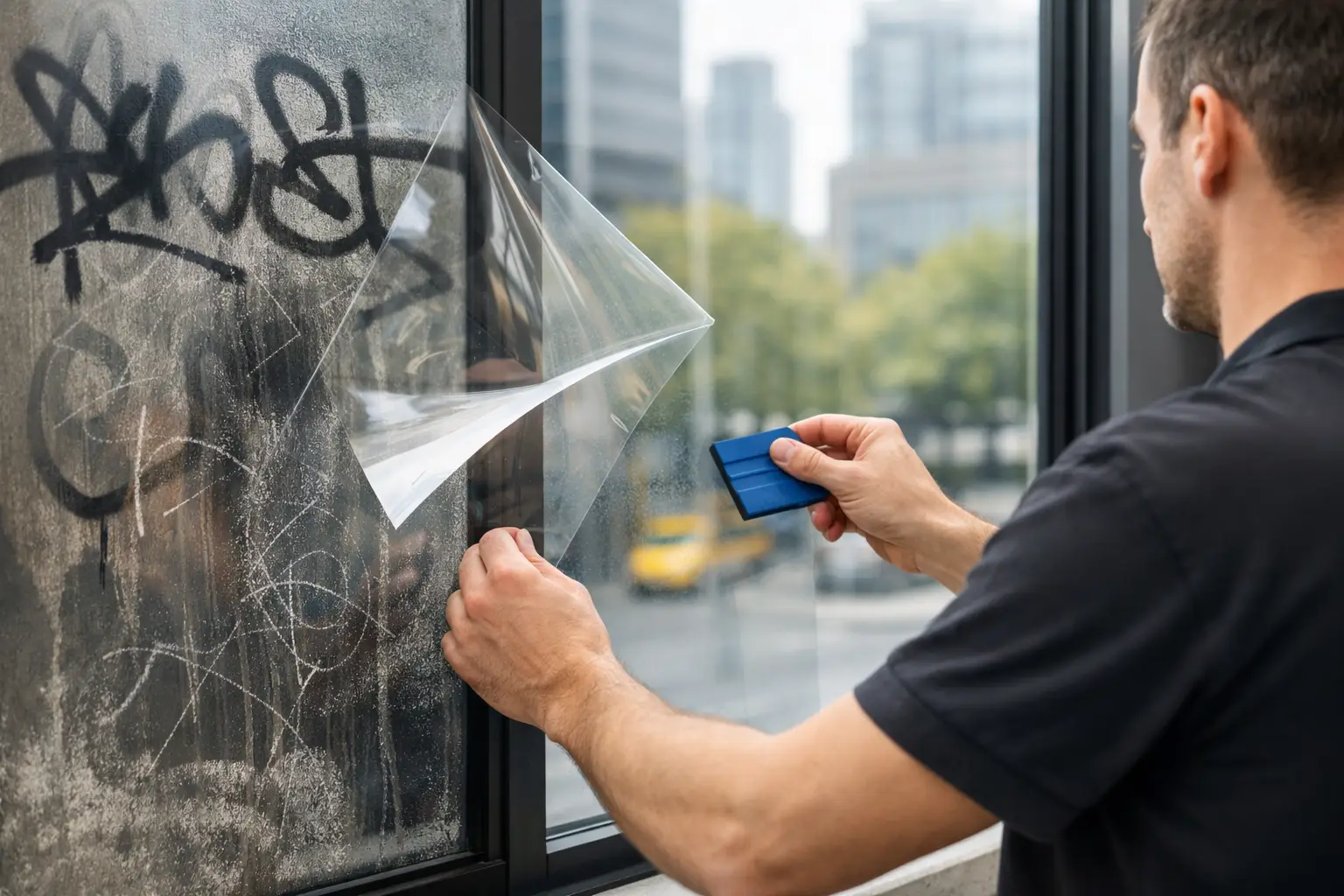
A single tag, scratch, or acid etch can turn a clean storefront or glass entry into an expensive problem overnight. Anti graffiti film for windows is designed for exactly that situation – it adds a sacrificial protective layer over the glass, so vandalism hits the film first instead of the window itself.
For San Diego property owners, that matters more than most people realize. Replacing damaged glass is rarely just about the pane. It can mean custom sizing, downtime for tenants or customers, labor costs, and a property that looks neglected until repairs are complete. A protective film gives you a faster, more cost-effective way to deal with repeat vandalism and keep your building looking professional.
What anti graffiti film for windows actually does
Anti graffiti film is a clear, optically clean polyester film applied to the surface of existing glass. Its job is simple: take the abuse so the glass does not have to. When someone scratches the surface, marks it with paint, or etches it with chemicals, the damage is often limited to the film layer.
If the vandalism is severe enough, the film can be removed and replaced without replacing the entire glass panel. That is the main value. You are not making the glass indestructible. You are creating a removable barrier that is much less expensive to replace than the glass behind it.
This distinction is important. Some customers assume anti-graffiti film prevents any visible damage at all. In reality, it reduces the financial impact and speeds up recovery. It is a practical protection product, not a magic shield.
Where anti graffiti film for windows makes the most sense
This type of film is especially useful on ground-level glass and any location with regular public access. Storefronts, office entries, restaurant windows, schools, elevators, transit-facing buildings, and apartment common areas are common candidates.
In residential settings, it can also make sense for street-facing windows, glass doors, and detached properties that sit vacant for periods of time. Most homeowners do not need it on every pane of glass. Usually, the best approach is to protect the most exposed areas first.
For commercial properties, the value often comes down to visibility and replacement frequency. If a building has already dealt with tagging, scratching, or repeated cleanup costs, installing protective film on vulnerable glass can quickly pay for itself.
How it compares to replacing damaged glass
Glass replacement sounds straightforward until you price it out. Once labor, measurement, lead time, disposal, and possible interruptions to business operations are factored in, the bill climbs fast. If the glass is tempered, oversized, tinted, or part of a specialized storefront system, the cost goes even higher.
Anti-graffiti film changes that equation. Instead of replacing the whole pane after minor to moderate damage, you may only need to replace the surface film. That typically means lower material cost, less downtime, and a cleaner-looking property sooner.
There is a trade-off, though. If a vandal damages the film, the film still needs to be removed and reinstalled by someone who knows how to do it cleanly. If you are dealing with constant attacks in the same location, you may be replacing film more often than you would like. Even then, it is usually a better option than replacing glass over and over.
What kinds of damage it helps with
The most common threats are scratching, keying, marker stains, paint, and acid etching. Not every film performs the same way against every form of damage, which is why product selection matters.
A thicker protective film generally provides better sacrificial protection, but thickness alone is not the whole story. Adhesive quality, optical clarity, and proper installation all affect how well the film performs and how cleanly it can be replaced later.
It also helps with routine wear in high-traffic areas. In some properties, the issue is not dramatic vandalism but repeated scuffs, abrasion, or accidental damage from carts, equipment, or heavy public use. In those environments, the film works as a maintenance tool as much as a security measure.
Will it change the look of your glass?
In most cases, no. A quality anti-graffiti film is designed to remain clear and maintain the appearance of the glass. That is one reason it is a popular choice for storefronts and entry systems where appearance matters.
That said, clarity depends on film quality and installation quality. A poorly installed film can show contamination, edge lift, or visual distortion. On decorative, coated, or older glass, the final look can vary slightly, so it is worth having the glass evaluated before installation.
For business owners, this is where professional installation earns its keep. Protection is the goal, but appearance still matters. A clean, nearly invisible result is part of the value.
Why installation matters more than most people expect
Protective film only performs well when it is installed correctly. The glass must be thoroughly cleaned, the film must be applied without contamination, and the edges need to be finished properly so the film stays put under normal use.
A rushed install can lead to peeling, trapped debris, or premature failure. That defeats the purpose. If the film has to be replaced too early because of a poor installation, the savings disappear.
Experienced installers also help you avoid mismatching the product to the application. A busy retail storefront, a school entry, and a residential patio door may all need different recommendations based on exposure, traffic, and budget. That kind of guidance is part of getting a result that lasts.
Is anti-graffiti film the same as security film?
No, and this is a common point of confusion. Anti-graffiti film is primarily a surface-protection product. Security film is designed to help hold glass together under impact and make forced entry more difficult.
Some properties need one or the other. Some need both. If your main issue is scratching, tagging, and acid etching, anti-graffiti film is the right conversation. If your concern is smash-and-grab risk or glass breakage, security film may be the better fit.
There are situations where a layered protection strategy makes sense, especially for ground-floor commercial properties. The right answer depends on what kind of damage you are actually trying to prevent.
Who should consider it now instead of later
If your property has already been vandalized once, waiting for the next incident usually costs more than getting ahead of it. The same goes for properties in visible commercial corridors, near transit, or in areas with regular pedestrian traffic.
Property managers often see the value quickly because they are balancing repair budgets, tenant expectations, and curb appeal. Business owners feel it in lost presentation and customer perception. Homeowners usually look at it differently – they want to avoid the hassle of replacing expensive glass and keep the house looking cared for.
In all three cases, the logic is the same. Prevention is cheaper than replacement when the risk is real.
What to ask before choosing a film installer
Start with product quality, experience, and whether the installer understands both protection and glass compatibility. Not every film is right for every pane, and not every contractor works with anti-vandal applications regularly.
It also makes sense to ask how damaged film is removed and replaced, what kind of warranty applies, and whether the installer can evaluate only the highest-risk areas instead of pushing a whole-building install. A practical recommendation is usually the sign of an experienced contractor.
For San Diego customers, local service matters too. Fast response and knowledgeable installation can make a big difference when you are protecting active storefronts, office entries, or street-facing residential glass. Companies like Simmons Solar Control that already work across residential and commercial film applications tend to understand those real-world priorities.
Anti-graffiti film is not about overbuilding a problem. It is about putting an affordable, replaceable barrier in front of expensive glass, so one bad night does not turn into a major repair bill the next morning.