



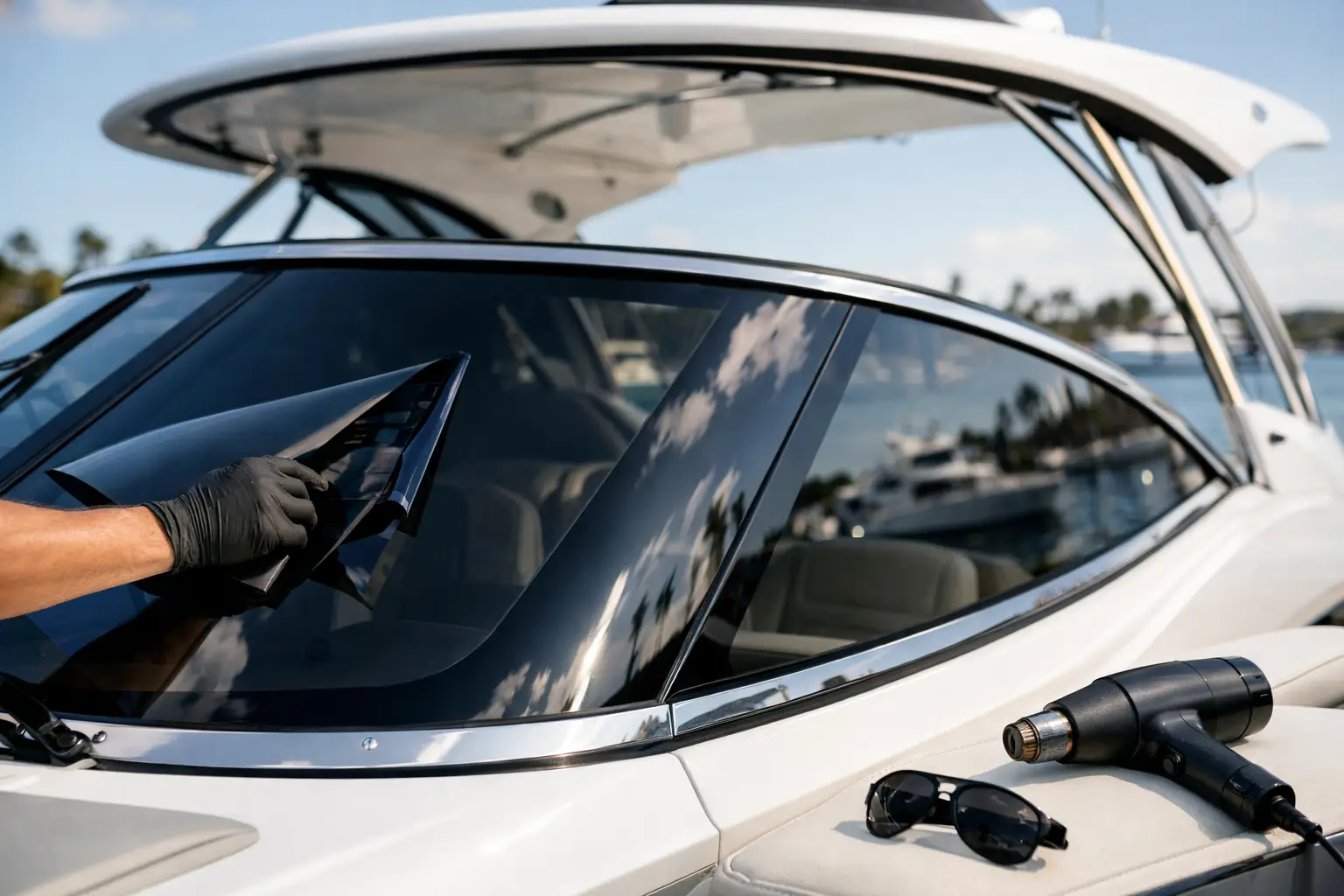
A bright day on the water can turn uncomfortable fast when the sun is beating through the glass and reflecting off every hard surface around you. If you have been searching for boat window tinting near me, you are probably not looking for a cosmetic add-on. You want less glare, better heat control, more protection for your interior, and a cleaner, more comfortable ride.
Marine window film can deliver all of that, but only when the product and installation match the way your boat is actually used. Salt air, constant sun, moisture, and curved glass create a different set of demands than a typical car or home project. That is why choosing the right installer matters just as much as choosing the right film.
Why boat window tinting near me is worth a closer look
On the water, sunlight feels more intense because it is coming from above and bouncing back from below. Glare off the water can make it harder to see electronics, read gauges, or simply enjoy the ride. Cabin areas heat up quickly, especially in Southern California, where boats often sit exposed for long periods.
A professionally installed marine window film helps reduce solar heat and cut harsh glare without blocking your view. It can also filter UV rays that fade upholstery, dry out trim, and wear down interior finishes over time. For many boat owners, that means the cabin stays more usable during midday hours and the interior holds up better season after season.
There is also a privacy benefit, depending on the film you choose. Some tints make it harder for people at the dock or in nearby slips to see into your cabin during the day. That can make your boat feel more secure and more comfortable when you are spending extended time onboard.
What makes marine tint different from auto tint
This is where many buyers get tripped up. Not every film that works well on a car should go on a boat. Marine environments are harder on materials. The film has to stand up to UV exposure, moisture, temperature swings, and the day-to-day wear that comes with boating.
Boat glass can also be more complex. Some windows are curved, some are unusually shaped, and some are made from materials that require careful product selection. A film that performs well on flat automotive glass may not be the right choice for a boat windshield or enclosed cabin window.
That is why a local, experienced installer should evaluate the glass type, the boat layout, and your main goals before recommending a product. If your biggest issue is heat, the best option may be different from what works for privacy or appearance. It depends on how you use the boat and where it spends most of its time.
The real benefits of professional boat tinting
A good boat tint job should solve practical problems, not create new ones. The biggest improvement most owners notice is comfort. With less heat entering through the glass, enclosed spaces feel less stuffy and more manageable, especially when the boat is docked or idling.
Glare reduction is another major advantage. Whether you are navigating, checking chartplotters, or relaxing in the cabin, less reflected light makes the space easier on your eyes. That can be a safety upgrade as much as a comfort upgrade.
UV protection matters more than many people realize. Sun damage does not happen all at once. It shows up gradually in faded seating, brittle vinyl, discolored panels, and worn finishes. Quality marine film helps protect those surfaces, which can extend the life of your interior and reduce upkeep costs.
Some films also add a layer of shatter resistance. That does not turn your glass into safety armor, but it can help hold broken pieces together if the glass is impacted. For boat owners thinking long term, that added protection can be part of the value.
How to choose the right film for your boat
The right film depends on your priorities. If heat rejection is the main issue, look for a high-performance film designed to reduce solar energy while maintaining visibility. If your boat has a dark cabin and you do not want it to feel closed in, a lighter film may make more sense than going as dark as possible.
Glare control is often the deciding factor for helm areas and front-facing glass. But visibility is critical too. The darker the film, the more that trade-off matters in low light, early morning, or evening conditions. On some windows, a moderate shade can give you enough glare relief without making visibility a problem.
You also need to consider appearance. A clean, consistent tint can sharpen the look of a boat, but the finish should still fit the style of the vessel. Reflective films, neutral tones, and darker shades all create a different look. A qualified installer can explain what is available and what is appropriate for marine use.
Questions to ask when comparing local installers
If you are typing boat window tinting near me into a search bar, you will likely find companies that tint cars, homes, offices, and sometimes boats. That does not mean all of them have the same level of marine experience.
Ask what kind of marine tinting they do and how often they do it. Ask whether they work with recognized film brands and whether the installation is backed by a warranty. Ask if they are licensed and whether they offer mobile service if your boat is stored at a marina, boatyard, or private dock.
You should also ask about the process. A professional installer should talk through glass compatibility, film options, expected performance, and any limitations. If someone promises a one-size-fits-all answer without seeing the boat or asking questions, that is usually a red flag.
In San Diego, convenience matters too. Mobile service can save time and make the project much easier to schedule. For many boat owners, that alone is a major reason to work with a local contractor instead of trying to coordinate transport or waiting for an opening at a far-off shop.
What to expect from the installation process
A proper installation starts with evaluating the windows and discussing your goals. The installer should identify the glass type, note any curves or unusual shapes, and recommend films that fit both the boat and the way you use it.
From there, surface preparation is critical. Marine glass tends to collect residue, salt, and environmental buildup. If the glass is not cleaned correctly before installation, the final result can suffer. Good prep work is a big part of getting a clean finish and long-term performance.
After installation, there is usually a curing period. Depending on conditions, the film may take some time to fully settle. A reputable installer will explain what to expect, how to care for the windows afterward, and when the film will reach its final appearance.
Local matters when you are buying marine tint
Boat owners in San Diego deal with strong sun, warm weather, and long boating seasons. That makes local knowledge valuable. An installer who works in this environment understands the intensity of UV exposure here and the importance of balancing heat reduction, visibility, and durability.
That local experience can also help when recommending film for specific use cases, whether your boat spends most of its time offshore, at the bay, or in storage between weekends. Conditions are not the same for every vessel, and the right recommendation should reflect that.
For owners who want a practical upgrade with measurable value, working with an experienced local contractor is usually the better move. A company like Simmons Solar Control brings the kind of film knowledge, mobile convenience, and installation experience that matters when the goal is long-term performance, not just a darker window.
Searching for boat window tinting near me is really about finding a service that makes your time on the water more comfortable and your boat easier to protect. If the installer asks the right questions, uses the right film, and treats the job like a marine project instead of a generic tint job, you will feel the difference every time the sun is high and the water is bright.