



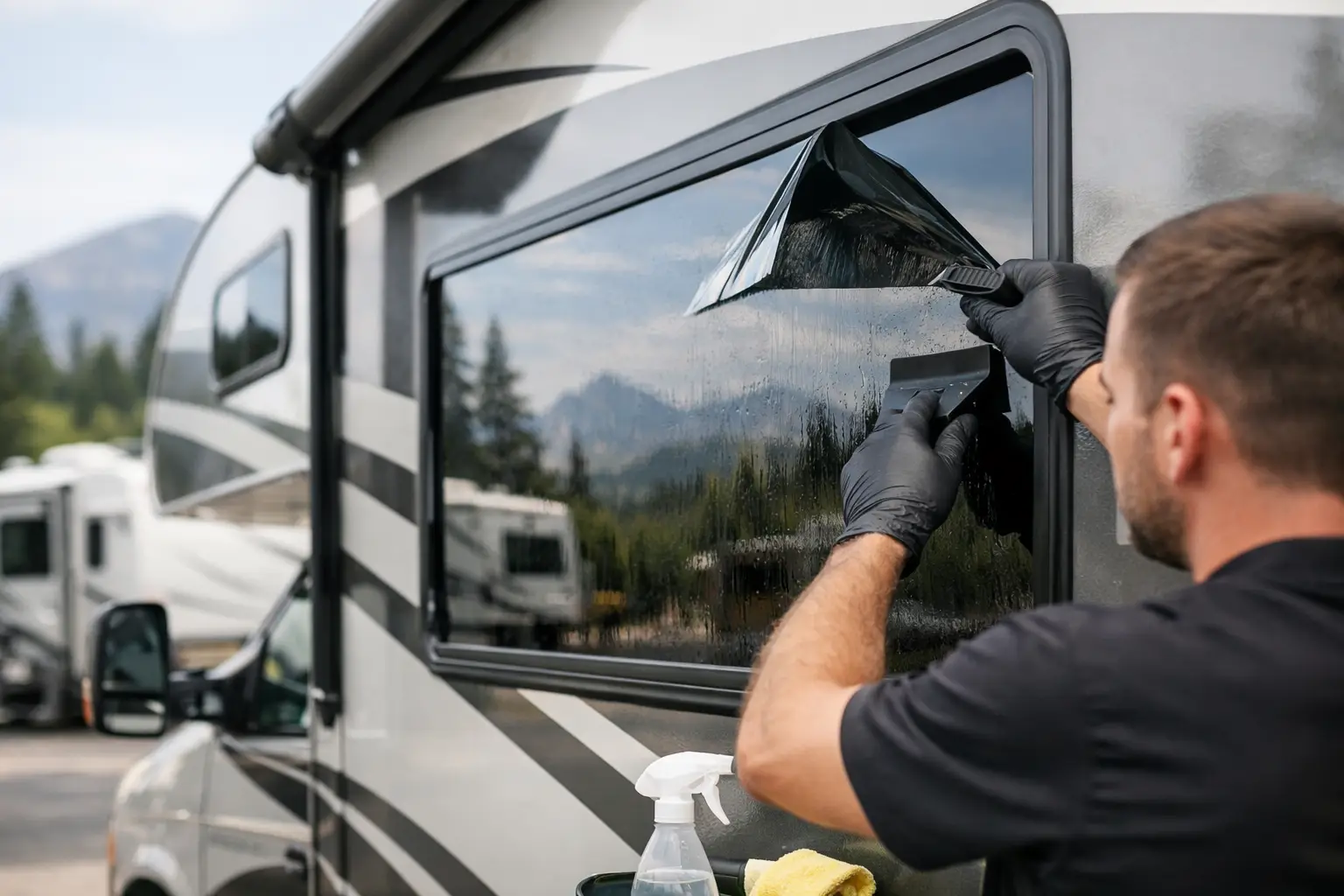
If you have ever stepped into your RV after it has been parked in the San Diego sun for a few hours, you already know why rv window tinting cost comes up so often. The real question is not just what you will pay up front. It is what you get back in comfort, glare control, interior protection, and day-to-day usability.
For most RV owners, window tinting is less about appearance and more about making the coach easier to live with. A good film installation can help reduce cabin heat, cut down on harsh glare, protect upholstery from UV damage, and add privacy without turning the interior into a cave. Cost matters, but value matters more – especially on an RV you use for travel, weekends, or full-time living.
What affects RV window tinting cost?
There is no one-size-fits-all price because RVs vary more than passenger vehicles. A Class B camper van, a Class C motorhome, and a large Class A coach all present very different amounts of glass, window shapes, and installation difficulty.
The first major factor is total glass area. More windows usually means more film and more labor. Large panoramic windshield areas, oversized side windows, and multiple living-area windows can raise the price quickly compared to a smaller setup with fewer openings.
Film type is another big variable. Dyed film is usually the most budget-friendly, but many RV owners want better heat rejection and longer-term performance. Ceramic and other premium films typically cost more because they are built to reject more heat, reduce glare effectively, and hold up well over time. If your goal is serious comfort improvement in Southern California heat, the cheapest film is not always the best value.
Window shape also matters. Flat, simple panes are more straightforward to tint than curved glass, unusually tall windows, or hard-to-access sections. Some RVs have layouts that slow down installation because furniture, trim, or tight working angles make preparation and film application more involved.
Then there is labor quality. Professional installation from an experienced, licensed contractor will usually cost more than a bargain job, but that difference often shows up in the finish. Clean edges, fewer imperfections, proper film selection, and warranty-backed work all matter more on an RV than many owners realize. Large glass panels make flaws easy to spot.
Typical RV window tinting cost ranges
When people ask about rv window tinting cost, they are usually hoping for a simple number. A reasonable working range for professional RV tinting is often a few hundred dollars on the low end for limited windows and can climb into the low thousands for larger coaches with premium film and more extensive coverage.
A smaller camper van or RV with only select side windows tinted may land closer to the lower end of the range. A mid-size motorhome with several cabin and living-area windows usually falls somewhere in the middle. A large Class A RV with substantial glass, specialty film, and a more labor-intensive layout can cost considerably more.
Windshields deserve separate mention. Many RV owners ask about tinting the front windshield or upper windshield area to reduce heat and eye strain. Pricing depends on local regulations, film choice, and the exact area being covered. In some cases, owners choose legal visor strips or heat-rejecting options that improve comfort without creating visibility issues.
That is why accurate pricing usually starts with an estimate, not a flat online number. The installer needs to know your RV type, how many windows you want tinted, what level of heat rejection you want, and whether you are prioritizing privacy, aesthetics, or interior protection.
Why film choice changes the price so much
Not all tint is built for the same job. If you mainly want a darker look and a modest reduction in glare, an entry-level film may meet your needs. If you want your RV to stay noticeably cooler during travel or while parked, premium film usually makes more sense.
Ceramic and other high-performance films cost more because they are designed to block more heat and UV without relying only on darkness. That matters on an RV, where comfort is tied directly to large glass areas and long exposure to direct sun. A lighter premium film can sometimes outperform a darker low-end one, which is worth knowing if you want visibility without sacrificing performance.
There is also the issue of fading. Seats, dash materials, flooring, and interior finishes take a beating from UV exposure. Better film can help protect those surfaces, which adds long-term value beyond temperature control. If you plan to keep your RV for years, film quality has a bigger financial impact than the initial invoice alone suggests.
RV window tinting cost vs. DIY
DIY kits can look appealing because the material cost is obviously lower. On paper, this seems like a straightforward way to save money. In practice, RV glass makes DIY much harder than people expect.
Large windows are less forgiving than car windows. Dust, alignment problems, trapped air, contamination, and uneven shrinking become more noticeable on bigger panes. If you end up removing failed film and starting over, the savings can disappear fast.
There is also the risk of choosing the wrong product. Some films are better suited to certain glass types and use cases than others. A professional installer can help match the film to your priorities, whether that is privacy at the campground, reduced solar heat gain, or a balanced look that works across the whole RV.
DIY may still make sense for owners with experience, simple windows, and realistic expectations. But for most people, professional installation is the better route if they want a clean result that lasts.
What you are really paying for
The price of RV tinting is not just film on glass. You are also paying for prep work, careful measuring, surface cleaning, cutting accuracy, installation technique, and product knowledge.
A quality installer will look at window condition, film compatibility, and how the finished result will perform in real use. That matters on an RV because these vehicles deal with heat, movement, storage conditions, and wide swings in daily sun exposure. A poor install may bubble, peel, or age badly, especially if corners were cut at the start.
Experienced contractors also know how to work around the practical issues of RV service. Mobile installation can be a major benefit for owners who do not want to move a large vehicle across town or sit at a shop all day. That convenience can be part of the value equation, especially for larger motorhomes.
How to judge whether the price is worth it
A fair price is not always the lowest quote. It is the price that gets you the performance you actually need without paying for features you will never use.
If your RV spends most of its time in sunny, high-heat conditions, investing in stronger heat rejection usually makes sense. If you use the vehicle occasionally and mostly want privacy and a cleaner look, a more moderate film package may be enough. There is no universal right answer.
Ask practical questions. What film brand is being used? Is the installer licensed and experienced? Is there a workmanship warranty? How will the selected film affect visibility, privacy, and heat control? Those details tell you far more than the quote by itself.
For San Diego RV owners, this is especially relevant. Southern California sun is not mild, and large RV windows can turn an otherwise comfortable interior into a heat trap. Paying more for a film that performs well in that environment is often the smarter long-term decision.
Getting an accurate quote without guesswork
The best way to estimate your own RV window tinting cost is to start with a few specifics. Know your RV model, count the windows you want covered, and think about your main goal. Do you want maximum heat reduction, more privacy, less glare, or a combination of all three?
Photos can help speed up the quoting process, especially for mobile service. A good contractor should be able to explain your options clearly and help you understand where the price comes from. At Simmons Solar Control, that means looking at the real-world needs of the vehicle instead of pushing a generic package.
If you are shopping estimates, compare more than the final number. Compare the film type, installer experience, warranty coverage, and expected performance. That is how you avoid paying twice.
The right tint job should make your RV easier to drive, easier to relax in, and easier to protect from years of sun exposure. If the quote lines up with those results, the cost usually makes a lot more sense.