



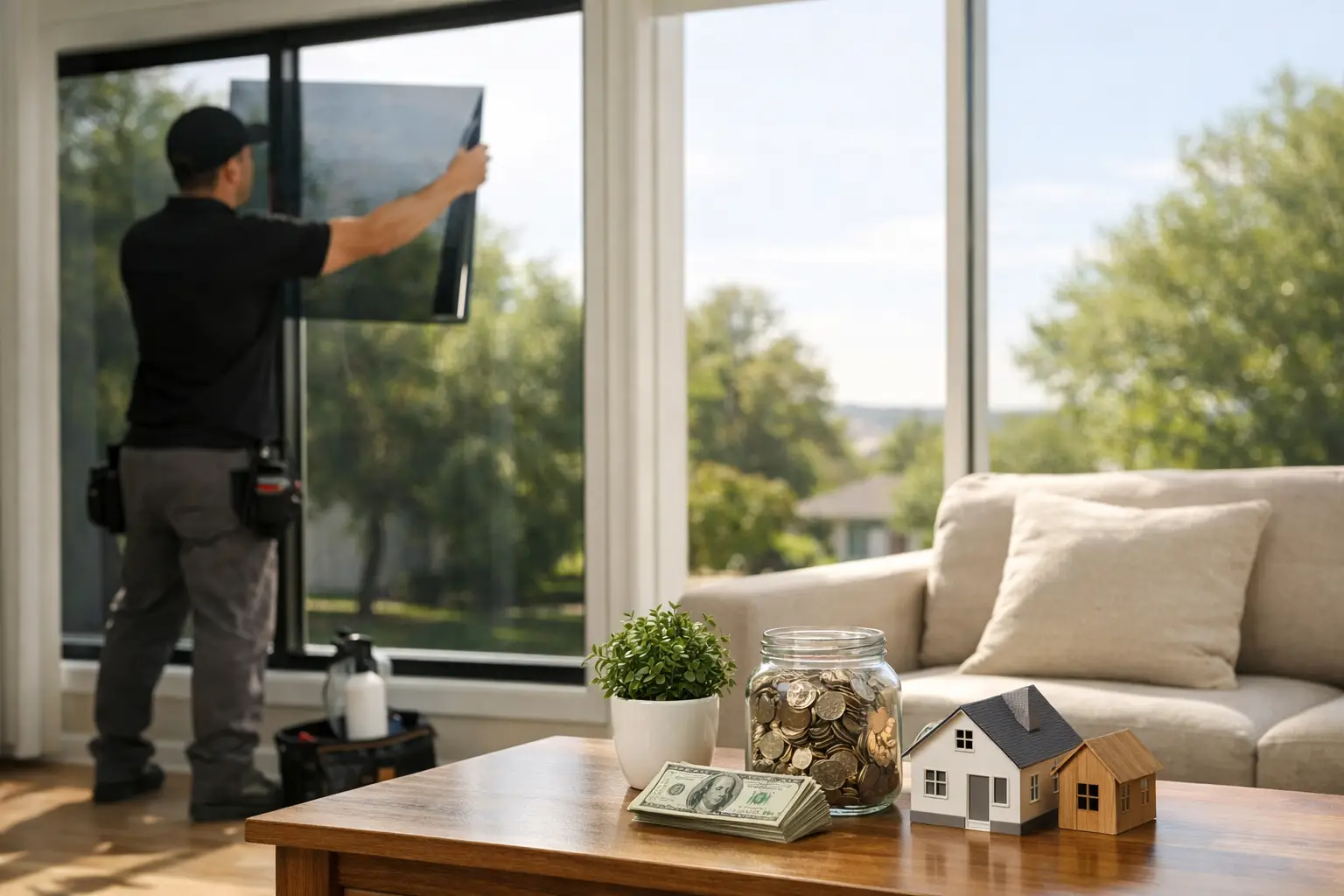
If one side of your house heats up by noon, your floors are fading near the slider, or the TV room turns into a glare box every afternoon, the problem usually is not your windows alone. It is what comes through them. Residential window tinting gives homeowners a practical way to reduce heat, block UV rays, improve privacy, and make rooms more comfortable without replacing the glass.
In San Diego County, that matters more than many people realize. We get strong sun for most of the year, and a lot of homes have large windows, patio doors, and open layouts that bring in plenty of light along with unwanted heat. Good window film helps you keep the natural light while cutting down the parts that make a home harder to live in.
What residential window tinting actually does
A quality residential film is designed to improve how your existing glass performs. Depending on the product, it can reject a significant amount of solar heat, reduce glare, block most UV rays, and add daytime privacy. Some films are nearly invisible. Others have a more reflective or tinted look. The right choice depends on your goals, your home’s orientation, and how much visible light you want to keep.
The biggest benefit for most homeowners is comfort. Rooms with direct sun exposure often feel hotter than the rest of the house, which pushes the AC to work harder and leaves certain spaces underused. Film helps balance that out. It does not turn a west-facing room into a cave, and it will not replace insulation or solve every heat issue, but it can make a noticeable difference where the glass is doing most of the damage.
UV protection is another major reason people install film. Sunlight can fade hardwood floors, furniture, rugs, artwork, and cabinets over time. That damage adds up slowly, which is why many homeowners do not address it until it is already visible. A professionally installed window film acts as a protective layer for the interior finishes you have already paid for.
Where home window film makes the biggest impact
Not every window in a house needs the same treatment. In many homes, the most important areas are the ones that take direct afternoon sun, especially large west- and south-facing windows. Living rooms, family rooms, upstairs bedrooms, home offices, and rooms with big picture windows or sliding glass doors usually show the fastest improvement.
Glare control is often underestimated until you fix it. If you are adjusting blinds all day, avoiding certain seats in the living room, or struggling to see screens without closing the room off completely, film can help without sacrificing the open feel of the space. That is especially useful in homes where natural light is part of the design.
Privacy can also be improved, but this is where expectations matter. Some residential films provide excellent daytime privacy by making it harder to see in from the outside while still allowing outward visibility. At night, when interior lights are on, that effect changes. If privacy is the main goal, the film selection should account for how the room is used during both day and evening hours.
Choosing the right residential window tinting film
There is no single film that is best for every house. The right product depends on whether your priority is heat rejection, UV protection, glare reduction, privacy, security, or appearance.
Solar control films are the most common choice for homeowners who want to cool down hot rooms and lower solar heat gain. These films can be very effective on sun-heavy windows and are available in different shades and performance levels. Some are lighter and maintain a more natural look. Others are darker or more reflective and offer stronger sun control.
Dual-reflective and neutral films are popular when homeowners want performance without making the glass look overly mirrored. They can preserve curb appeal while still reducing glare and heat. That matters in neighborhoods where the outside appearance of the home is a factor.
For homes where break-in resistance or glass hold is part of the concern, safety and security film may be worth discussing. This type of film is not the same as solar film. Its job is to help hold shattered glass together after impact, which can reduce hazards and make forced entry more difficult. It is a good example of why product selection should be based on the actual problem you want to solve.
Professional installation versus DIY kits
This is one area where the difference between a kit and a professional install shows up quickly. Residential glass varies by size, age, coating, and exposure. Applying the wrong film to the wrong glass can lead to performance issues or, in some cases, increase the risk of thermal stress. A professional installer knows how to match the film to the window type and the conditions around it.
Installation quality matters just as much as product quality. Large panes, French doors, transom windows, and hard-to-reach glass all need careful prep and precise application. Dust, edge lift, contamination, and uneven lines are common problems with DIY film jobs. They usually become more visible once the sun hits the glass.
For homeowners, the bigger value is not just appearance. It is long-term performance. A professionally installed film backed by a manufacturer warranty gives you more confidence that the product will hold up and deliver the results you are paying for.
What to expect after installation
Once installed, window film starts working right away, but it can take some time to fully cure depending on the weather and the specific product. During that period, a slight hazy look or small water pockets may appear. That is normal and usually clears as the film settles.
Most homeowners notice the difference first in the afternoon. Rooms feel more stable, glare is reduced, and the need to constantly close blinds goes down. Over time, you may also see savings in cooling demand, especially in homes where direct sunlight has been driving up indoor temperatures. The exact energy impact depends on the home, the amount of glass, insulation levels, thermostat settings, and sun exposure. Some houses see a bigger payoff than others.
That is why a realistic estimate matters. If someone promises that residential window tinting will slash every utility bill dramatically, that is overselling it. The real value is a combination of improved comfort, UV protection, reduced glare, and better efficiency. For many homeowners, those benefits together make the investment worthwhile.
Is residential window tinting worth it in San Diego?
For many local homes, yes. San Diego’s sun exposure is strong and consistent, and homeowners often want to preserve views and daylight without taking the heat and glare that usually come with them. Film is a smart middle-ground upgrade. It improves the performance of the windows you already have without the higher cost and disruption of full replacement.
It is especially worthwhile if your home has large west-facing windows, rooms that never seem to cool down, furnishings that are starting to fade, or spaces that feel too bright to use comfortably during parts of the day. Those are all signs that your glass is working against you.
The best results come from an on-site evaluation, not guesswork. A qualified installer can look at the direction of the windows, the type of glass, your privacy needs, and the look you want from inside and outside the home. That is how you end up with a film that performs well and still fits the house.
For homeowners who want practical improvements instead of cosmetic upgrades, residential window tinting is one of the more efficient ways to make a home feel better every day. If your windows are bringing in more heat, glare, and UV exposure than you want, it may be time to make them work for you instead of against you.