



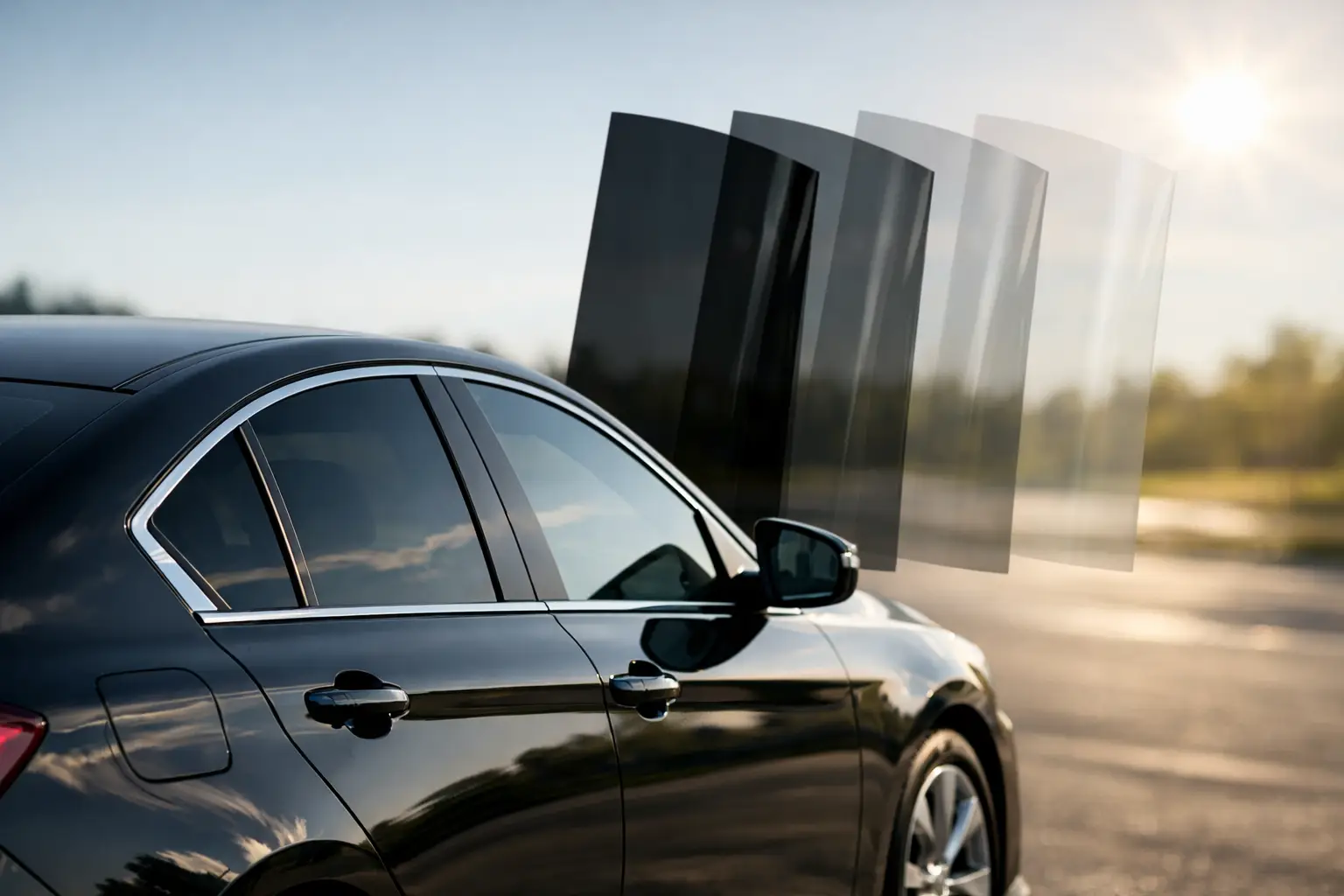
Pick the wrong tint percentage and your car can end up darker than expected, hotter than it should be, or out of step with California law. A good car window tint percentages guide helps you avoid that problem by showing what each shade actually does in real driving conditions – not just how it looks on a sample card.
In San Diego, that matters. Sun exposure is intense, glare is constant, and many drivers want a cleaner look without giving up visibility or getting into legal trouble. The right answer is rarely just “go as dark as possible.” Tint percentage affects privacy, heat reduction, daytime appearance, nighttime visibility, and what is allowed on different windows.
How car window tint percentages work
Window tint percentage refers to Visible Light Transmission, often shortened to VLT. That number tells you how much visible light passes through the glass and film together. A higher number means more light gets in. A lower number means the tint is darker.
For example, 70% tint is very light. It lets in most visible light and gives a subtle appearance. A 35% tint is noticeably darker and often chosen for a balance of style, glare reduction, and visibility. A 5% tint is extremely dark and is often called limo tint.
This is where many buyers get tripped up. The percentage is not how much light is blocked. It is how much light is allowed through. So if you want a darker look, you are looking for a lower number.
It is also worth knowing that factory glass already has some tint built into it. When film is added, the final VLT can end up darker than the film rating alone suggests. That is one reason professional installation and product selection matter.
Car window tint percentages guide by shade level
The easiest way to choose tint is to think in terms of how you use your vehicle. Privacy, heat control, appearance, and legal limits all matter, but different percentages fit different priorities.
70% tint
This is one of the lightest options commonly used on vehicles. It changes the look very little, but it can still help with glare and UV protection when paired with a quality film.
Drivers who want a nearly clear appearance often choose 70% for windshields where legal, or for front windows when they want minimal visual change. It is also a practical option for people who drive a lot at night and do not want reduced visibility. The trade-off is privacy. From the outside, 70% tint does not do much to conceal the interior.
50% tint
At 50%, the vehicle still looks relatively open, but there is more noticeable glare control and a slightly more refined appearance. This shade is a solid middle ground for drivers who want comfort improvements without making the car look obviously tinted.
It works well for commuters, family vehicles, and drivers who want better daytime comfort while keeping night visibility strong. If your main goal is privacy, though, 50% may feel too light.
35% tint
For many drivers, 35% is the sweet spot. It is dark enough to improve the look of the vehicle and reduce glare, but not so dark that visibility becomes a major compromise for most people.
This is one of the most popular choices because it balances appearance and function. During the day, it gives the vehicle a noticeably tinted look. At night, most drivers still feel comfortable. If you want a clean, practical upgrade without going extreme, 35% is often where the conversation starts.
20% tint
A 20% tint is clearly dark. It offers strong privacy during the day and gives most vehicles a more aggressive, finished appearance. From a comfort standpoint, many drivers like the added shade and reduced eye strain in bright sun.
The trade-off is visibility, especially at night or in poorly lit areas. Backing up, changing lanes, or driving on dark roads can feel different with 20% tint if you are not used to it. This percentage can be a good fit for rear windows on SUVs and trucks, but it is not the right choice for every driver or every window.
5% tint
This is limo-dark. It provides maximum privacy and a dramatic appearance, but it significantly limits visibility, especially after sunset. For most everyday drivers, 5% is more about style and privacy than practicality.
It can make sense in some rear-window applications, depending on the vehicle and local law, but it is generally too dark for drivers who prioritize nighttime safety and ease of use. It is a strong example of where darker is not always better.
What matters beyond darkness
A lot of people assume darker film always means better heat reduction. That is not necessarily true. Film technology matters just as much as tint percentage.
A premium ceramic or high-performance film can reject substantial heat and UV even in lighter shades like 50% or 70%. That is important for drivers who want to keep the cabin cooler, protect interior surfaces, and reduce sun exposure without going very dark. In other words, if your goal is comfort and protection, you should not choose based on appearance alone.
This is especially relevant in Southern California. If you spend time in traffic, park outdoors, or drive long distances inland, heat rejection can matter more day to day than the visual shade level. A lighter premium film may outperform a darker low-grade film where it counts.
Choosing the right tint for your vehicle
The best tint percentage depends on how you drive, what you drive, and what bothers you most right now.
If glare is your main issue and you do a lot of night driving, stay lighter. If you want daytime privacy and a darker custom look, a mid-to-dark option may make more sense on legal rear glass. If your car has a dark interior, the tint may look darker from the outside than the same film on a light interior. Vehicle type changes the result too. A sedan, coupe, SUV, and truck do not all wear the same tint the same way.
It also helps to be realistic about your habits. Some drivers love a dark look for the first week, then realize they do a lot of nighttime errands, parking garage driving, or reversing in dim conditions. Others start out cautious, choose a lighter percentage, and later wish they had gone darker on the rear windows. That is why an in-person consultation matters more than guessing from photos online.
Legal considerations in California
Any practical car window tint percentages guide should address the legal side. California window tint laws can be restrictive, especially on front side windows and windshields. What is allowed can vary by window location, vehicle type, and specific use.
That means the right percentage is not just about preference. It has to be matched to what is legal for your vehicle setup. This is another area where buyers can make expensive mistakes if they purchase film based only on appearance or internet advice. A professional installer can help you understand what is appropriate before any film goes on the glass.
Why installation quality changes the outcome
Even the best film percentage can disappoint if the installation is poor. Low-quality installs can leave contamination, peeling edges, haze, purple fading, or uneven appearance. They can also make a well-chosen percentage look wrong because the finish is not clean.
A proper installation starts with matching the film to the customer’s goals, then applying it with precision so the final result looks factory-finished. For a service-based company like Simmons Solar Control, that means not just offering shade options, but helping drivers choose a film that delivers the right mix of comfort, protection, style, and long-term durability.
A better way to decide
If you are stuck between two percentages, do not think only in terms of dark versus light. Think about visibility at night, how much privacy you really need, whether heat rejection is the bigger goal, and what is legally appropriate for each window.
In most cases, the smartest choice is not the darkest one. It is the one that fits your daily driving, your vehicle, and your expectations a year from now – not just how you want the car to look this weekend.
A well-chosen tint should make your car more comfortable every day you own it. If you start with the right percentage and the right film, that is exactly what it will do.