



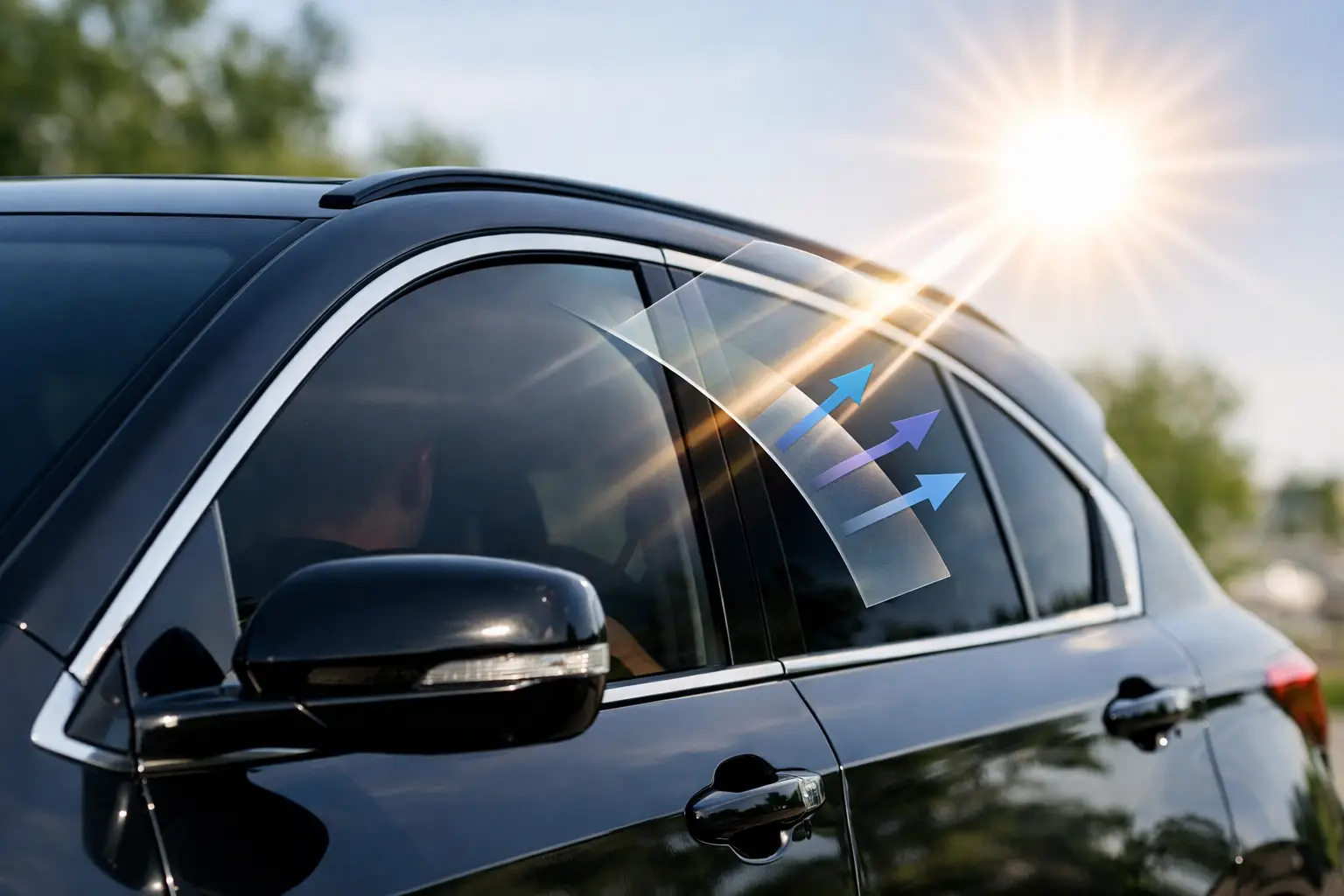
You feel it most on a San Diego afternoon when the sun is coming through the driver-side window and your arm is taking the full hit. That is usually when people start asking, can car tint block UV, or is tint mostly about looks and privacy? The short answer is yes, quality automotive window film can block a very high percentage of ultraviolet radiation, but the real answer depends on the glass, the film, and how the tint is installed.
Can car tint block UV, or just reduce glare?
Car tint does a lot more than darken windows. A professionally installed film can help reject heat, cut glare, add privacy, and most importantly for many drivers, reduce UV exposure inside the vehicle. That matters because ultraviolet rays are one of the main causes of fading, cracking, and discoloration in interiors, and they also contribute to skin damage over time.
Many people assume darker tint means better UV protection. That is not always true. Visible light transmission and UV rejection are two different measurements. A lighter, high-quality film can block a large percentage of UV rays, while a darker, lower-grade film may not perform nearly as well. If UV protection is the priority, the film technology matters more than how dark it looks.
What your car’s factory glass already blocks
Before any film is installed, your vehicle already has some level of UV protection. Most laminated windshields do a solid job of blocking a large amount of UV radiation. That is one reason your face may be better protected from the front than your arms are from the side.
Side and rear windows are a different story. In many vehicles, those windows are made from tempered glass, which typically does not block UV nearly as effectively as a laminated windshield. Factory privacy glass on SUVs and trucks can make the cabin look darker, but that does not automatically mean it offers the same level of UV protection as premium window film.
This is where aftermarket tint makes a clear difference. When the right film is applied to side and rear glass, it can significantly increase UV rejection where factory glass often falls short.
How window film blocks UV
Window film is engineered in layers, and those layers are designed to filter different parts of the solar spectrum. UV-blocking films target ultraviolet radiation directly, while many advanced films also help with infrared heat rejection and glare control.
In practical terms, that means less direct exposure for drivers and passengers, better protection for leather, vinyl, dashboards, trim, and electronics, and a more comfortable cabin during everyday driving. In Southern California, where vehicles spend a lot of time in strong sun, that protection is not just a nice extra. It is part of preserving the value and condition of the vehicle.
Most premium automotive films are marketed as blocking up to 99 percent of harmful UV rays. That is a meaningful number, but it only applies when the product is legitimate, properly selected, and installed correctly. Cheap dyed films may look fine at first, but performance and durability can fall off fast.
Not all tint performs the same
If you are comparing films, the biggest mistake is shopping by darkness alone. There are major differences between dyed film, metalized film, carbon film, and ceramic film.
Dyed film is usually the budget option. It can improve appearance and reduce some glare, but it is often less effective at long-term heat rejection and may be more prone to fading. Metalized film can improve solar performance, but in some cases it may interfere with electronics, signals, or onboard tech. Carbon film is a step up in durability and performance. Ceramic film is typically the premium option because it offers strong heat rejection, excellent clarity, and high UV protection without relying on metal.
For drivers who want the best balance of comfort, interior protection, and clean appearance, ceramic film is often the strongest choice. It is especially useful when you want performance without going extremely dark.
UV protection helps people and interiors
Most customers first think about personal comfort, and that makes sense. Less glare and less heat make daily driving easier. But UV protection also solves a longer-term problem that is easy to overlook until the damage is already done.
Dashboard surfaces can dry out and crack. Leather can stiffen and fade. Plastic trim can discolor. Upholstery can lose its original look unevenly, especially on the sun-facing side of the cabin. If you keep a vehicle for years, those effects add up.
For people who spend a lot of time on the road, UV reduction also matters from a personal exposure standpoint. Delivery drivers, commuters, rideshare drivers, and anyone who spends hours in daylight can benefit from better protection through the side glass. Window film is not a substitute for sunscreen or other precautions, but it can reduce daily UV load inside the cabin in a very real way.
What to ask before you buy
If your main question is can car tint block UV, the next step is asking the right questions before installation. Do not stop at tint shade. Ask what percentage of UV the film rejects. Ask what type of film it is. Ask whether the product is backed by a manufacturer warranty. Ask whether the installer is experienced and whether the work complies with California tint laws.
Those details matter because poor installation can undermine a good product. Gaps, contamination, peeling edges, and bubbling are not just cosmetic issues. They are signs of a job that may not last. A quality installer should be able to explain performance clearly and recommend options based on how you actually use the vehicle.
For example, someone who parks outdoors in East County all day may prioritize heat rejection and UV protection over maximum privacy. Someone with a newer luxury vehicle may care just as much about optical clarity and long-term appearance. The right answer is not always the darkest film or the cheapest quote.
California law still matters
There is always a practical limit to what can be installed legally. In California, tint laws regulate how dark certain windows can be, especially on front side windows. Windshield applications are even more restricted.
That is another reason to work with a professional rather than guessing based on online advice or a generic kit. The goal should be real performance within legal limits, not a film that causes visibility issues or compliance problems later. A good installer can help you choose a film that improves comfort and UV protection while staying within the rules.
The difference between DIY tint and professional installation
A roll of film and a weekend tutorial may sound appealing, but automotive tint is one of those jobs where experience shows immediately. Vehicles have complex curves, tight seals, dot matrix patterns, and visibility requirements that make clean installation difficult without the right tools and environment.
Professional installation gives you more than a smoother finish. It also gives you access to better film lines, better warranty coverage, and better long-term performance. That matters when your goal is not just a darker look, but actual UV protection that holds up through years of sun exposure.
For San Diego drivers, mobile service can make the process even easier. Simmons Solar Control works with vehicle owners across the county who want practical results from professional film installation, not guesswork.
So, can car tint block UV enough to make a difference?
Yes, absolutely, if you choose the right film. Quality automotive tint can block a high percentage of harmful UV rays, especially on side and rear windows where factory glass often offers less protection. It can also help reduce cabin heat, cut glare, protect the interior, and improve everyday comfort behind the wheel.
The important part is understanding that not all tint is built for the same job. Shade alone does not tell you much. Film technology, installation quality, warranty support, and legal compliance all affect the result.
If your car spends any real time in the Southern California sun, UV-blocking window film is one of the more practical upgrades you can make. It protects what you see every day and what you do not always notice until it starts to wear out.