



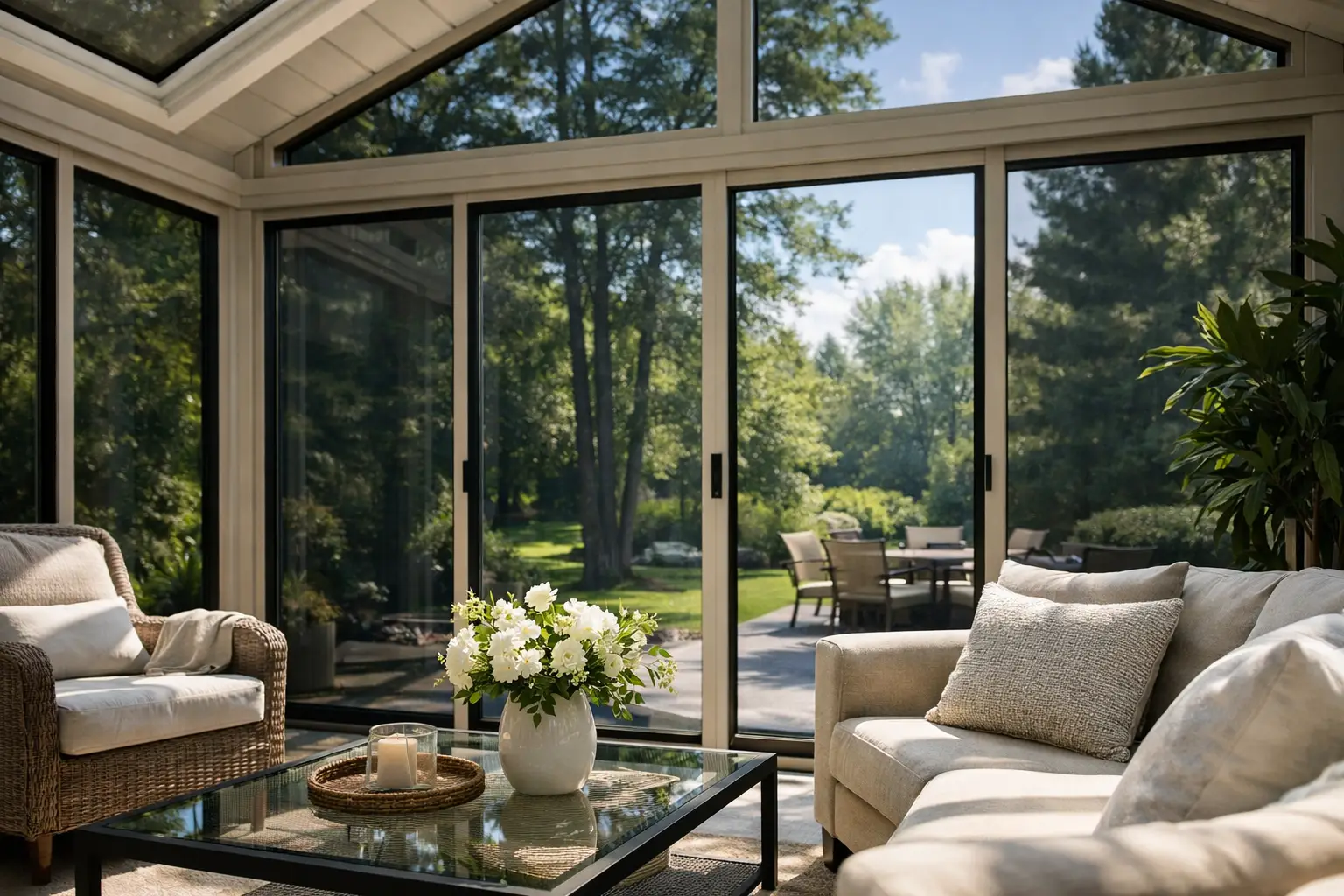
A sunroom should feel like the best seat in the house, not the hottest. If your glass room turns blinding by noon, fades furniture, or forces the AC to work overtime, window tint for sunrooms is often the fix that makes the space usable again.
In San Diego County, sun exposure is part of daily life. That is great when you want natural light. It is less great when a south- or west-facing sunroom traps heat, creates nonstop glare on screens, and makes the room feel uncomfortable for half the day. A professionally installed window film helps control those problems without covering the glass or taking away the open feel that made you want a sunroom in the first place.
Why sunrooms get uncomfortable so fast
Sunrooms are built around glass, and glass has limits. Standard glass lets in a lot of visible light, which is why the room feels bright and airy. It also lets in significant solar heat and UV radiation unless it has been specifically upgraded. When that sunlight hits floors, furniture, and other interior surfaces, the room heats up quickly.
That is why many homeowners notice the same pattern. The space feels pleasant in the morning, then becomes too warm by early afternoon. Blinds can help, but they also block the view and darken the room. Running the AC may lower the temperature, but it does not solve glare or UV damage, and it can raise cooling costs.
Window film works differently. Instead of reacting after heat has already entered the room, the right film reduces solar energy at the glass. That makes the room easier to live in, especially during long sunny stretches.
What window tint for sunrooms can improve
The biggest benefit is comfort. Good film can cut down heat buildup so the room stays more stable through the day. That matters if your sunroom is used as a reading area, family room, home office, dining space, or plant room.
Glare reduction is another major upgrade. A sunroom with too much direct light can be hard on the eyes and nearly impossible for watching TV, working on a laptop, or even enjoying a meal. Tint helps soften that harsh brightness while still preserving natural light.
UV protection is just as important, even if it is less obvious at first. Sun exposure can fade flooring, rugs, upholstery, wood finishes, and artwork over time. Quality film can block a high percentage of UV rays, helping protect the finishes and furnishings you have already invested in.
There is also the energy side. When a sunroom adds heat to the home, your HVAC system has to compensate. By reducing solar heat gain, window film can help lower the overall cooling load. The exact savings depend on the glass, orientation, and how often the room is conditioned, but many homeowners notice the difference in day-to-day comfort first and energy use second.
Not all sunroom tint is the same
This is where a lot of homeowners get tripped up. They assume darker film always means better performance. In reality, the best choice depends on what you are trying to fix.
Some films are designed mainly for heat rejection. Others focus on glare control, UV blocking, privacy, or a more reflective exterior look. There are also more neutral films that reduce heat without making the glass look very dark. For many sunrooms, that balance matters. You want better comfort, but you probably do not want the room to feel closed off.
Heat control vs. appearance
If heat is the main issue, a high-performance solar film is usually the right place to start. Many modern films can reject a substantial amount of solar energy without creating an overly dark appearance indoors. That is useful for homeowners who want performance but still want the space to feel bright.
If afternoon glare is the bigger complaint, a slightly darker or more reflective option may make sense. The trade-off is that stronger glare control often changes the look of the glass more noticeably.
Privacy has limits in a sunroom
Some customers ask for privacy film for a sunroom, especially if neighbors are close by. That can help during the day, particularly with reflective films. But privacy films are not magic. At night, when the interior is lit and it is dark outside, visibility can reverse. If privacy is a major goal, film may be part of the solution, but it is usually not the only one.
The glass itself matters
Before any film goes on a sunroom, the existing glass needs to be evaluated. Different glass types react differently to heat absorption, and the wrong film on the wrong glass can create stress. This is one reason professional assessment matters. A licensed installer should look at the glass type, pane construction, orientation, and sun exposure before recommending a product.
Signs your sunroom is a good candidate for tint
If you avoid the room during certain hours, that is a clear sign. The same goes for floors or furniture that are fading faster than expected, or if the room feels much hotter than the rest of the house even with the AC running.
Another common sign is constant glare. If you have to close blinds every afternoon just to use the room, the glass is not doing enough on its own. Window tint lets you keep more of the open, glass-heavy design while cutting back the parts that make the room frustrating.
Condensation, drafts, or significant insulation issues may point to larger problems beyond film. Window tint helps with solar load and UV exposure, but it will not replace failed seals or poor construction. A good contractor will be direct about that instead of overselling what film can do.
Why professional installation matters on a sunroom
Sunrooms usually have large panes, lots of light, and highly visible glass. That means every edge, speck, and imperfection stands out. Professional installation is not just about getting the film onto the window. It is about choosing a compatible product, preparing the glass correctly, and applying it cleanly so it performs and looks the way it should.
There is also the warranty factor. Reputable films from brands such as 3M and SunTek are backed by manufacturer support when they are installed properly. That matters when you are making an upgrade meant to last for years, not months.
For homeowners in Southern California, mobile service is another practical advantage. Having an experienced local contractor come out, assess the room, and handle the installation on site makes the process easier and more accurate than guessing from an online kit.
What to expect from the process
A proper estimate usually starts with questions about the room itself. Which direction does it face? What times of day are the worst? Is the goal heat reduction, glare control, UV protection, privacy, or a combination? Those details shape the recommendation.
From there, the installer should assess the glass and explain the film options in plain terms. You should be able to compare appearance, performance, and trade-offs without feeling pushed toward the darkest or most expensive product.
After installation, the film needs time to cure. Some slight haziness or a different appearance during the drying period can be normal depending on conditions. A professional should explain what to expect, how to clean the glass afterward, and how long the film should perform.
Is window tint for sunrooms worth it?
If your sunroom is already comfortable year-round, maybe not. But most problem sunrooms have the same issue: too much sun and not enough control. In that case, quality window film is one of the most cost-effective upgrades available because it improves how the room feels without major renovation.
You keep the daylight. You reduce heat and glare. You help protect flooring and furnishings. And you get more actual use out of a room that may currently sit empty during the hottest parts of the day.
That is the real value. A sunroom should add living space, not create another problem to manage. For homeowners who want a straightforward fix backed by experience, Simmons Solar Control can help evaluate the glass, recommend the right film, and install it correctly. The best result is simple: a room you stop working around and start enjoying again.