



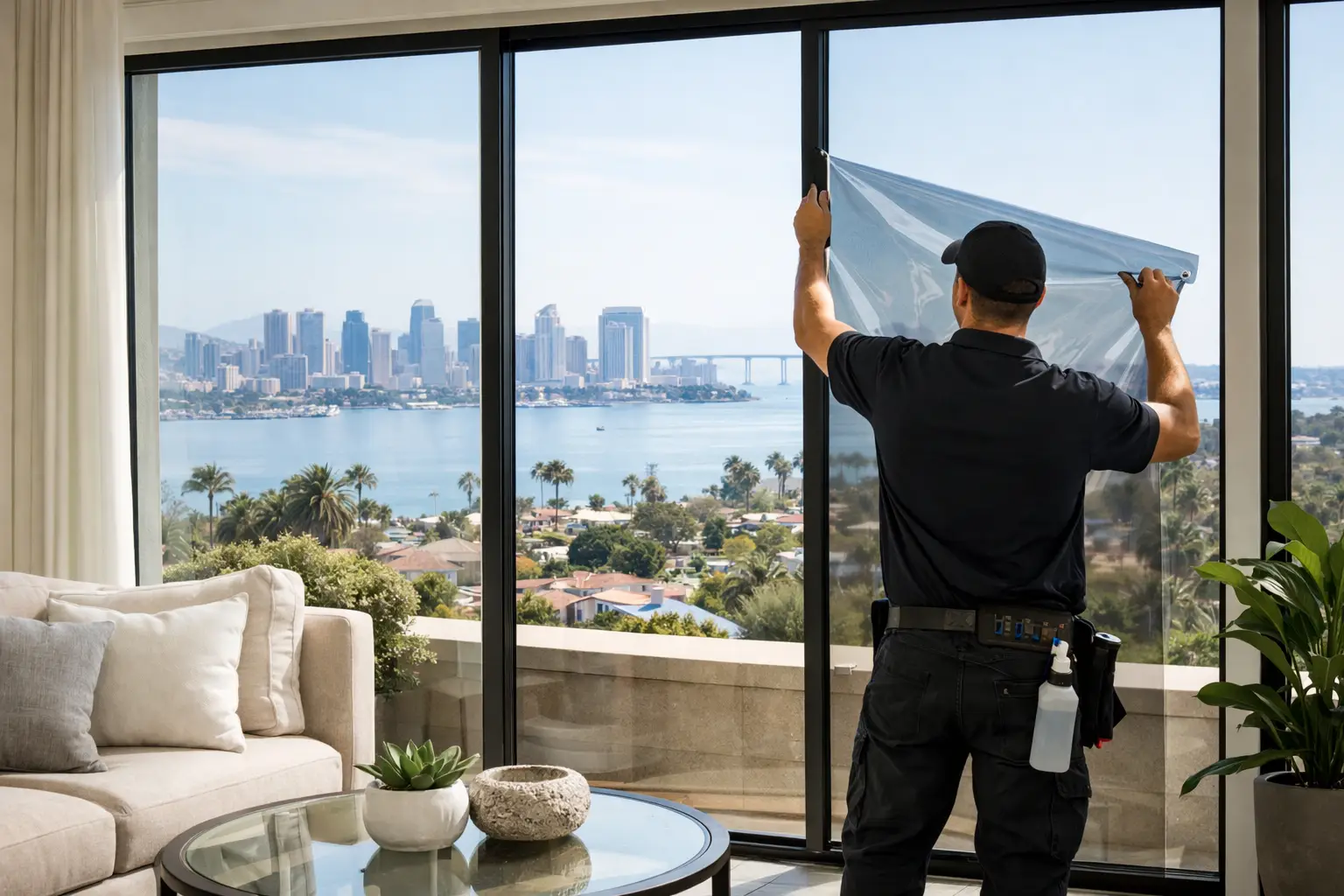
A west-facing living room can look great at 10 a.m. and become the hottest, brightest room in the house by late afternoon. That is the real test behind any 3M residential film review: not whether the film looks good on a sample card, but whether it makes a San Diego home more comfortable without making the glass look noticeably dark or changing the view homeowners paid for.
3M residential window film is a premium option for homeowners who want to reduce solar heat, glare, and UV exposure while keeping natural light. It is not the least expensive route, and the right product depends heavily on window orientation, glass type, existing shading, and how much visible light you want to retain. For the right application, it can be one of the most practical upgrades for rooms that are difficult to cool.
3M Residential Film Review: What It Does Well
The strongest reason to choose 3M window film is performance in direct sun. San Diego County homes deal with long stretches of clear weather, and large windows can transfer a surprising amount of heat into a room. A quality solar control film helps reject a portion of that solar energy before it becomes heat inside the home.
The result is usually most noticeable in rooms with south- and west-facing glass: family rooms, home offices, upstairs bedrooms, sunrooms, and spaces with broad sliding doors. The goal is not to turn a warm room into a refrigerator. The goal is to reduce the sharp heat gain that makes a room uncomfortable and forces the air conditioner to work harder during peak afternoon hours.
Glare reduction is another major benefit. Many homeowners first call because television screens, computer monitors, or polished floors become difficult to use when the sun hits at a certain angle. A properly selected film softens that glare while preserving more daylight than blinds or blackout shades. That matters when you want the view open but do not want to squint through meetings, homework, or dinner.
3M films also provide strong UV protection. Ultraviolet exposure contributes to fading and deterioration of hardwood floors, rugs, artwork, furniture, and merchandise near storefront windows. Film is not a complete answer to fading – visible light and heat also play a role – but reducing UV exposure is a meaningful layer of protection for expensive interiors.
Clear film versus darker solar control film
Not every homeowner wants a tinted appearance, and 3M offers options across a wide range of looks. Clear or low-reflectivity films are often a fit for primary living areas where maintaining a natural view is the priority. They can reduce heat without making the glass look heavily tinted from inside or outside.
Darker or more reflective films generally provide more noticeable glare control and daytime privacy, but they come with trade-offs. A darker film reduces visible light. A reflective exterior look may not fit every architectural style, neighborhood guideline, or homeowner preference. The best choice is rarely the darkest film available. It is the film that solves the heat problem while preserving the amount of light and appearance you want.
Where 3M Residential Film Makes the Biggest Difference
Window film performs best when it is matched to a specific problem. A home with shaded north-facing windows may see little benefit from an aggressive solar film. A home with broad, unshaded west-facing windows can see a major comfort improvement, especially where existing dual-pane glass still allows substantial solar heat into the room.
For San Diego homeowners, these are common situations where 3M film is worth serious consideration:
- Rooms that become too hot between noon and sunset, even with the air conditioning running.
- Large windows and sliding doors that create glare on televisions, monitors, or kitchen counters.
- Furnishings, flooring, and artwork exposed to daily direct sun.
- Bedrooms or street-level windows where daytime privacy is desired without closing the blinds.
- Older homes where replacing every window is not currently practical or necessary.
Film can be especially appealing when the windows themselves are in good condition. Full window replacement may make sense for failing frames, damaged seals, or outdated single-pane glass. But replacement is a much larger project. Film is a targeted improvement that can address solar comfort and glare at a lower cost and with far less disruption.
The Trade-Offs Homeowners Should Understand
A credible 3M residential film review should be clear about limitations. Window film is a performance upgrade, not a substitute for insulation, roof ventilation, exterior shade structures, or a properly sized HVAC system. If a room is hot because of an uninsulated attic or constant air leakage, film can help with solar gain but will not solve every comfort issue.
The first trade-off is visible light. Higher heat rejection often requires some change in tint, reflectivity, or color. Premium spectrally selective films can deliver strong solar control with a lighter appearance, but product selection still matters. Before installation, look at samples on the actual glass at different times of day. A film that looks nearly clear indoors may show more reflectivity outside in afternoon light.
The second issue is nighttime privacy. Reflective film can make it harder for people outside to see in during the day when exterior light is brighter. At night, the effect reverses when interior lights are on. Homeowners who need consistent privacy should consider pairing film with shades, drapes, or another window treatment.
The third consideration is glass compatibility. Different glass types handle absorbed heat differently. Applying the wrong film to certain insulated glass units, tempered glass, laminated glass, or specialty windows can create unnecessary risk. A professional installer should identify the glass construction, assess existing seals and edge conditions, and recommend a compatible film rather than treating every window the same.
Will it save money on cooling?
It can, particularly where solar gain is a major part of the cooling load. The amount depends on your home, thermostat settings, window size, sun exposure, insulation, and energy use. Homeowners should be cautious of blanket savings promises.
The more immediate payoff is often comfort. If a room is currently avoided every afternoon because it is too bright or too hot, reducing that heat load has value beyond the utility bill. It can make a home office usable, protect a living room floor, and reduce the need to keep blinds closed during the best daylight hours.
Installation Quality Matters as Much as the Film
Premium film deserves careful installation. Residential glass requires thorough cleaning, precise trimming, clean edges, and a controlled approach to large panes and complex window layouts. Small installation issues are much more visible on home windows than on a small automotive side glass.
After installation, the film may show a slight hazy or watery appearance while the mounting solution dries. This is normal. Drying time varies with film type, temperature, humidity, and sun exposure. Do not judge the final clarity on the first day, and avoid cleaning the newly filmed glass until the installer’s curing guidance allows it.
Ask about the manufacturer warranty, the installer’s workmanship coverage, and the specific film being proposed. A quote should identify the product line and performance characteristics rather than simply saying “tint.” That gives you a clearer basis for comparing appearance, heat control, and long-term value.
Is 3M Residential Film Worth It?
For homeowners dealing with direct sun, glare, and fading, 3M residential film is generally worth the premium when the product is selected for the actual glass and installed correctly. Its value is strongest in problem rooms where comfort is consistently affected and window replacement is not the immediate plan.
It may be less necessary for heavily shaded windows, rooms that already have effective exterior awnings, or homes where the main issue is poor insulation rather than solar exposure. In those cases, a more targeted approach can prevent spending money where the benefit will be limited.
The right next step is to evaluate the windows that cause the most frustration, not every piece of glass in the house. Simmons Solar Control can assess sun exposure, glass type, desired appearance, and privacy needs before recommending a film. A practical estimate should leave you knowing exactly what problem the film will solve – and what it will not.