



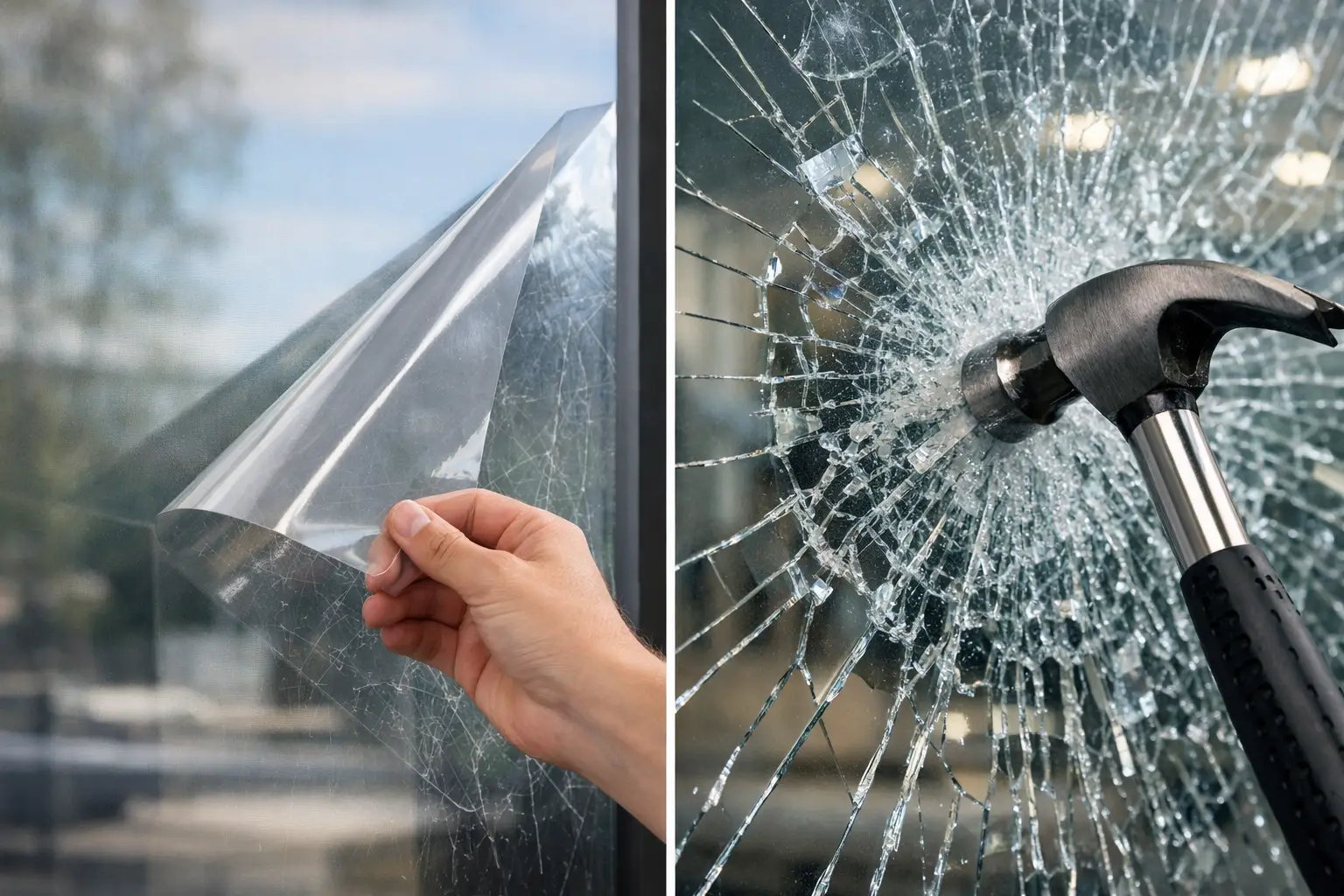
A shattered storefront window, patio door, or vehicle side window creates two immediate problems: broken glass and an opening that is no longer protected. When comparing security film vs tempered glass, the right choice depends on whether you are upgrading existing glass, replacing a damaged window, or planning a new build. Both improve safety, but they work in very different ways.
For most San Diego property owners, security film is the practical retrofit solution. It can be professionally applied to existing glass to help hold broken pieces together after impact. Tempered glass is a type of safety glass installed as a replacement unit. It is stronger than standard annealed glass, but when it breaks, it is designed to fracture into many small pieces.
Security Film vs Tempered Glass: The Main Difference
Security window film is a clear, heavy-duty polyester film bonded to the interior surface of glass with a strong adhesive system. If the glass breaks from an attempted break-in, accidental impact, or certain weather events, the film helps retain the fragments in the frame. The glass may crack, but it is less likely to immediately fall away and leave an open entry point.
Tempered glass is heat-treated during manufacturing to be several times stronger than ordinary glass of the same thickness. It handles everyday impacts better than annealed glass and is commonly required in locations where people may fall against the glass, such as doors, sidelights, shower enclosures, and many low-level windows. Once its surface is compromised, however, tempered glass releases its stored stress and breaks into small, pebble-like pieces.
That break pattern reduces the risk of deep cuts compared with large, sharp shards. It does not necessarily keep the opening closed. A broken tempered-glass door can still provide quick access to a home, office, or retail space.
When Security Film Is the Better Choice
Security film makes the most sense when the existing glass is in good condition and you want to add protection without replacing windows or doors. This is especially valuable in commercial buildings with large storefront panels, offices with ground-floor glazing, and homes with sliding glass doors or accessible windows.
The biggest advantage is glass retention. A properly selected security film, installed with the appropriate attachment system when needed, can make it more difficult for an intruder to create an opening quickly. The delay matters. It can discourage opportunistic break-ins, give occupants more time to react, and allow an alarm or security response to do its job.
Security film can also help contain glass after accidental impacts. For a family home, that may mean less scattered glass after a ball strike or door impact. For a business, it can reduce cleanup and disruption after vandalism. It is not an unbreakable barrier, and no film should be sold as one. The glass can still crack or fail under enough force. The benefit is that the film helps keep the broken panel together longer.
Many security films also provide useful solar-control benefits, depending on the product selected. San Diego sun can drive heat and glare through exposed glass for much of the year. A film solution may combine safety retention with UV rejection, glare reduction, and improved comfort near windows. That combination can be more cost-effective than replacing functional glass solely for security concerns.
When Tempered Glass Is the Better Choice
Tempered glass is the right answer when building codes require safety glazing or when a window or door panel is already due for replacement. It is a strong, established material for locations exposed to normal human contact and everyday impact.
For example, a new glass door, bathroom enclosure, or window in a hazardous location may need tempered glass to meet code. In those situations, film is not a substitute for required safety glazing. A contractor, glazier, or building professional can confirm what is required for a specific project.
Tempered glass is also a good choice where the priority is impact resistance before breakage. It generally withstands more routine force than standard glass. But property owners should understand the trade-off: once it breaks, it typically breaks completely. If your main concern is preventing a fast smash-and-grab entry, tempered glass alone may not provide the delay you expect.
For new construction or a full window replacement, laminated safety glass is also worth discussing. Laminated glass uses an interlayer between panes to hold fragments together after breakage, which makes it closer in function to a security-film installation. It is often more expensive than adding film to existing glass, but it can be an excellent option when windows are already being replaced.
Cost, Installation, and Downtime
Replacing glass with tempered units can involve measuring, fabrication, removal, disposal, installation, and possible frame or hardware work. Costs rise quickly for custom storefront glass, oversized panels, doors, and insulated glass units. The project may also leave an opening temporarily unusable while replacement glass is ordered.
Security film is typically faster and less disruptive because it uses the glass you already have. A professional installer cleans and prepares the surface, applies the film, trims it precisely, and allows the adhesive to cure. Mobile installation can be particularly convenient for occupied homes, offices, retail spaces, RVs, and fleet vehicles.
Price still depends on the film thickness, panel size, accessibility, window condition, and whether an attachment system is needed. A basic safety film and a high-performance security film are not the same product. Thicker films and specialized anchoring methods generally cost more, but they can deliver stronger glass-retention performance for higher-risk applications.
What About Cars, Boats, and RVs?
The comparison changes slightly for vehicles. Most vehicle windshields are laminated glass, while side and rear windows are commonly tempered. When a tempered side window breaks, it can shatter quickly and leave an immediate opening.
Automotive window tint is primarily selected for heat reduction, UV protection, glare control, privacy, and appearance. It should not automatically be treated as security film. Some specialty protective films may provide added fragment retention, but the product, thickness, application, and local regulations all matter. A professional should recommend the correct film for the vehicle and the goal rather than promising security performance from standard tint alone.
The same principle applies to marine and RV glass. Film can improve comfort and reduce glare, but security needs should be assessed separately based on the glass type, exposure, mounting system, and how the vehicle or vessel is used.
Choosing the Right Protection for Your Property
Start with the reason you are making the upgrade. If your glass is intact and you want added break-in resistance, fragment retention, and possible heat reduction, security film is usually the most efficient first step. It is especially practical for existing storefronts, sliding doors, office glass, and accessible residential windows.
If you are replacing glass anyway, need code-compliant safety glazing, or have a panel in a high-contact area, tempered glass may be required or make more sense. If the concern is serious forced-entry resistance, ask whether laminated glass or a security-film system with frame attachment is more appropriate than tempered glass alone.
The installation details matter as much as the material. Film needs a clean surface, proper edge finishing, and the right product for the glass type. Not every film is compatible with every insulated glass unit, and poorly selected products can create thermal stress concerns. Working with an experienced, licensed installer helps avoid an upgrade that looks good on day one but fails to meet the actual need.
For San Diego homes and businesses, Simmons Solar Control can evaluate existing glass and recommend a practical film solution based on the location, exposure, and level of protection you want. A clear assessment before installation is the best way to spend your budget where it will make a real difference.