



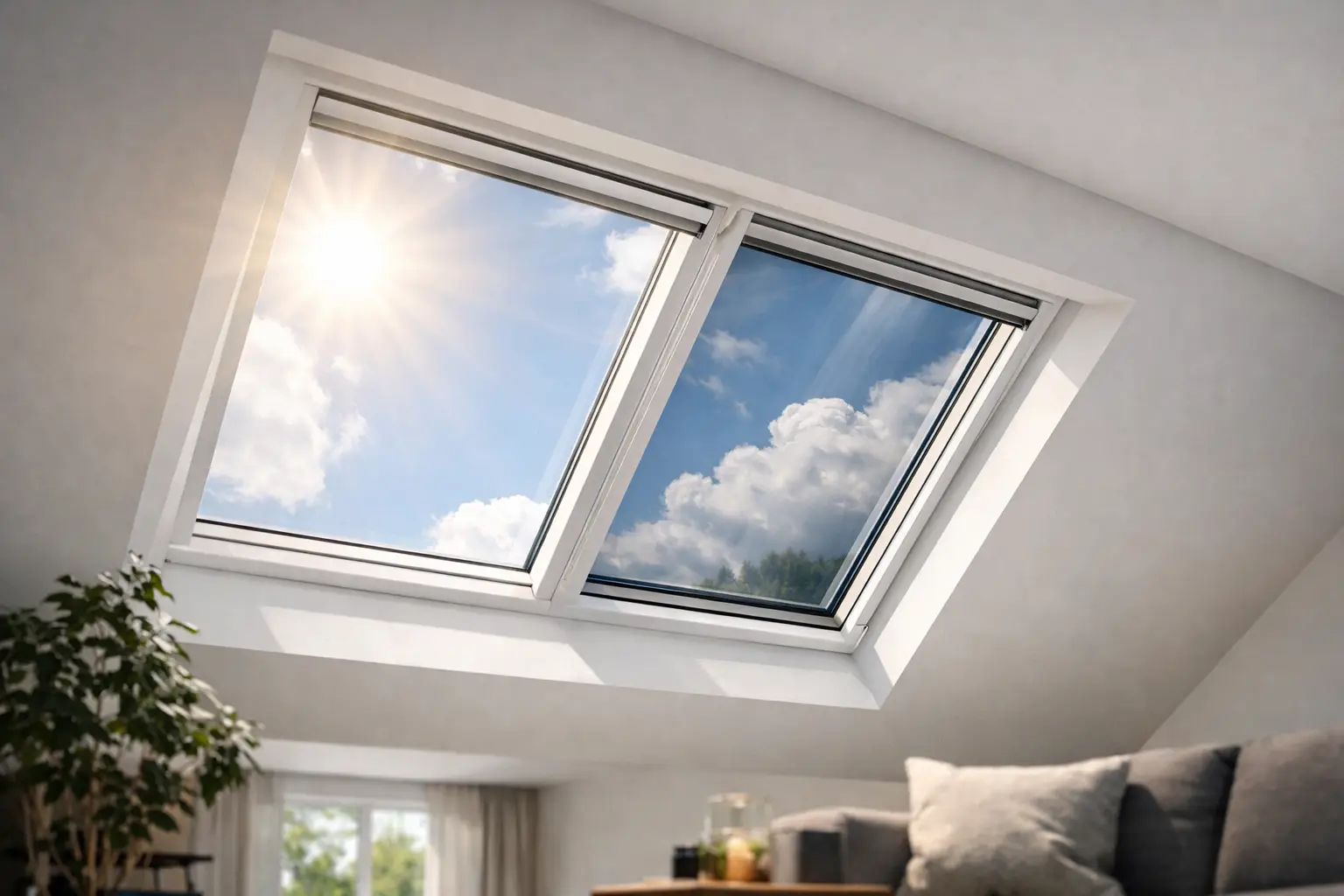
A skylight can make a room feel open and bright, then turn that same room into the hottest place in the house by early afternoon. In San Diego County, the sun angle and long cooling season can make overhead glass a major source of heat, glare, and fading. Window film for skylight heat control is a practical way to improve comfort without giving up the natural light that made the skylight appealing in the first place.
The right film can reject a meaningful portion of solar heat, filter damaging UV rays, and soften harsh glare on floors, countertops, TVs, and workspaces. But skylight film is not a one-size-fits-all product. The glass type, roof access, skylight location, and desired appearance all affect which film is appropriate and how much improvement you can expect.
Why Skylights Create So Much Heat
Heat enters through skylights differently than it does through many vertical windows. Because the glass faces upward or at an angle, it can receive direct sunlight for long parts of the day. That solar energy passes through the glazing and heats interior surfaces, furniture, flooring, and air below it.
The result is often a hot spot that makes an upstairs bedroom, kitchen, hallway, office, or retail space uncomfortable. Your air conditioning has to work harder to offset that concentrated heat gain, especially when several skylights are installed in a large open room.
Glare is another common complaint. Sunlight from overhead glass can wash out a television screen, make computer work difficult, and create bright reflections on polished floors or counters. Even when a room is technically cool enough, glare can make the space less usable.
How Window Film for Skylight Heat Control Helps
Solar control window film is applied directly to compatible skylight glass. It works by reducing the amount of solar energy transmitted through the glass while preserving varying levels of visible light. Depending on the film selected, it may also block up to 99% of UV rays that contribute to fading and interior damage.
For most property owners, the immediate difference is less intense radiant heat beneath the skylight. The room may feel more even from one area to another, and the air conditioner may cycle less aggressively during sunny periods. Film also reduces glare without requiring blinds or shades to stay closed all day.
The best choice depends on what is causing the problem. A highly reflective or darker film can provide stronger heat and glare reduction, but it also changes the exterior appearance and reduces daylight more noticeably. A lighter, spectrally selective film can maintain a brighter, more natural look while still rejecting a substantial amount of infrared heat. Neither option is automatically better. It comes down to the room, the glass, and your priorities.
Choosing the Right Film for Your Skylight
A professional assessment starts with the skylight itself. Is it tempered glass, laminated glass, insulated glass, acrylic, polycarbonate, or a specialty unit? Is it installed on a steep roof, above a stairwell, or inside a commercial ceiling system? These details affect both film selection and installation method.
Ceramic and spectrally selective films
These are often a strong fit for homeowners and businesses that want heat reduction without making the skylight look heavily tinted. They are designed to target solar heat while allowing useful visible light into the room. This can be a good solution for kitchens, living rooms, offices, and common areas where daylight matters.
Reflective solar films
Reflective films are a practical option when maximum heat and glare control are the priority. They can be especially useful for sun-facing commercial spaces, high-ceiling rooms, and skylights above areas that become difficult to cool. The trade-off is a more noticeable mirrored or darker appearance, particularly from the exterior.
Neutral and privacy-oriented films
A neutral film may reduce brightness and heat while keeping the glass appearance more understated. Privacy films are less common for roof skylights, but they can be helpful for interior glass or lower-angle glazing where overlooking is an issue. For overhead applications, performance and glass compatibility usually matter more than privacy.
The Glass Compatibility Question Matters
Not every film should be installed on every skylight. Applying the wrong product can increase thermal stress in some types of glass, potentially creating breakage risk or affecting a manufacturer warranty. This is why skylight tinting should not be treated like a simple do-it-yourself project with off-the-shelf film.
A qualified installer evaluates the glazing construction, existing coatings, pane configuration, frame condition, and sun exposure before recommending a product. Some skylights are better suited to exterior-rated film, while others can accept an interior installation. Exterior film can be especially useful when interior access is difficult or when the glass configuration calls for a product designed to manage heat before it enters the glazing.
Professional installation also matters because overhead glass is unforgiving. Film must be measured accurately, applied cleanly, and properly edged for a lasting result. A small crease, contamination spot, or lifting edge is far more visible when the sun is directly above it.
What Results Can You Expect?
Most customers notice a reduction in heat and glare soon after installation, but exact results depend on the skylight size, orientation, film performance, and insulation levels in the rest of the building. Film will not replace a failing HVAC system, correct poor attic insulation, or solve every comfort issue in a room with extensive exposed glass. It can, however, remove a major source of solar gain at a fraction of the disruption and cost of skylight replacement.
The benefits are often most noticeable during peak afternoon sun. A room that once felt too hot to use may become far more comfortable, while furniture, wood floors, artwork, and fabrics receive better UV protection. For commercial properties, reducing glare can also improve screen visibility and employee comfort without blocking natural light completely.
Energy savings vary, so it is better to view window film as a practical efficiency upgrade rather than a promise of a specific utility-bill reduction. When the air conditioner is fighting less direct solar heat, the building has a better chance of maintaining a stable indoor temperature.
Skylight Film vs. Shades or Replacement
Shades can reduce heat and glare, and they may be the right answer when you want adjustable light control. However, shades often need to remain closed during the hottest part of the day, which removes the daylight benefit of the skylight. Motorized shades add convenience but also add equipment, maintenance, and cost.
Replacing a skylight can make sense if the unit leaks, has failed seals, shows condensation between panes, or is near the end of its service life. If the skylight is in good condition and the main problem is solar heat, window film is frequently the more efficient first step.
Film is also a cleaner option for occupied homes and businesses. There is no need to open the roof, alter drywall, or schedule a major construction project. A trained mobile installer can assess access and complete many applications with minimal interruption to your property.
A Smarter Approach to Overhead Glass
The goal is not to eliminate sunlight. It is to make the sunlight entering your home or business more manageable. With the proper product, skylight film can preserve the open feel of a bright room while cutting the heat, glare, and UV exposure that make overhead glass frustrating.
For San Diego property owners, Simmons Solar Control can evaluate the skylight, recommend compatible premium film options, and install a solution built around the way the space is actually used. A free estimate is the easiest way to find out whether your skylight can deliver the light you enjoy without carrying the heat you do not need.