



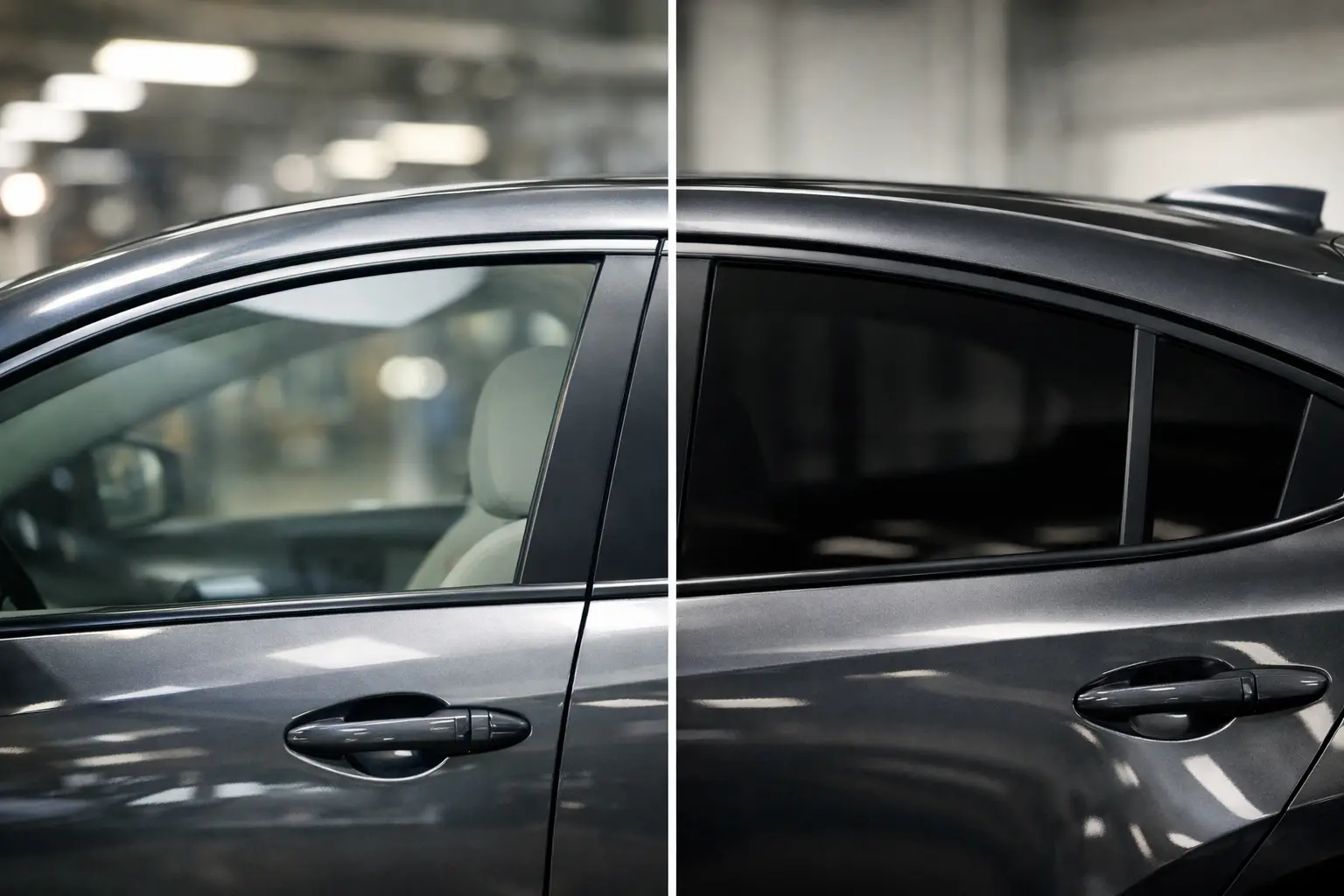
You notice it fast in San Diego. Two vehicles can look equally tinted from the outside, yet one still feels like an oven after 20 minutes in the sun. That gap is the real issue in factory tint vs aftermarket. It is not just about how dark the glass looks. It is about what the glass or film is actually doing for heat rejection, UV protection, glare reduction, privacy, and long-term comfort.
A lot of drivers assume factory tint and aftermarket tint are basically the same with different price tags. They are not. If your goal is appearance only, factory tint may be enough. If your goal is measurable performance, especially in Southern California heat, aftermarket film usually gives you far more control.
Factory tint vs aftermarket: the core difference
Factory tint is typically privacy glass. The color is built into the glass during manufacturing, most often on rear windows and back glass in SUVs, trucks, and vans. It darkens the window, but that does not automatically mean it blocks much heat. In many cases, it provides limited solar performance compared with a quality window film.
Aftermarket tint is a film applied to the inside surface of the glass after the vehicle is built. That matters because film can be engineered for specific results. Depending on the product, it can reject significant heat, block up to 99 percent of harmful UV rays, reduce glare, improve privacy, and help protect the interior from fading and sun damage.
So when customers ask which one is better, the honest answer is simple. Factory tint changes the look. Aftermarket tint can change how the vehicle performs.
Why factory tint often falls short in San Diego
For local drivers, heat is usually the biggest complaint. Dark rear glass may make a vehicle look cooler, but if the glass is not built to reject solar energy effectively, cabin temperatures still climb fast. That means more strain on your AC, more discomfort when you get in, and more wear on interior surfaces over time.
Factory privacy glass also does not solve the front-window issue. Most vehicles with factory tint only have darkened rear windows. The front side windows remain untinted or lightly tinted to comply with state law. That leaves the driver and front passenger exposed to glare, UV, and heat through the windows they use most.
This is where aftermarket film makes a practical difference. A professionally selected film can create a more balanced result across the vehicle while staying within California regulations. You get a cleaner look, but more importantly, a more usable vehicle in daily driving.
Heat rejection is where aftermarket usually wins
If you compare factory tint vs aftermarket based on performance, heat rejection is where the difference becomes obvious. A dyed or darkened piece of glass can reduce visible light, but that is not the same as blocking infrared heat. You can have dark glass that still lets in a lot of heat.
Modern automotive films are designed to target solar energy more effectively. Ceramic and other premium films can deliver strong heat rejection without forcing you into the darkest possible shade. That is important for drivers who want comfort and visibility at the same time.
In practical terms, better heat rejection means your car reaches a more tolerable temperature faster, your AC does not have to work as hard, and passengers are more comfortable on short trips and long drives. For families, commuters, rideshare drivers, and anyone parking outdoors, that benefit is not minor. It affects the vehicle every day.
UV protection is another major difference
People often focus on darkness because it is easy to see. UV protection is less visible, but it matters more over time. Harmful ultraviolet rays contribute to fading, cracking, and deterioration in dashboards, seats, trim, and other interior materials. They also increase skin exposure during daily driving.
Factory-tinted glass may offer some UV reduction, but aftermarket film is where you get stronger, more consistent protection. High-quality films are built specifically to block the vast majority of UV rays. That helps preserve the interior and supports a safer, more comfortable driving experience.
For owners who plan to keep their vehicle for years, this is one of the clearest value points. Interior protection is not just cosmetic. It helps maintain condition and resale appeal.
Appearance matters, but it should not be the only factor
There is nothing wrong with caring about looks. Tint absolutely changes the appearance of a vehicle. Factory privacy glass can give SUVs and trucks a finished look from day one. For some owners, that is enough.
But appearance can also be misleading. A vehicle with dark factory rear glass and no film may look protected while still underperforming in heat and glare control. On the other hand, a lighter ceramic film may not look dramatically darker, yet still outperform factory glass where it counts.
That is why the best tint decisions are usually based on use, not just style. If you spend a lot of time on the road, park outside, transport kids, protect a newer vehicle, or simply want to feel less heat on your commute, performance should lead the conversation.
Can you put aftermarket film over factory tint?
Yes, in many cases you can apply film over factory-tinted rear glass. This is common and often recommended when the owner wants more than privacy. Adding film to factory privacy glass can improve heat rejection, UV protection, and overall comfort.
That said, it is not a one-size-fits-all choice. Layering film affects the final visible light transmission, and the wrong combination can create a result that is darker than expected or not appropriate for your goals. Product selection matters. So does making sure the finished setup aligns with California tint laws.
This is one reason professional installation is worth it. A good installer does not just ask how dark you want it. They ask how you use the vehicle, where you park, what bothers you most, and what legal limits apply.
Legal compliance matters more than most drivers expect
Tint law is one area where assumptions cause problems. Drivers often see dark glass on the road and assume the same setup is legal everywhere. California has specific requirements, especially for front side windows and windshields.
Factory tint usually avoids legal issues because it comes from the manufacturer. Aftermarket film, however, needs to be chosen carefully. The goal should be improved comfort and appearance without creating unnecessary risk of citations or visibility concerns.
A professional installer will explain what is realistic, what is legal, and what will actually perform well. That advice is especially useful for customers who want a clean, polished result instead of guessing based on internet photos or generic shade charts.
Cost vs value: what are you really paying for?
Factory tint is bundled into the vehicle, so many owners treat it like a free feature. In reality, you are paying for appearance and privacy more than advanced solar control. If that is all you need, it may be adequate.
Aftermarket tint is a separate investment, but the value comes from targeted performance. You are paying for better materials, better comfort, interior protection, glare reduction, and a result tailored to your vehicle and priorities. Premium film also tends to offer stronger durability, clearer optics, and warranty-backed installation quality.
The cheaper route is not always the better value. If you end up with a vehicle that still runs hot, still exposes the interior to damage, and still leaves the front seat uncomfortable, dark glass alone did not solve much.
Which option makes the most sense?
If you own a truck or SUV with factory rear privacy glass and you are happy with the appearance, the next question is whether the vehicle performs the way you want in direct sun. If it does not, aftermarket film is usually the practical upgrade.
If your vehicle has clear glass all around, aftermarket tint gives you the most flexibility from the start. You can choose a film based on heat rejection, UV blocking, glare control, privacy, or a combination of all four.
If you already have factory-tinted rear windows, adding professional film can help turn a cosmetic feature into a true comfort upgrade. That is often the best of both worlds.
For San Diego drivers, the right answer usually comes down to one standard: does your current glass actually keep you cooler and better protected, or does it just look tinted? That question clears up most of the confusion around factory tint vs aftermarket.
When you choose tint based on performance instead of assumptions, you end up with a vehicle that feels better every time you get behind the wheel.