



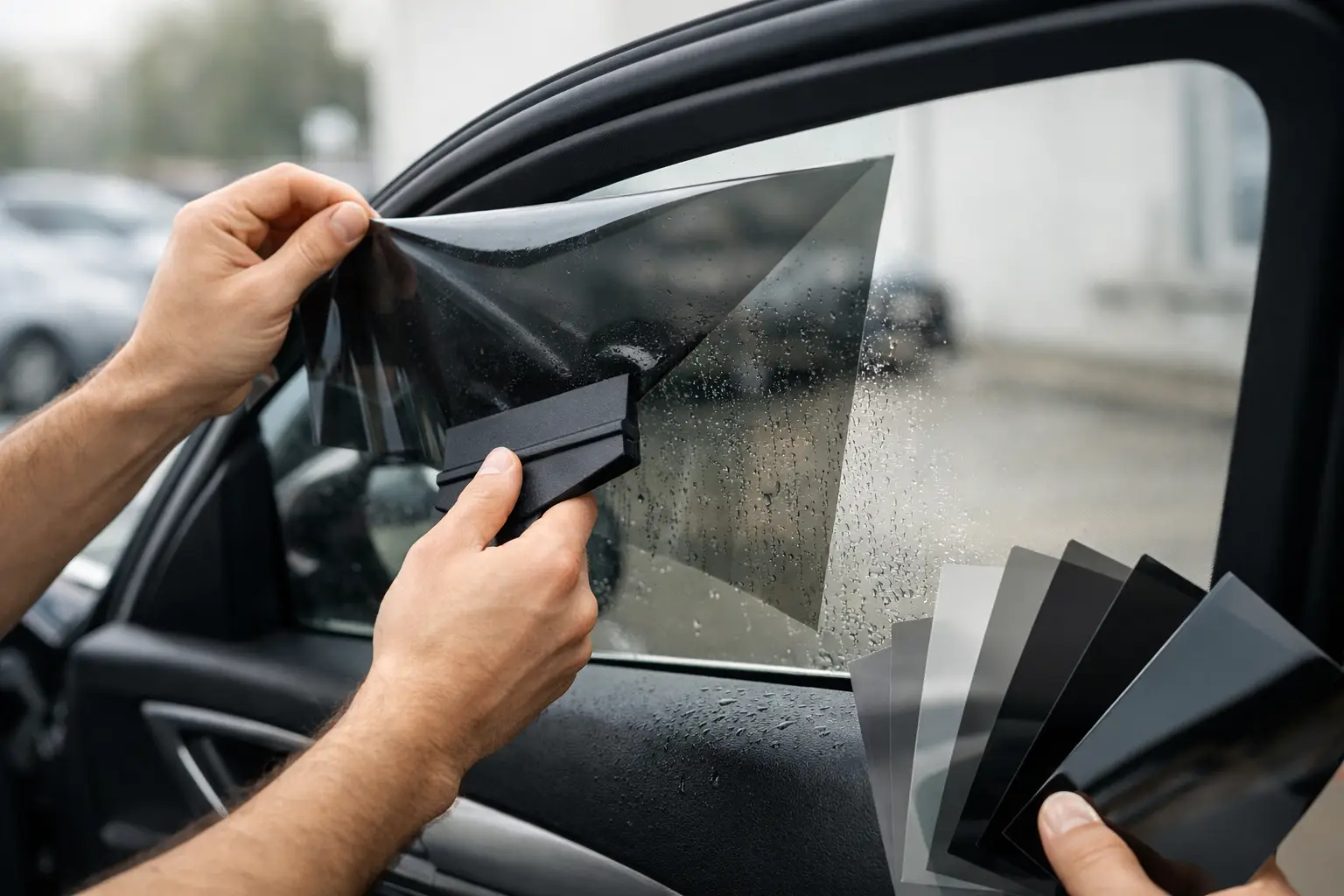
Most people start shopping for tint after a problem gets hard to ignore. The car feels like an oven by noon. A west-facing living room gets blinding glare every afternoon. An office runs the AC nonstop and still feels warm. If you’re wondering how to choose window tint, the right answer starts with the problem you want to solve first – because not every film is built for the same job.
That matters in San Diego, where strong sun, UV exposure, and long warm seasons put real stress on interiors, comfort, and cooling costs. A darker film is not always a better film. The best choice depends on whether your priority is heat rejection, glare reduction, privacy, security, appearance, or a mix of all five.
How to choose window tint based on your real goal
Window tint is often discussed as if it were one product category with minor differences. In practice, film performance varies quite a bit. Some films are designed mainly for appearance and privacy. Others are engineered to reject solar heat, block UV rays, reduce fading, strengthen glass, or cut eye strain from glare.
For a vehicle, comfort and cabin protection are usually the main goals. Good automotive film can reduce interior heat buildup, help preserve leather and plastics, and make driving more comfortable during bright daylight hours. If you spend a lot of time on the road, glare control may matter just as much as heat rejection.
For a home, the conversation often shifts toward energy efficiency, protecting floors and furniture, and making certain rooms easier to use throughout the day. A large bank of windows can look great, but it can also create hot spots and harsh light. Residential film helps manage those issues without giving up natural light.
For commercial properties, the priorities are usually broader. Building owners and managers may want lower HVAC strain, better employee comfort, improved privacy, a cleaner exterior appearance, or safety film for vulnerable glass areas. Retail and office spaces often need a more balanced solution that supports comfort while still looking professional from the outside.
If you start by naming the main problem, the selection process gets much simpler.
Understand the difference between darkness and performance
One of the biggest mistakes buyers make is assuming visible darkness tells you everything. It does not. A very dark film may increase privacy and cut glare, but that does not automatically mean it delivers the best heat rejection. Some lighter, higher-performance films can reject more heat than darker basic films.
That is why specs matter. Visible light transmission affects how dark the film looks. Solar heat rejection tells you how much heat the film can reduce. UV rejection indicates how well it helps protect interiors and skin from ultraviolet exposure. Depending on the product, you may also see figures for glare reduction and infrared rejection.
This is where product quality makes a real difference. Dyed films are often more budget-friendly and can improve appearance, but they may not offer the same long-term performance as higher-end options. Metalized and ceramic films typically provide stronger heat control, though they come with different price points and characteristics. Ceramic film is especially popular for buyers who want strong heat rejection without sacrificing visibility or dealing with signal interference concerns that can come with some metal-based products.
In short, do not choose by shade alone. Choose by what the film actually does.
Legal limits and use case matter
Automotive tint has to comply with California regulations, and that should be part of your decision from the start. A film that looks great online or on another vehicle may not be appropriate for your specific windows. Front side windows, rear glass, and windshield applications can all have different rules and practical limitations.
Residential and commercial projects have a different set of considerations. In homes and buildings, the goal is usually to improve comfort and efficiency without making rooms feel closed in. A film that is too reflective or too dark may solve one issue while creating another, especially if the room depends on daylight.
Marine and RV applications introduce another layer. These vehicles and vessels deal with heavy sun exposure, reflective glare from water or pavement, and a wide range of temperatures. The right film needs to perform well under those conditions and hold up over time.
This is one reason professional guidance matters. The right recommendation for a sedan is not the same as the right recommendation for a storefront, a motorhome, or a boat cabin.
Match the film to the glass and environment
Glass type matters more than many people realize. Not every window film is suitable for every type of glass. On homes and commercial buildings, factors like dual-pane glass, tempered glass, low-E coatings, and window orientation can affect product selection. Installing the wrong film on the wrong glass can lead to performance issues and, in some cases, stress on the glass itself.
Sun exposure also changes the equation. South- and west-facing windows usually take the most punishment. Rooms with large panes of glass, little shade, and long afternoon exposure often benefit from stronger solar control film than cooler parts of the property. In a vehicle, a windshield strip, side windows, and rear glass may all serve different purposes.
The best results come from evaluating how the space is actually used. A conference room with screen glare issues needs a different solution than a living room where the main complaint is furniture fading. A work truck parked outdoors all day has different needs than a weekend car stored in a garage.
Budget matters, but value matters more
Price is part of every buying decision, and it should be. But the lowest quote is not always the best value if the film underperforms, fades early, or is installed poorly. Window tint is only as good as the combination of film quality and installation quality.
A premium film generally costs more up front because it delivers better heat rejection, clearer visibility, stronger durability, and more reliable long-term appearance. That can mean fewer hot spots, lower cooling demand, less interior fading, and better day-to-day comfort. For many customers, those benefits outweigh the initial price difference.
Installation quality matters just as much. Even a top-tier film can look bad if it is cut poorly, contaminated during installation, or applied with visible flaws. Clean edges, proper fit, and a professional finish are what turn film into a true upgrade instead of a temporary fix.
A warranty should also be part of the conversation. Reputable film brands and experienced installers stand behind the work. That gives you better protection against issues like bubbling, peeling, discoloration, or premature failure.
How to choose window tint without overbuying or underbuying
The right choice usually lives in the middle between cheap and excessive. Some customers buy a basic film and later wish they had prioritized heat rejection. Others ask for the darkest or most expensive option when a more balanced film would have solved the problem just as well.
A better approach is to ask a few practical questions. How much heat do you want to reduce? Is daytime privacy important? Do you need to protect flooring, upholstery, or merchandise from UV damage? Is visibility from the inside important at night? Are you trying to improve curb appeal, occupant comfort, or both?
Once those answers are clear, the field narrows fast. A homeowner dealing with bright afternoon sun may need a high-performance residential film that preserves natural light. A business owner may want a cleaner exterior look with lower glare and better comfort for staff and customers. A driver may care most about cabin temperature and a sharp, legal finish.
That is where working with an experienced local installer helps. A contractor who handles automotive, residential, commercial, marine, and RV projects can usually spot the trade-offs quickly and recommend a film that fits the glass, the environment, and the goal. For San Diego customers, that often means balancing strong solar performance with clean appearance and long-term durability. Companies like Simmons Solar Control are built around exactly that kind of practical recommendation.
The best window tint is not the darkest one or the most expensive one. It is the one that solves the problem you actually have, holds up over time, and looks right on the glass. If you choose with that standard in mind, you are much more likely to be happy with the result every time the sun hits the window.