



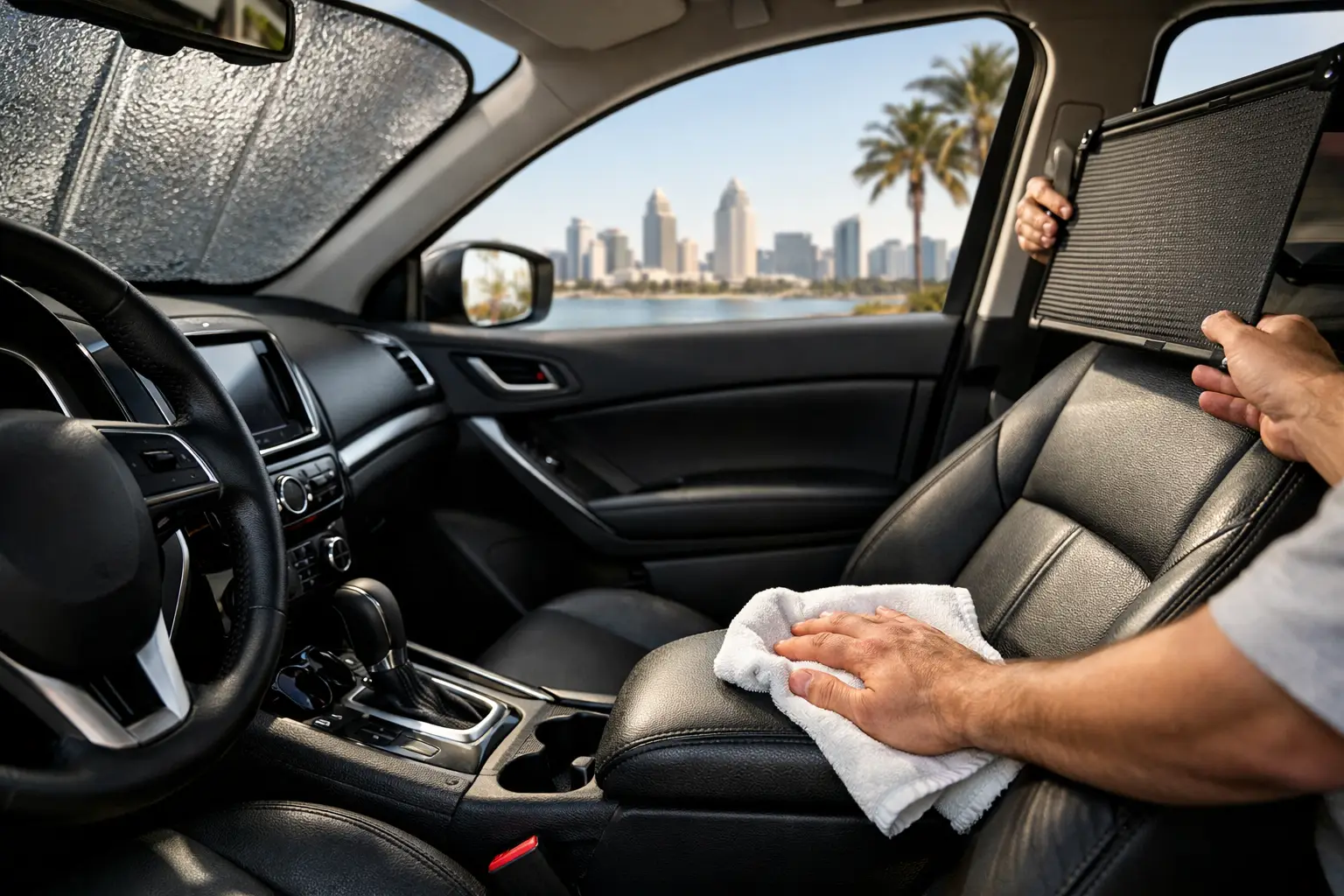
Park a car in the San Diego sun for a few hours, then open the door and you can feel the damage happening. The steering wheel is hot, the seats are warmer than they should be, and every surface inside is taking a beating from UV rays, heat, dust, and daily use. If you’re wondering how to protect car interior surfaces for the long haul, the answer is not one single product. It takes a few smart layers of protection that work together.
A clean, well-protected interior does more than look better. It holds value longer, feels more comfortable on hot days, and helps prevent the slow fade, cracking, drying, and staining that turn a newer vehicle into an older-looking one fast. In Southern California, that process moves quicker than many drivers expect.
How to protect car interior from sun and heat
Sun exposure is the biggest threat to most vehicle interiors in this part of California. UV rays break down dashboards, door panels, leather, vinyl, fabric, and trim. Heat makes that damage worse by drying materials out and accelerating fading and warping.
The most effective way to reduce interior damage is to block as much solar energy and UV exposure as possible before it reaches the cabin. That starts with your glass. Quality automotive window tint helps reject heat, cut glare, and filter the UV rays that age interior materials over time. This matters whether you drive daily through East County, park at the beach, or leave your car outside at work all day.
Not all tint performs the same, and that is where some drivers get tripped up. A darker film is not automatically a better film. High-performance products are built to reduce heat and UV without forcing you into a look you may not want. If your goal is interior protection, comfort, and long-term value, film quality and installation quality matter more than just shade level.
A windshield sunshade also makes a real difference, especially for cars parked outdoors for long stretches. It is simple, affordable, and worth using. The dashboard and steering wheel take direct punishment through the windshield, so covering that area reduces surface temperatures and slows material breakdown.
Whenever possible, choose covered parking, a garage, or even partial shade. That sounds obvious, but repeated exposure is what does the damage. Parking under cover five days a week can change how an interior ages over the next several years.
Keep interior materials clean before they wear out
Dirt is not harmless. Dust, sand, body oils, food residue, and sunscreen all sit on interior surfaces and slowly grind them down or stain them. In San Diego, beach trips, dry weather, and everyday traffic make this worse.
The best maintenance routine is consistent, not aggressive. Vacuum fabric seats, carpets, and floor mats regularly so grit does not get worked into the fibers. Wipe down hard surfaces with a cleaner designed for automotive interiors, not household sprays that can leave residue or damage finishes. If a product makes a dashboard look greasy or overly shiny, it is usually not doing you any favors.
Leather needs a different approach than cloth or vinyl. It should be cleaned with a leather-safe product and conditioned often enough to keep it from drying out. Over-conditioning can leave buildup, so this is one of those areas where more is not always better. Cloth interiors need prompt stain treatment and moisture control. Vinyl and synthetic trim need UV-safe protection without harsh solvents.
If you have kids, pets, or a work truck that sees a lot of use, your interior care plan needs to match that reality. A lightly used commuter car can get away with less frequent deep cleaning. A family SUV cannot.
Protect the high-wear areas first
If you want the biggest return on your effort, start with the surfaces that wear out fastest. These are usually the driver’s seat, steering wheel, center console, armrests, door pulls, carpets, and floor mats. They get touched, rubbed, and exposed every day.
Seat covers can help, but fit matters. Cheap universal covers often shift, trap heat, and make the interior look worse. A better option is a well-fitted cover designed for your vehicle, especially if you are protecting leather from work clothes, pet nails, or child seats. For many owners, though, prevention is cleaner than covering everything up.
Floor mats are one of the easiest upgrades to justify. They catch sand, dirt, spilled drinks, and moisture before the factory carpet does. If you drive in work boots, carry sports gear, or head to the coast often, durable all-weather mats are usually a better choice than carpeted ones.
The steering wheel is another trouble spot because heat, skin oils, and friction wear it down quickly. If your wheel is leather-wrapped, keep it clean and avoid leaving the vehicle baking in direct sun whenever possible. Even a good material will age fast under constant heat.
Be careful with what you leave inside
A lot of interior damage comes from habits, not accidents. Water bottles leak. Pens burst. Food gets forgotten. Gym bags trap moisture. Electronics and accessories left on the dash create hot spots and can mark surfaces.
Try not to store items directly against leather, vinyl, or plastic for long periods, especially in summer. Plastic bags, suction mounts, and rubber-backed accessories can leave impressions or discoloration when they sit on hot surfaces. The same goes for child seats that stay in one place year-round. They are necessary, of course, but it helps to check under them regularly and clean the area before grit gets pressed into the upholstery.
If you transport pets often, use a seat protector or cargo liner. Hair is one thing. Nail scratches, drool, dirt, and accidents are another. The right barrier keeps a practical vehicle from turning into a restoration project.
Use protectants that actually protect
There is no shortage of interior sprays promising showroom shine. The problem is that shine and protection are not the same thing. Some products leave a slick finish that attracts dust, creates glare on the windshield, or speeds up deterioration by drying surfaces out.
Look for interior protectants made specifically for automotive use and designed to provide UV resistance. For dashboards, door panels, and trim, a matte or low-sheen finish usually looks better and performs better over time. The goal is to preserve the material, not make it look wet.
This is also where people tend to overdo it. Applying multiple products on top of each other can cause buildup and uneven appearance. A straightforward cleaning routine plus a quality protectant used as directed is usually enough.
Why window tint plays such a big role
When people ask how to protect car interior areas that are already starting to fade or dry out, the conversation often comes back to window tint for a reason. You can clean, condition, and cover surfaces all you want, but if the sun keeps pouring through the glass every day, the problem does not stop.
Professional automotive film helps reduce the source of the damage. By cutting UV exposure and lowering cabin heat, tint supports everything else you do to maintain the interior. It can also make daily driving more comfortable, especially on bright afternoons and during hotter months when parked cars become ovens.
There are trade-offs, and a good installer should be honest about them. Film selection depends on your vehicle, your goals, your budget, and California regulations. Some drivers care most about heat rejection. Others want privacy, glare reduction, or a clean factory-style appearance. The right setup is not always the darkest one or the cheapest one.
For San Diego drivers who plan to keep a vehicle for years, this is one of the most practical upgrades available. A professionally installed film from a trusted local contractor gives you protection you notice immediately and value you see later, especially when the interior still looks sharp after seasons of sun exposure.
Build a routine you will actually keep
The best interior protection plan is the one you will follow consistently. For most vehicle owners, that means using a sunshade, keeping windows professionally tinted, vacuuming and wiping surfaces regularly, cleaning spills right away, and using the right protectant for the materials in the cabin.
You do not need a complicated system. You need habits that prevent damage before it becomes permanent. If your car spends hours outside each day, prioritize UV and heat control. If your biggest issue is kids, pets, or jobsite use, focus more on seat and floor protection. It depends on how you use the vehicle.
At Simmons Solar Control, we see firsthand what Southern California sun does to interiors over time, and we also see how much longer they hold up when drivers take protection seriously. A cooler cabin, less glare, and better-preserved materials are not small improvements. They are part of keeping your vehicle comfortable, presentable, and worth more down the road.
If you start with the glass, stay consistent with cleaning, and protect the surfaces that take the most abuse, your interior has a much better chance of looking good for years instead of just months. That is the kind of maintenance that pays you back every time you open the door.