



Fresh window tint always looks great on day one. The mistake happens on day two, when someone rolls the window down too soon, scrubs the glass with ammonia cleaner, or assumes a little haze means the install went wrong. Good film needs a little time and the right care to settle in properly, which is why these car tinting aftercare tips matter if you want the finish, performance, and lifespan you paid for.
In San Diego, that matters even more. Heat, UV exposure, salt air near the coast, and constant driving can all put extra stress on automotive glass and interior surfaces. A quality installation gives you the benefits people actually want – less heat, less glare, better privacy, and better protection for the interior – but aftercare plays a real role in how well your tint holds up over time.
Car tinting aftercare tips for the first few days
The first 48 hours to 5 days are the most important. The exact curing time depends on the film type, weather, and how much sun the vehicle gets. In warmer, drier conditions, film usually settles faster. In cooler weather or if the car stays parked indoors most of the time, curing can take longer.
The biggest rule is simple: keep the windows up. Rolling a window down too early can shift the film before the adhesive fully bonds to the glass. That is one of the fastest ways to create edge lift or misalignment, especially on side windows that move in and out of the door seals.
You may also notice a slightly cloudy look, small water pockets, or a hazy appearance right after installation. In most cases, that is normal. Installers use a slip solution during application, and some moisture remains between the film and the glass until it evaporates. As the film cures, that appearance usually clears on its own. Trying to press it out yourself often causes more harm than good.
If your vehicle has tint on the rear window, be careful around the defroster lines. Those lines sit on the inside of the glass, and aggressive rubbing can damage either the film or the defroster grid. During the early curing period, less contact is better.
What to avoid after window tint installation
After installation, a little restraint goes a long way. Most problems are not caused by bad intent. They come from routine habits that are fine on bare glass but too harsh for newly applied film.
Avoid cleaning the inside of the windows right away. Even if you notice fingerprints or light residue, it is better to wait until the film has had time to cure. If your installer gave you a specific timeframe, follow that over any general rule. Different films and conditions can change the schedule.
Avoid ammonia-based glass cleaners at any stage, not just during curing. Ammonia can break down certain tint films over time and may lead to discoloration or premature wear. This is one of the most common long-term care mistakes because many standard household and auto glass cleaners contain it.
Be careful with seat belts, rings, watches, pet claws, hard squeegees, and anything else that can strike or scrape the inside of the glass. Tint film is durable, but it is not immune to impact. Repeated contact near the edges can nick the material and eventually cause peeling.
Parking habits matter too. Sun helps the film cure, but extreme interior heat combined with constant touching or cleaning can create unnecessary stress during the first few days. Normal outdoor parking is fine. Just do not treat the windows like they are ready for full use the moment you leave the appointment.
How to clean tinted windows the right way
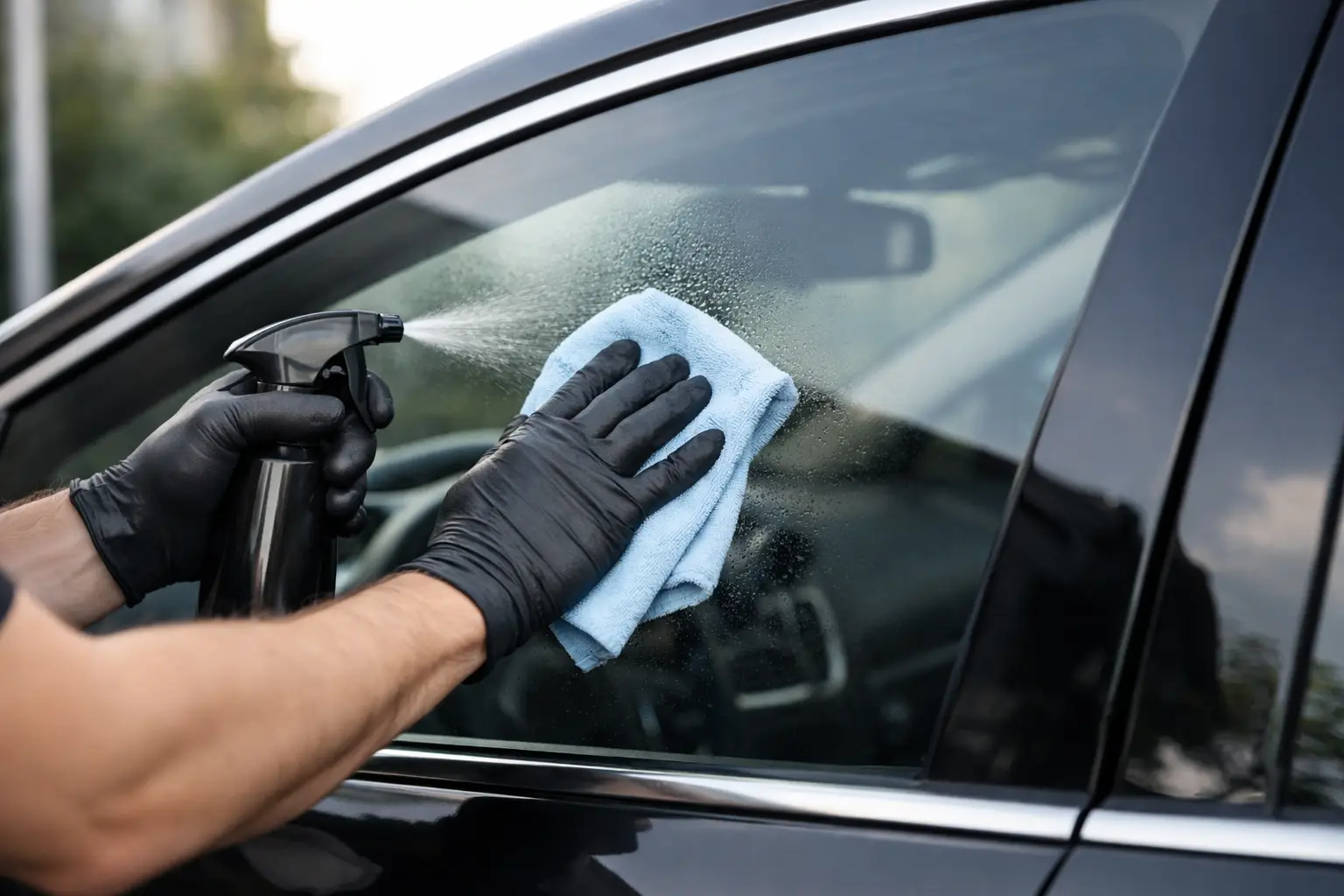
Once the film has fully cured, cleaning is straightforward. The safest approach is also the simplest: use a soft microfiber towel and a tint-safe cleaner. If you prefer a homemade option, mild soap diluted in water is often enough for routine cleaning.
Spray the towel instead of soaking the window. That gives you better control and helps prevent excess moisture from collecting along the edges. Wipe gently rather than scrubbing hard. Most interior haze, dust, and fingerprints come off easily when the right cleaner is used.
For drivers who like a spotless finish, it helps to keep a dedicated microfiber just for tinted glass. Towels that have been used on dashboards, wheels, or exterior trim may carry grit or residues that can mark the film. Clean tools matter as much as the cleaner itself.
If something sticky ends up on the glass, do not attack it with a razor blade. That can score the film immediately. Let the cleaner sit for a minute, then wipe it away gently. Stubborn spots may take a second pass, but patience is safer than pressure.
Long-term car tinting aftercare tips that actually matter
Once your tint is cured, the goal shifts from protection during installation to preserving clarity and edge condition over the long haul. That usually comes down to a few consistent habits rather than anything complicated.
Keep the inside glass clean, but do not overclean it. Frequent harsh wiping causes more wear than light dust ever will. If the windows look clear, leave them alone until they actually need attention.
Pay attention to the window edges. Most film failures start there first. If you notice peeling, lifting, or contamination building up at the top edge of a side window, do not keep rubbing at it. A small edge issue can become a larger problem if it is handled roughly.
If your car spends a lot of time outdoors, especially in full Southern California sun, windshield shades can help reduce overall cabin temperatures. That does not replace window film, but it does reduce stress on the interior and supports the comfort benefits that tint is already providing.
Interior detailing also deserves a little caution. Some dressing products leave residue that transfers easily onto glass. If you use sprays on the dash or door panels, apply them to a towel first instead of fogging the entire cabin. Overspray on tinted windows creates extra cleanup and can leave a smeared finish.
When bubbles, haze, or edge issues are normal
This is where a lot of customers second-guess a perfectly good installation. Not every mark means there is a defect.
Light haze and small water pockets are normal during curing. They usually fade as moisture evaporates. The timeline can vary from a few days to a few weeks depending on weather and film thickness.
Tiny specks can also happen in real-world installs. Automotive tint is applied by hand, not in a clean room. A professional installation should look clean and consistent, but no installer can promise laboratory-perfect glass in every lighting condition. What matters is whether the film performs well and whether any visible issue falls within normal installation standards.
What is less normal is large bubbles that remain after full curing, widespread peeling, major contamination, or edges that do not stay down. If you see those problems, contact the installer rather than trying to fix them yourself. Reputable professionals stand behind their work and can tell the difference between normal curing and a warranty issue.
Protecting your tint in daily driving
A parked car is not the only environment that affects film. Daily use does too. If you regularly carry tools, sports gear, pet crates, or anything bulky, be mindful when loading and unloading around the windows. One careless hit from a hard object can leave a permanent mark.
If you have children in the back seat, check their routine habits. Shoes on the doors, toys against the glass, and suction-cup accessories can all shorten the life of the film. The same goes for dog owners whose pets like to brace against side windows.
For drivers who use automatic car washes, the tint itself is generally protected because it is installed on the inside of the glass. The bigger concern is the rest of the vehicle and the likelihood of residue or moisture making the interior glass dirty more often. Hand cleaning the inside glass properly matters more than the exterior wash method in most cases.
When to call your installer
Some questions are better handled early. If you are unsure whether your windows have cured, if the film still looks distorted after the expected timeframe, or if you notice lifting near the edges, reach out. The best installers would rather answer a simple question than have a customer make the issue worse with the wrong cleaner or a DIY repair attempt.
That is one reason working with an experienced local contractor matters. A company like Simmons Solar Control can explain what is normal for the specific film installed, the current weather conditions, and the warranty guidelines that apply to your vehicle. Good aftercare starts with clear expectations.
The best tint jobs keep doing their work quietly in the background. Your cabin stays cooler, the glare stays down, and the interior takes less abuse from the sun. Treat the film with the same practical care you give the rest of the vehicle, and it should keep paying off every time you get behind the wheel.