



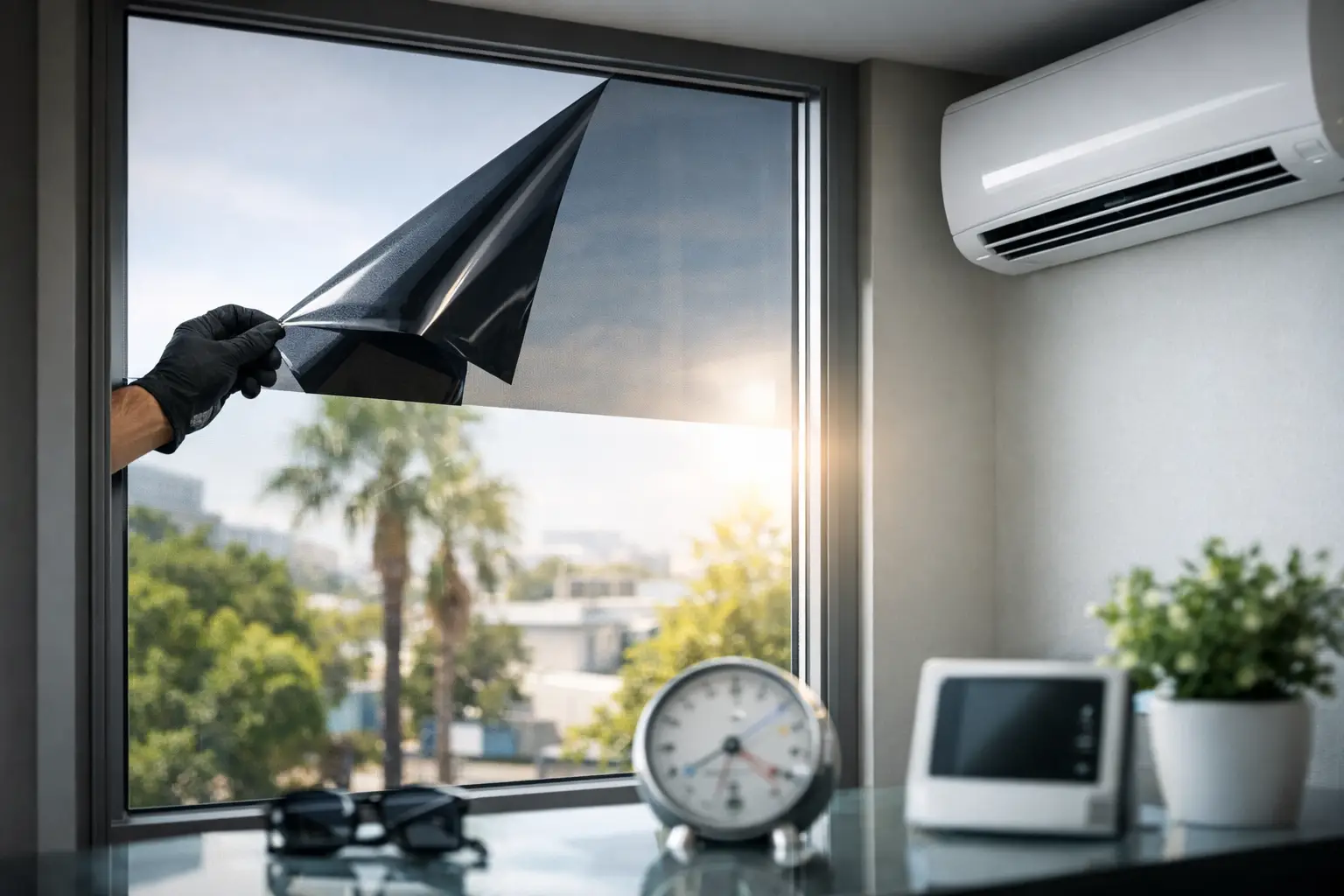
If your AC seems to run nonstop every afternoon, your windows may be part of the problem. In San Diego, sunlight pouring through untreated glass can turn living rooms, offices, and parked vehicles into heat traps, so it is fair to ask: can window film reduce cooling costs? In many cases, yes – but the real answer depends on the glass you have, how the space is used, and whether the film is chosen and installed correctly.
Can window film reduce cooling costs in real-world use?
Window film helps by reducing the amount of solar heat that passes through glass. That means less heat building up indoors, less strain on your air conditioning system, and a more stable temperature near windows where hot spots usually show up first. When the sun is hitting large panes of glass for hours a day, even a modest reduction in heat gain can make a noticeable difference in comfort.
For homeowners, that often means rooms that feel usable again in the late afternoon. For business owners, it can mean fewer complaints from employees or customers seated near the front windows. For vehicle owners, it means a cabin that does not feel like an oven every time the car has been parked outside. Cooling cost savings are usually part of the result, but comfort is what most people notice first.
The key point is that window film does not create cold air. It reduces heat entering through the glass so your cooling system does not have to work as hard to keep up. That distinction matters because film is not a replacement for insulation, weather sealing, or a properly sized HVAC system. It is a targeted upgrade that addresses one of the biggest sources of solar heat gain.
How window film lowers heat gain
Sunlight coming through a window brings more than brightness. It carries infrared heat and ultraviolet radiation along with visible light. High-performance window film is designed to reject a portion of that solar energy before it can build up inside the space.
Some films are more reflective, which can be a good fit for commercial buildings or certain residential exposures. Others use advanced ceramic or spectrally selective technology to cut heat while keeping a more natural appearance. That matters for customers who want performance without making the glass look overly dark or mirrored.
This is where product choice matters. A cheap film may darken the glass but still underperform on heat rejection or create unwanted appearance issues. A premium film from a proven manufacturer is built to deliver measurable performance, better clarity, and longer-term durability. That difference shows up over time in both comfort and value.
Why some rooms benefit more than others
Not every window has the same impact on your energy bill. Large west-facing windows usually create the biggest afternoon heat load. South-facing glass can also bring in steady heat throughout the day, especially in exposed homes and commercial storefronts.
If you have a room that is always hotter than the rest of the house, or an office with one side of the building that stays uncomfortable, film often delivers the strongest results there. In a car, the windshield and side glass can make a major difference in how quickly the cabin heats up. On boats and RVs, broad glass exposure can make cooling systems work much harder than they should.
What kind of savings should you expect?
This is the part where honesty matters. Window film can reduce cooling costs, but the amount varies. Savings depend on your building design, the size and type of glass, insulation levels, sun exposure, thermostat settings, occupancy, and the film selected.
A property with large single-pane windows in direct sun often sees a stronger improvement than one with newer low-E glass and limited sun exposure. A commercial space with heavy afternoon glare and high AC demand may see a faster return than a shaded home with smaller windows. Vehicles, RVs, and boats can also see practical fuel or generator-use benefits when cooling systems run less aggressively, but those results depend on usage patterns.
The more realistic way to look at it is this: window film helps lower the heat load. Lower heat load gives your cooling system less work to do. In the right setting, that can reduce energy use and help control utility costs. In almost every setting, it improves day-to-day comfort.
Cooling savings are only one part of the value
People often start with the utility bill, but window film solves more than one problem at a time. It reduces glare on screens, helps protect interiors from UV damage, and can improve privacy depending on the product. That matters if you are trying to protect flooring, furniture, dashboards, merchandise, or workspaces from sun exposure.
For many San Diego property owners, the total value is a mix of benefits. Lower AC strain is one. Better comfort near windows is another. Preserving the look and condition of interiors is another. When you combine those factors, film often makes sense even before you calculate exact payback.
Can window film reduce cooling costs enough to justify installation?
For many customers, yes – especially when they are dealing with obvious heat and glare problems. The best candidates are homes, offices, storefronts, vehicles, RVs, and marine applications that get strong direct sun and already rely heavily on air conditioning.
That said, the answer is not automatic. If your main problem is poor attic insulation, duct leakage, or an old AC unit, window film should be part of the solution, not the whole plan. If your windows are shaded most of the day, cooling savings may be modest. If you choose film based only on price, performance may fall short of expectations.
A professional assessment helps because film needs to match the application. The right choice for a street-facing office is not always the right choice for a home, and the right residential film is not always the right fit for a vehicle or boat. Glass type, orientation, appearance goals, and local code considerations all matter.
Why installation quality affects results
Even the best film can underdeliver if it is installed poorly. Clean edges, proper adhesion, and product compatibility with the glass all matter for long-term performance. On flat glass, the wrong film can create avoidable issues when paired with certain insulated window units. On vehicles, precision installation affects both appearance and function.
Professional installation also gives you a clearer path to warranty protection and confidence that the product is doing what it is supposed to do. That is one reason many San Diego customers work with licensed installers who have experience across residential, commercial, automotive, RV, and marine applications. A company like Simmons Solar Control is not just applying film – it is helping match the right solution to the actual heat and comfort problem.
How to know if film is a smart upgrade for your property
Start with the symptoms. If certain rooms spike in temperature every afternoon, if your storefront gets blasted with sun, if your car stays painfully hot after parking, or if glare forces you to close blinds all day, film is worth serious consideration.
Then look at the windows themselves. Large expanses of glass, older windows, and spaces with direct western or southern exposure usually offer the strongest opportunity for improvement. If you are already planning to replace windows, you will want to compare costs carefully. But if the windows are in decent shape and the main issue is solar heat, film is often a far more cost-effective upgrade.
That practical middle ground is why window film remains such a popular solution. It addresses heat where it enters, improves comfort quickly, and supports lower cooling demand without the disruption and expense of replacing every window.
If your space is heating up faster than it should, the smartest next step is not guessing at a darker shade or a cheaper product. It is getting a clear recommendation based on your glass, your sun exposure, and the way you actually use the space.