



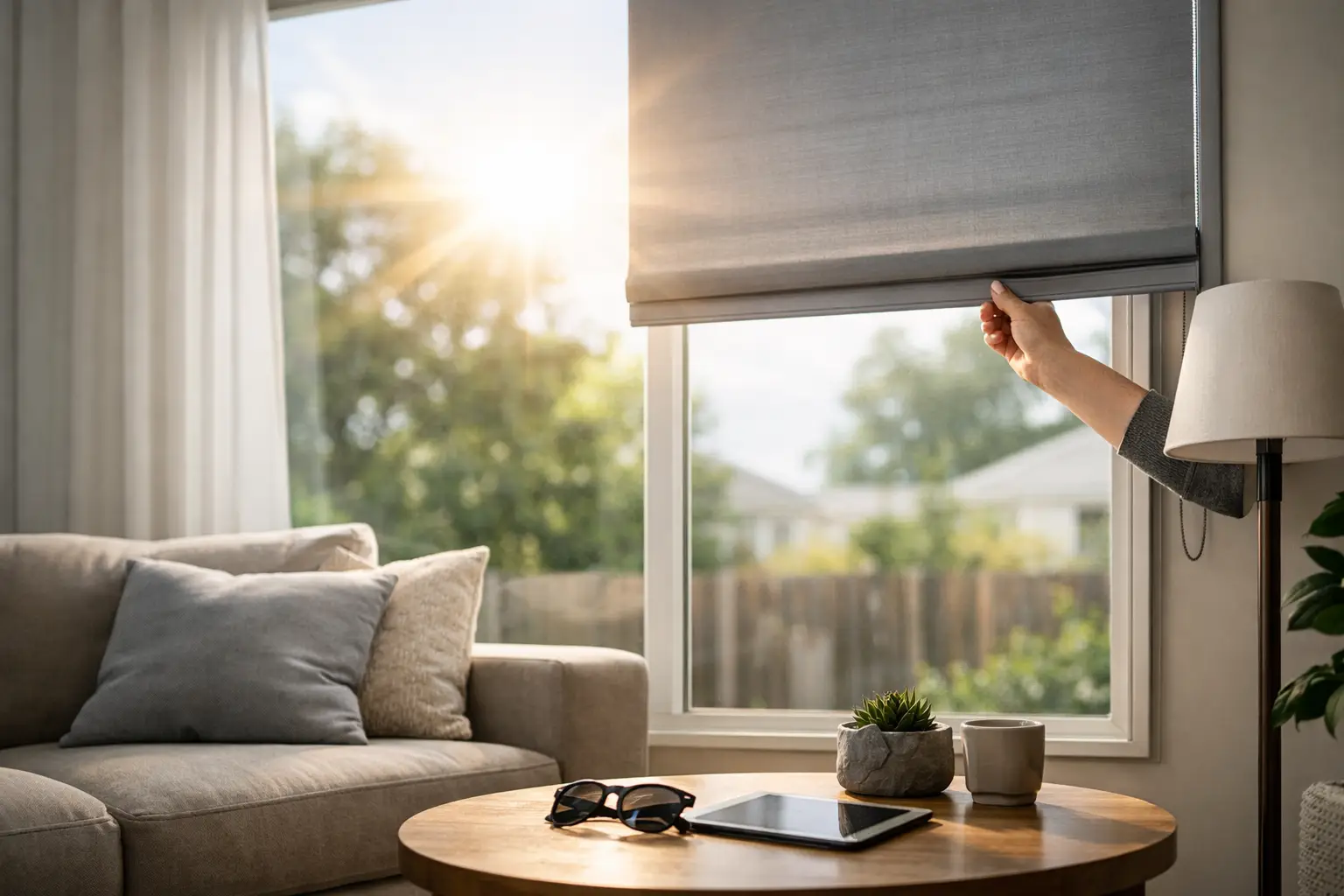
That bright patch across the living room floor might look harmless at 9 a.m., but by noon it can turn TV screens into mirrors, wash out computer monitors, and make a comfortable room feel harsh. If you are figuring out how to reduce home glare, the right fix depends on where the light is coming from, how the room is used, and whether you want a quick improvement or a long-term solution.
In San Diego, glare is not just a seasonal annoyance. Strong sun, wide glass areas, and open floor plans make it a daily issue for homeowners who want more comfort without giving up natural light. The goal is not to make your home darker. It is to control excessive brightness so the space works better throughout the day.
What causes home glare in the first place?
Glare happens when sunlight reflects off a surface or enters a room at an angle that overwhelms your eyes. Large uncovered windows are the most obvious source, but they are not the only one. Glossy flooring, polished countertops, light-colored walls, electronics screens, and even water outside a window can intensify the problem.
That is why two homes with the same amount of sun exposure can feel very different. One room may have soft daylight, while another feels sharp and uncomfortable. Orientation matters too. West-facing rooms usually deal with intense afternoon glare, while east-facing rooms often get it in the morning. South-facing spaces can have prolonged brightness for much of the day.
Before choosing a solution, it helps to identify when glare is worst and what it affects most. For some homeowners, the main complaint is eye strain while working from home. For others, it is heat and fading on furniture, or the inability to watch television without closing every blind in the house.
How to reduce home glare without making rooms feel closed off
A common mistake is treating glare and privacy as the same problem. Heavy curtains may block both, but they can also make a bright, open room feel shut down. If your goal is usable daylight, the best approach usually involves light control rather than complete light blockage.
Window treatments can help, especially when the issue is limited to certain hours of the day. Solar shades, for example, reduce brightness while preserving some outside visibility. They work well in living rooms, offices, and sun-facing bedrooms where blackout curtains would be too much. Blinds also give you flexibility, but they often create uneven light patterns and may not fully address reflective glare on screens.
Rearranging furniture can also make a noticeable difference. If a desk faces a bright window or a television sits opposite one, glare becomes harder to avoid. Shifting the angle of the screen, moving seating slightly off-axis, or placing work areas where direct sun is less intense can improve comfort without any construction or installation.
Surface choices matter more than many homeowners expect. A shiny coffee table or polished tile floor can bounce sunlight deeper into the room. In spaces with persistent glare, matte finishes tend to be easier on the eyes. This is especially true in home offices, kitchens, and rooms with large sliding glass doors.
Still, these fixes have limits. If glare is consistent, severe, and tied directly to the windows, adjusting furniture and closing shades every afternoon starts to feel like a workaround rather than a solution.
Why window film is often the most practical long-term fix
When homeowners ask how to reduce home glare in a way that lasts, window film is often the most effective answer. It addresses glare at the glass itself, where the problem begins, instead of trying to manage the symptoms after sunlight has already entered the room.
A quality residential window film can significantly cut visible light transmission and reduce harsh brightness without eliminating daylight. That means you can keep the room functional and comfortable while still enjoying the open feel that large windows provide. This matters in Southern California homes, where natural light is a selling point and a lifestyle preference.
There are trade-offs, and they should be considered honestly. A darker film generally reduces more glare, but it can also change the look of the glass and slightly dim the room. A lighter film may preserve more brightness and views, but it may not perform as aggressively in rooms with severe afternoon exposure. The right choice depends on the room, the glass type, and what matters most to you – glare reduction, heat rejection, UV protection, privacy, or aesthetics.
Another advantage of window film is that glare control often comes with added benefits. Many homeowners start with one problem and end up solving three. Reducing glare can also lower solar heat gain, help protect flooring and furnishings from UV damage, and make rooms easier to cool. That combination makes film a strong value compared with temporary fixes that only address brightness.
Which rooms benefit most from glare reduction?
Some parts of the home reveal glare problems faster than others. Living rooms are a common example because televisions and large windows often compete with each other. If you have to lower every blind to watch a game or movie in the afternoon, the room is getting more light than it can comfortably handle.
Home offices are another priority area. Monitor glare leads to squinting, headaches, and reduced productivity, especially if the workspace is set up near a sun-facing window. In these spaces, balancing natural light with screen visibility is critical. Too dark, and the room feels closed in. Too bright, and it becomes difficult to work.
Kitchens can also be surprisingly problematic. Reflective countertops, glossy cabinets, and stainless appliances amplify direct sun, particularly in open-concept homes where light moves across multiple surfaces. Bedrooms matter too, especially if early morning or late afternoon glare makes it harder to relax.
If you are trying to prioritize your budget, start with the room where glare affects daily function the most. That may be the family room, a workspace, or a primary bedroom. Solving the worst area first often gives homeowners a clearer sense of what they want throughout the rest of the house.
How to choose the right glare-reduction solution
The best solution depends on how permanent you want the fix to be and how much performance you need. Shades and blinds are familiar and relatively simple, but they rely on constant adjustment and often block the view when in use. Curtains can soften a room visually, yet they may not fit a clean modern look and can make bright spaces feel heavy.
Window film is a better fit when you want round-the-clock performance without changing the appearance of the interior. It works especially well for homeowners who want to preserve views, reduce eye strain, and improve comfort with minimal daily effort. Professionally installed film also tends to deliver a cleaner finish and more predictable results than off-the-shelf products.
If your home has specialty glass, large panes, or dual-pane windows, professional guidance matters. Not every film is right for every window. The wrong product can underperform or create stress on the glass. An experienced installer can match the film to your home’s conditions and explain what level of glare reduction is realistic in each room.
That is one reason many San Diego homeowners prefer working with a local contractor that understands the region’s sun exposure and common building styles. A company like Simmons Solar Control can assess the specific orientation of your home, the type of glass you have, and the comfort issues you are trying to solve, then recommend a film that fits those priorities.
What to expect after reducing glare
A well-managed room feels different right away. Screens are easier to see. Light looks softer instead of sharp. You stop chasing the sun across the house by adjusting blinds every few hours. In many cases, the room also feels cooler and more balanced through the hottest parts of the day.
The change is not always dramatic in a before-and-after photo, but it is obvious in daily use. That is what makes glare reduction worthwhile. It improves the way your home functions, not just the way it looks.
If glare has turned your favorite room into a space you avoid during certain hours, it is worth addressing at the source. The right solution should let you keep the light you want and lose the discomfort you do not.